
Herniated Disc and Back Injury Claims in San Diego
A herniated disc can change your life in an instant. Whether the injury happened in a rear-end collision on Interstate 5, a slip and fall at a local business, or a workplace accident, the pain, numbness, and limited mobility that follow can make even simple daily activities feel impossible. If you are dealing with herniated disc and back injury claims in San Diego, you deserve to understand your legal rights, the medical evidence that strengthens your case, and the compensation California law makes available to you.
Back injuries are among the most common results of traumatic accidents, and herniated discs rank among the most significant. Unlike soft-tissue strains that may heal within weeks, a herniated disc often requires months of treatment and can lead to chronic pain or permanent disability. The financial toll of medical care, lost wages, and diminished quality of life adds up quickly. For San Diego spine injury victims, knowing how the legal process works is the first step toward recovery.
This guide covers everything you need to know about pursuing a herniated disc injury claim in San Diego, from how these injuries are diagnosed and treated to how California courts evaluate them and what your case may be worth.
Understanding Herniated Disc Injuries
What Is a Herniated Disc?
Your spine is made up of 33 vertebrae separated by intervertebral discs. Each disc has a tough outer layer called the annulus fibrosus and a gel-like center called the nucleus pulposus. A herniated disc occurs when the outer layer tears and the inner material pushes outward, pressing against nearby spinal nerves.
This nerve compression is what causes the symptoms most herniated disc patients experience: radiating pain, numbness, tingling, and muscle weakness. A herniated disc in the lumbar spine (lower back) may cause sciatica, which sends sharp pain down one or both legs. A cervical herniation (neck) can cause pain, weakness, or numbness in the arms and hands.
Herniated discs are most common in the lumbar region (L4-L5 and L5-S1) and the cervical region (C5-C6 and C6-C7). These areas bear the most stress during sudden impacts like car accidents and falls.
Herniated Disc vs. Bulging Disc: Why the Distinction Matters
Insurance companies often try to minimize back injury claims by conflating herniated discs with bulging discs. The difference is significant, both medically and legally.
A bulging disc occurs when the disc extends beyond its normal boundary but remains intact. The outer layer has not torn. A herniated disc involves an actual tear in the outer layer, allowing the inner material to leak out and compress nerve tissue. Herniated discs typically cause more severe symptoms, require more aggressive treatment, and are associated with higher settlement values in personal injury cases.
A third category, degenerative disc disease, refers to the gradual breakdown of spinal discs over time due to aging. Insurance adjusters frequently argue that a plaintiff’s herniated disc is the result of pre-existing degeneration rather than the accident. California law provides a clear answer to this defense, which we address below.
How Herniated Discs Are Diagnosed
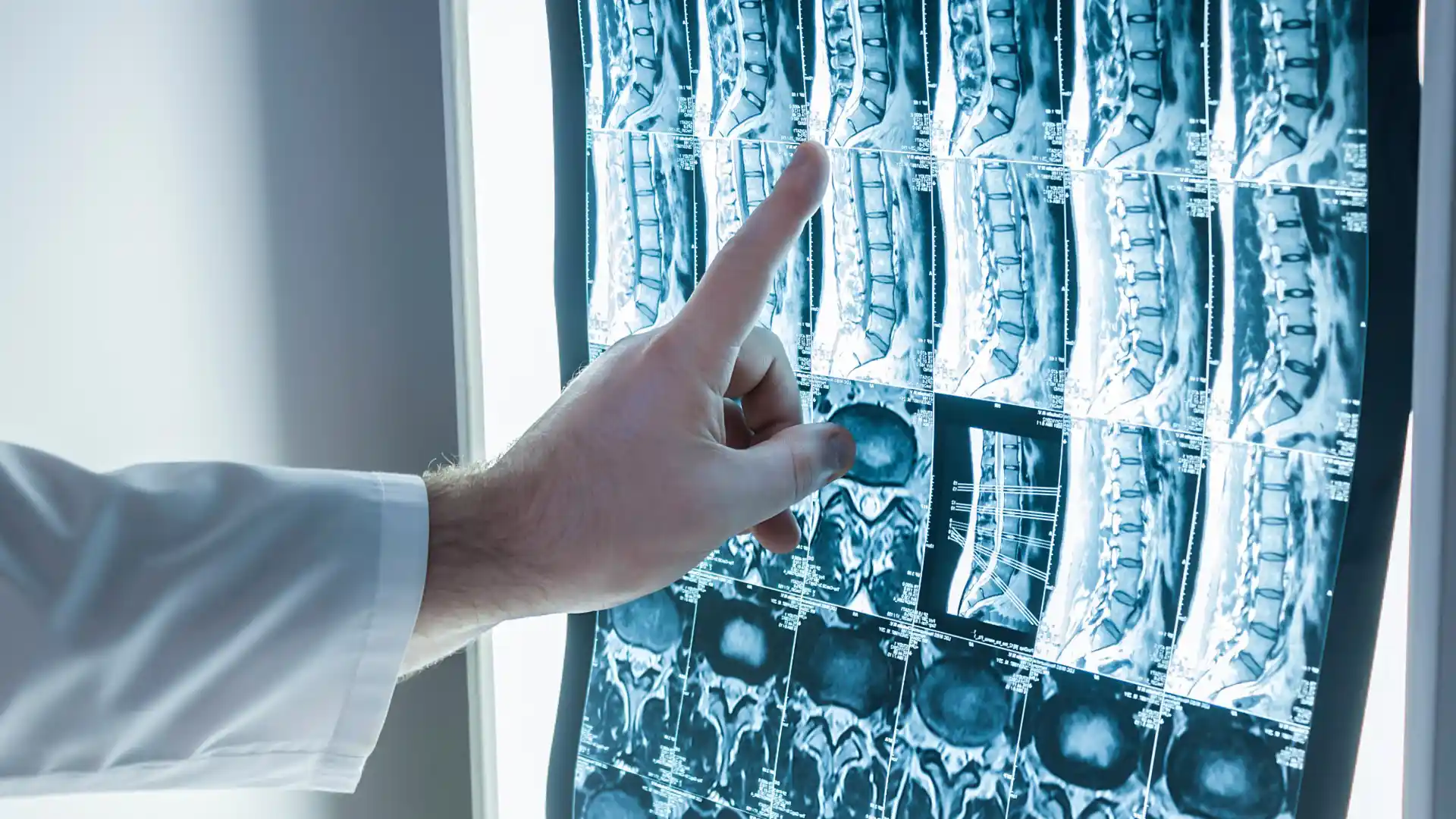
MRI (magnetic resonance imaging) is the gold standard for diagnosing herniated discs. An MRI produces detailed cross-sectional images of the spine, clearly showing disc protrusions, nerve compression, and surrounding tissue damage. For personal injury claims, the MRI report is often the most important piece of medical evidence.
Other diagnostic tools include CT scans, X-rays (which can reveal bone abnormalities and disc space narrowing but do not show soft tissue as clearly as MRI), and electromyography (EMG) or nerve conduction studies, which measure how well electrical signals travel through the nerves. When an EMG confirms nerve damage consistent with the MRI findings, it significantly strengthens the case.
In San Diego, major medical centers including UC San Diego Health, Scripps Clinic, and Sharp HealthCare offer comprehensive spinal diagnostics. Prompt evaluation after an accident is critical for both your health and your legal claim.
Common Causes of Herniated Disc Injuries in San Diego
Herniated discs can result from virtually any accident that subjects the spine to sudden force, compression, or twisting. In San Diego, the most frequent causes include:
Motor vehicle accidents. Rear-end collisions are the leading cause of traumatic herniated discs. The sudden deceleration forces the occupant’s body forward while the head snaps back, compressing the cervical and lumbar discs. Even seemingly minor fender-benders at 10-15 mph can generate enough force to herniate a disc, particularly in the neck. San Diego’s congested corridors along I-5, I-8, I-15, and I-805 see thousands of rear-end crashes each year. For more on the common causes of spinal cord injuries in San Diego, see our detailed guide. High-speed collisions can also cause vertebral fractures, which sometimes occur alongside disc herniations and complicate both treatment and recovery.
Slip, trip, and fall accidents. A fall onto a hard surface can herniate a disc on impact, especially if the victim lands on their back or twists during the fall. Property owners in San Diego have a legal duty to maintain safe premises, and a failure to address wet floors, uneven walkways, or poor lighting can give rise to a premises liability claim.
Workplace accidents. Construction workers, warehouse employees, healthcare workers, and others who perform heavy lifting or repetitive bending are at elevated risk. A single event, such as lifting a heavy object incorrectly, or cumulative trauma over time can cause disc herniation. In California, injured workers may have both a workers’ compensation claim and a separate personal injury claim against a negligent third party.
Pedestrian and bicycle accidents. When a vehicle strikes a pedestrian or cyclist, the impact can throw the victim to the ground with tremendous force. Back injuries, including herniated discs, are common in these collisions.
Sports and recreational injuries. Contact sports, surfing, mountain biking, and other activities popular in San Diego can cause disc injuries. When the injury is caused by another person’s negligence or a defective product, a personal injury claim may be appropriate.
Symptoms and Long-Term Impact of a Herniated Disc
Herniated disc symptoms vary depending on the location and severity of the injury. Common symptoms include:
Lumbar herniation (lower back): Sharp or burning pain in the lower back, buttocks, and legs (sciatica); numbness or tingling in the legs or feet; muscle weakness affecting walking or standing; difficulty sitting for extended periods.
Cervical herniation (neck): Pain in the neck, shoulders, and arms; numbness or tingling in the fingers; reduced grip strength; headaches originating at the base of the skull.
One of the most important things to understand about herniated discs is that symptoms may not appear immediately. It is common for pain, numbness, and weakness to develop hours or even days after the injury. This is why medical professionals and personal injury attorneys emphasize seeking evaluation as soon as possible after any accident involving impact to the back or neck.
Without treatment, a herniated disc can lead to chronic pain, permanent nerve damage, and progressive loss of mobility. In severe cases, a condition called cauda equina syndrome can develop when a large lumbar herniation compresses the nerve bundle at the base of the spine, causing loss of bladder and bowel control. Cauda equina syndrome is a medical emergency requiring immediate surgery.
California Law and Your Herniated Disc Claim
Proving Your Injury Was Caused by the Accident
In any California personal injury case, the plaintiff must prove that the defendant’s negligence caused their injury. For herniated disc claims, this means establishing a direct connection between the accident and the disc injury through medical evidence. MRI imaging performed shortly after the accident, combined with medical records documenting the onset of symptoms and a treating physician’s opinion on causation, forms the foundation of this proof.
California courts follow Evidence Code sections 801-802, which allow qualified medical experts to testify about causation based on their examination, review of imaging, and clinical experience. A spinal cord injury lawyer in San Diego will typically work with orthopedic surgeons, neurologists, or physiatrists who can explain the mechanism of injury and connect it to the accident. For a closer look at how fault is established in these cases, see our guide on proving liability in a spinal cord injury case.
The Pre-Existing Condition Defense and California’s Eggshell Plaintiff Rule
If you had degenerative disc disease or a prior back condition before the accident, the insurance company will almost certainly argue that your herniated disc is pre-existing and not the defendant’s fault. This is one of the most common defense strategies in back injury cases.
California law firmly protects injured victims through the eggshell plaintiff doctrine. Under this rule, a defendant takes the plaintiff as they find them. If the accident aggravated, accelerated, or worsened a pre-existing condition, the defendant is liable for the full extent of the resulting injury. California Civil Jury Instruction (CACI) 3927 specifically addresses this, instructing juries that a defendant is responsible for any injuries that are greater because of the plaintiff’s pre-existing physical condition.
Your medical expert can compare pre-accident imaging (if it exists) with post-accident MRI results to demonstrate how the accident changed your condition. Even if the disc was already degenerating, the trauma that caused it to herniate is the defendant’s responsibility.
Comparative Negligence Under California Law
California follows a pure comparative negligence system under Civil Code Section 1714. If you were partially at fault for the accident, your compensation is reduced by your percentage of fault, but you are not barred from recovery. For example, if a jury determines your total damages are $300,000 but you were 20% at fault, you would recover $240,000.
This is particularly relevant in cases involving lane-change accidents, pedestrian jaywalking, or workplace injuries where both the employer’s conditions and the worker’s actions may have contributed to the injury.
Statute of Limitations
Under California Code of Civil Procedure Section 335.1, you have two years from the date of the injury to file a personal injury lawsuit. If the claim is against a government entity (for example, a city bus or a dangerous road condition maintained by the City of San Diego), you must file a government claim within six months under the California Government Claims Act (Government Code Section 810 et seq.).
Missing these deadlines can permanently bar your claim, regardless of how strong your evidence is. If you are dealing with a herniated disc from a recent accident, consulting an attorney promptly protects your rights.
Compensation for Herniated Disc Injuries in San Diego
The value of a herniated disc claim depends on several factors, including the severity of the injury, the treatment required, the impact on your daily life and ability to work, and the strength of your evidence. California allows injured victims to recover both economic and non-economic damages.
Economic Damages
Economic damages cover the measurable financial losses caused by the injury. For herniated disc cases, these typically include: medical expenses (emergency care, MRI and imaging, physical therapy, epidural injections, surgery, prescription medications, and follow-up visits); lost wages from time missed at work during treatment and recovery; reduced earning capacity if the injury limits your ability to perform your previous job; and future medical costs if ongoing treatment or additional surgery is expected.
A single-level lumbar discectomy in San Diego can cost $15,000 to $50,000, while a spinal fusion surgery may exceed $100,000 before accounting for rehabilitation. These costs form the baseline of economic damages in surgical cases. For a detailed look at how spinal injury damages are calculated, see our guide on compensation available to spinal cord injury victims.
Non-Economic Damages
Non-economic damages compensate for pain and suffering, emotional distress, loss of enjoyment of life, and loss of consortium (the impact on your relationship with your spouse). California does not cap non-economic damages in personal injury cases (unlike medical malpractice cases under MICRA), which means there is no statutory limit on what a jury can award for the pain and diminished quality of life caused by a herniated disc.
Chronic back pain that persists after surgery, the inability to play with your children, sleep disruption, anxiety about the future, and depression are all compensable forms of non-economic harm that juries in San Diego regularly consider.
How Herniated Disc Cases Are Valued in California
While every case is unique, herniated disc claims tend to fall into tiers based on the treatment required: cases resolved with conservative care alone (physical therapy, medication, injections) are valued lowest; cases requiring a discectomy sit higher; and cases requiring spinal fusion or producing permanent symptoms are valued highest. No attorney can promise a figure before the medical picture is complete.
Several factors push the value higher: objective MRI evidence of the herniation, surgical intervention, documented permanent restrictions, significant lost income, and a defendant with clear liability and adequate insurance coverage. For a deeper look at how these factors are weighed, see our guide on spinal cord injury settlement values and the key factors that affect case worth.
Treatment Options for Herniated Disc Injuries
Treatment for a herniated disc typically follows a progressive approach, starting with conservative methods and escalating to surgery only when necessary.
Conservative treatment is the first line of care for most herniated discs and includes rest (with gradual return to activity), physical therapy to strengthen supporting muscles and improve flexibility, anti-inflammatory medications (NSAIDs) and muscle relaxants, chiropractic care and spinal manipulation, and heat and ice therapy. Most herniated discs improve significantly within six to twelve weeks of conservative treatment.
Epidural steroid injections deliver corticosteroids directly to the area around the compressed nerve, reducing inflammation and pain. Injections are often used when physical therapy alone does not provide adequate relief. They can be diagnostic as well as therapeutic, helping physicians confirm which disc is causing the symptoms.
Surgical intervention is considered when conservative treatment fails to relieve symptoms after several months, or when the herniation causes progressive neurological deficits. The two most common procedures are:
Discectomy/microdiscectomy: The surgeon removes the portion of the disc pressing on the nerve. This is the most common surgery for lumbar herniations and has a high success rate for relieving leg pain (sciatica).
Spinal fusion: When the disc is severely damaged or the spine is unstable, the surgeon may remove the entire disc and fuse the adjacent vertebrae together using bone grafts and hardware. Fusion eliminates motion at that spinal segment, which relieves pain but can increase stress on neighboring discs over time.
Newer options, including artificial disc replacement, may be available for certain patients. Your treating physician will recommend the approach best suited to your specific injury. For more on what long-term recovery looks like after a serious spinal injury, see our San Diego spinal cord injury rehabilitation guide.
Building a Strong Herniated Disc Injury Claim
The strength of a herniated disc claim depends heavily on the quality and consistency of the medical evidence. Here are the steps to take after a spinal cord injury and the key elements that matter most in building your case:
Seek immediate medical evaluation. Visit an emergency room or urgent care facility as soon as possible after the accident. Even if your symptoms seem mild, early documentation creates a clear timeline connecting the accident to the injury. Gaps in treatment give insurance companies ammunition to argue the injury was not serious or was caused by something else.
Follow your treatment plan consistently. Attend every appointment, complete your physical therapy program, and follow your physician’s recommendations. Insurance adjusters scrutinize medical records for gaps or non-compliance, arguing that missed appointments prove the injury is not as severe as claimed.
Obtain an MRI as soon as your physician recommends one. The MRI is the cornerstone of a herniated disc claim. It provides objective visual proof of the injury that cannot be easily disputed. If you had prior imaging of your spine (from an earlier injury or routine care), your attorney can use the comparison to demonstrate the accident-related changes.
Document everything. Keep a pain journal recording your daily symptoms, limitations, and emotional state. Photograph any visible bruising or swelling. Save all medical bills, pharmacy receipts, and records of missed work. This documentation supports both the medical and financial components of your claim.
Secure expert medical testimony. In most contested herniated disc cases, your treating physician or a retained medical expert will need to provide testimony (or a declaration) establishing that the accident caused or aggravated the disc herniation. Understanding how types of spinal cord injuries are classified and treated helps both your legal team and your medical providers present a clear, consistent narrative.
Related Resources
For more information on spinal injuries and your legal options in San Diego, explore these guides from Hulburt Law Firm:
Speak with a San Diego Herniated Disc Injury Attorney
If you or someone you love has suffered a herniated disc or back injury in an accident, you do not have to navigate the legal process alone. At Hulburt Law Firm, we focus on catastrophic injury and wrongful death cases in San Diego, and we understand the medical complexity and financial stakes of serious spinal injuries.
Attorney Conor Hulburt provides free, no-obligation consultations to accident victims throughout San Diego County. We work on a contingency fee basis, which means you pay nothing unless we recover compensation for you. Contact us today to discuss your herniated disc injury claim and learn what your case may be worth.
Request a Free Case Review
Simply fill out the form or call 619.821.0500 to receive a free case review. We’ll evaluate what happened, your injuries, and potential defendants to determine how we can best help you.

Hulburt Law Firm handles serious personal injury and wrongful death cases throughout San Diego County.


