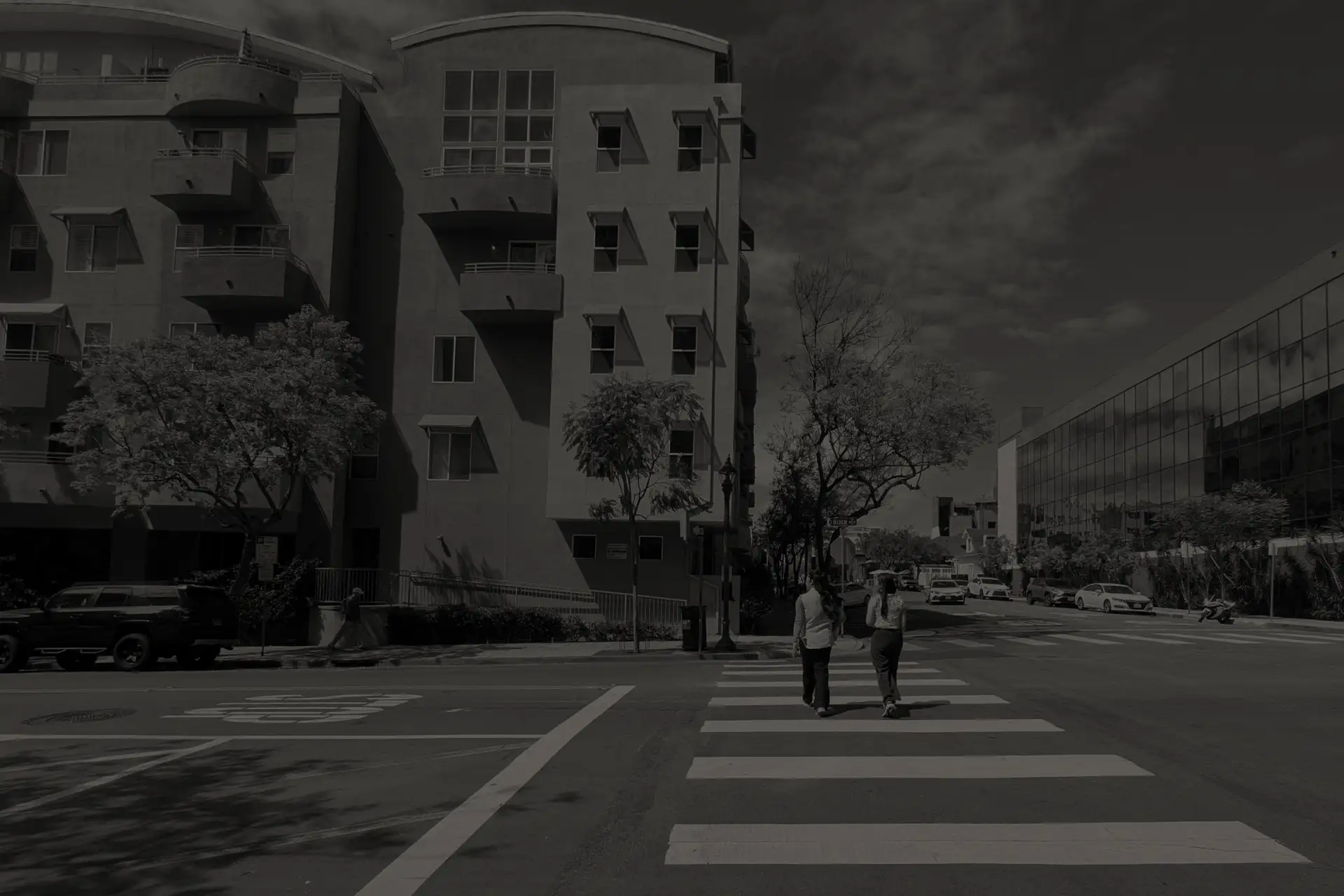
Pedestrian accidents in San Diego can result in serious injuries, costly medical bills, and long-term physical and financial challenges. At Hulburt Law Firm, our experienced San Diego lawyers help victims navigate insurance claims, hold negligent drivers or responsible parties accountable, and pursue maximum compensation for medical expenses, lost wages, and ongoing care.
Whether you’ve been injured in a crosswalk collision, hit-and-run incident, or accident caused by dangerous sidewalks or roadways, our team provides dedicated legal guidance to ensure you receive the justice and support you deserve.
Injured in a San Diego pedestrian accident? Get help today.

After a pedestrian accident in San Diego, you may feel overwhelmed, frightened, and uncertain about how to move forward. Coping with serious injuries, mounting medical expenses, and insurance companies disputing liability can create significant emotional and financial strain.
Hulburt Law Firm helps pedestrian accident victims navigate this challenging process, providing compassionate guidance, protecting your rights, and pursuing maximum compensation for medical treatment, lost income, and long-term recovery.
Pedestrian accidents in San Diego often occur at crosswalks and intersections when drivers fail to yield the right-of-way. These collisions can result in severe injuries, including fractures and traumatic brain injuries. Hulburt Law Firm helps victims pursue compensation for medical expenses, lost wages, and long-term rehabilitation.
Pedestrians struck mid-block or outside designated crosswalks in San Diego face serious risks of injury. Hulburt Law Firm provides legal guidance to hold negligent drivers accountable while pursuing maximum compensation for hospital bills, lost income, and ongoing care.
Accidents involving vehicles turning, entering driveways, or navigating parking lots can cause catastrophic injuries to pedestrians in San Diego. Hulburt Law Firm works with injured victims to secure compensation for medical treatment, pain and suffering, and rehabilitation.
Hit-and-run pedestrian accidents in San Diego often leave victims facing serious injuries and financial strain. Hulburt Law Firm helps navigate insurance claims and legal options to pursue full compensation when at-fault drivers flee the scene.
Pedestrian injuries caused by intoxicated, drug-impaired, or distracted drivers in San Diego can have devastating long-term effects. Hulburt Law Firm assists victims in holding negligent drivers accountable and obtaining compensation for medical bills, lost wages, and ongoing recovery needs.
Pedestrian accidents caused by hazardous streets, poorly maintained sidewalks, or unsafe crosswalks can lead to catastrophic injuries in San Diego. Hulburt Law Firm helps victims pursue claims against responsible parties, including municipalities, to recover compensation for medical care, lost income, and long-term impacts.
Conor and Leslie Hulburt, founders of the Hulburt Law Firm, are dedicated San Diego pedestrian accident lawyers with extensive experience helping clients recover maximum compensation after serious or catastrophic injuries. They understand the physical, emotional, and financial challenges victims face following pedestrian accidents, and are committed to guiding clients through every step of the legal process.
Known for their genuine care, dedication, and strategic advocacy, Conor and Leslie have built a reputation as trusted personal injury attorneys in San Diego, providing top-tier representation for pedestrian accident victims and ensuring justice is served.

Our experienced attorneys have a proven track record of achieving extraordinary results in pedestrian accident cases.
Jury verdict against Caltrans for a 13-year-old boy who was hit by a car while using a dangerous crosswalk.
A sudden tire failure caused an SUV to fishtail and crash into a tree on the side of a San Diego County highway, killing a beloved husband and father.
A massive, improperly installed gate collapsed on a sub-contracted worker who was asked by the general contractor to paint it, causing his tragic death.
A concrete block wall wasn't properly supported and fell on a construction worker in El Cajon, killing him.
A San Diego tour bus struck a man while he was crossing N. Harbor Drive in a marked crosswalk, causing serious injuries.
A San Diego tour bus struck and killed a woman while she was lawfully using the crosswalk in Mission Hills.
Forget surface-level research and mediocre inquiries. We dive deep to conduct extensive investigations and gather evidence in order to build your strongest case.
We use technology to your advantage. By using video and photography, scene recreations, and graphics, we tell your story in a visually-compelling way that other law firms cannot match.
Defense attorneys and insurance companies know us and respect us. We assess the full extent of your damages and pursue all responsible parties in order to maximize the compensation you deserve.
Catastrophic injury and wrongful death cases are rarely simple. We have taken on the largest corporations, insurance companies, and defense firms in the country and won.
We don’t just talk the talk, we walk the walk. From providing regular case updates to achieving life-changing results, we genuinely care about each and every one of our clients.
Throughout the process, we keep you informed, answer any questions you may have, and provide ongoing support. We limit the number of cases we take on so that we can dedicate the time and attention needed for each case.
With the Hulburt Law Firm by your side, you can focus on your recovery while knowing that your legal claims are being taken care of. If you or a loved one has been involved in a pedestrian accident, contact us today for a free case review.
Understand and manage the complexities of your case with an expert legal team on your side.
Our legal team collects crucial evidence to present a compelling case.
We handle negotiations with insurance companies and opposing parties in order to achieve the highest settlements possible.
Our experienced attorneys provide skilled representation if your case goes to trial.
During your free case review, we talk through where and how you were hit—whether in a crosswalk, at an intersection, along the shoulder, in a parking lot, or on a sidewalk—and what injuries you’re dealing with. We review any information you already have, such as police reports, photos, medical records, or insurance letters, and give an honest assessment of whether a pedestrian accident claim makes sense under California law. The conversation is confidential and there’s no obligation to move forward.
If you decide to work with us and the scope of representation is signed, we begin a focused investigation into the crash. That can include visiting and photographing the scene, documenting sight lines and lighting, obtaining police or CHP reports, and interviewing witnesses and first responders. We also move quickly to locate and preserve any traffic-camera, dash-cam, business-camera, or home-camera footage before it’s overwritten, as well as data from the vehicle if available.
Next, we bring in the right experts for your case. In pedestrian matters, that often includes accident reconstructionists who can analyze vehicle speed, stopping distance, and where in the roadway the impact occurred, as well as medical specialists, life-care planners, and economists. Together, they help us explain how and why the collision happened, the full extent of your injuries, and what you’re likely to face in terms of future treatment, work limitations, and daily life changes.
Pedestrian crashes often involve more than just a driver and a single insurance policy. We identify all potentially responsible parties—such as the driver, a vehicle owner, an employer if the driver was working, a rideshare or delivery company, or, in some cases, a public entity responsible for a dangerous crosswalk or roadway. At the same time, we review all available insurance coverage, including the at-fault driver’s liability policy and your own uninsured/underinsured motorist (UM/UIM) coverage, to help ensure no potential source of recovery is overlooked.
Using the evidence and expert input, we build a clear picture of what the collision has taken from you—medical expenses, lost income, future care needs, pain, limitations, and the impact on your daily activities and relationships. We then handle communications and negotiations with the insurance companies and defense lawyers so you don’t have to. We push back when insurers try to blame you for simply walking outside a crosswalk, “coming out of nowhere,” or wearing certain clothing, and we keep you updated on all offers and options throughout the process.
If the insurance companies are not willing to resolve your case fairly, we are prepared to file a lawsuit and, if necessary, take your case to trial. Litigation can involve written discovery, depositions of the driver, witnesses, company representatives, and experts, and motion practice. At trial, we work to tell your story—using crosswalk and right-of-way laws, scene diagrams, photos, video, medical testimony, and your own testimony—to show how the crash happened, why the defendants are responsible, and what the incident has meant for you and your family.
California pedestrian accident cases are governed by general personal-injury rules—fault, negligence, damages, and strict deadlines—as well as specific right-of-way and government-claim rules. Here is a brief overview of how the law treats pedestrians in crosswalks and on or near the roadway.
California law gives pedestrians strong protections, especially at intersections and crosswalks:
In practical terms, that means:
Key California Vehicle Code sections that protect pedestrians include rules requiring drivers to yield in marked and unmarked crosswalks, use due care to avoid hitting pedestrians, obey speed limits, and exercise extra caution around children, seniors, and people using canes or wheelchairs.
California is an at-fault state. In most pedestrian accident cases, the person or entity whose negligence caused the collision is legally responsible for the harm. Negligence can include:
California also follows pure comparative negligence. That means a pedestrian can usually seek compensation even if they are found partly at fault for the crash. Any award is reduced by their percentage of fault—for example, someone found 25% at fault could still recover 75% of their damages.
Insurance companies often rely heavily on comparative negligence arguments in pedestrian cases—claiming the person “came out of nowhere,” wore dark clothing, or was outside a crosswalk—to reduce what they pay. Careful investigation and evidence (photos, video, witness statements, reconstruction) can be critical to a fair assessment of fault.
Responsibility for a pedestrian crash often extends beyond just the individual driver. Depending on the facts, potentially liable parties can include:
Identifying all potentially responsible parties and insurance policies is a key part of many serious pedestrian cases.
The compensation available depends on the injuries, their impact on the person’s life, and the strength of the liability evidence. In many pedestrian cases, recoverable damages include:
Economic damages
Non-economic damages
If the collision results in death, surviving family members may bring wrongful death and related survival claims, which have their own rules about who may file and what can be recovered. In rare cases involving especially egregious conduct—like extreme recklessness or intentional harm—punitive damages may be available under California law, but they are the exception, not the rule.
Many pedestrian crashes are preventable and stem from one or more unsafe choices or conditions, such as:
A thorough investigation looks not only at what the pedestrian did, but also at driver behavior, roadway design, and environmental conditions.
California law sets strict statutes of limitations—deadlines for filing lawsuits. Missing a deadline usually means losing the right to pursue the claim in court.
In many pedestrian accident cases:
If a government entity (such as a city or county responsible for a crosswalk, roadway, or sidewalk) may be at fault, additional rules under the Government Claims Act apply:
There are limited exceptions (for example, involving minors or certain delayed-discovery situations), but these rules are technical and strictly enforced. Because of this, people injured in pedestrian crashes in or around San Diego are usually well-served by speaking with an attorney as soon as reasonably possible to determine which deadlines apply in their situation.
Your safety comes first. If you can, move out of traffic, call 911, and accept medical care at the scene. Even if you feel “okay,” consider getting checked by a doctor soon after—some serious injuries (including head, spine, and internal injuries) don’t show symptoms right away.
If you’re able, try to:
Before giving a detailed recorded statement or signing anything for an insurer, it can be helpful to talk with a pedestrian accident attorney about your rights and options.
You may have a claim if someone else’s carelessness was a substantial factor in causing the collision and your injuries. Examples include a driver who:
If you needed medical treatment, missed work, or your daily life has been disrupted, those are signs it may be worth exploring a case.
You’re not required to hire a lawyer, but serious pedestrian crashes often involve complex questions about right of way, comparative fault, insurance coverage, and (sometimes) claims against public entities. A lawyer can investigate the crash, preserve video and other evidence, deal with insurers, and explain your options so you can focus on healing.
Useful evidence often includes:
In pedestrian cases, details like lighting, sight lines, signal timing, and vehicle stopping distance can be important. Because video and other evidence can be overwritten or lost quickly, it’s important to act promptly to preserve it.
The most obvious defendant is usually the driver, but responsibility can extend beyond a single person. Depending on the facts, potentially responsible parties may include:
Identifying all potentially liable parties and insurance policies is a key step in many serious pedestrian cases.
The compensation available depends on your injuries, how the crash happened, and what insurance is available. In many pedestrian cases, injured people may pursue:
Economic damages
Non-economic damages
If a loved one is killed, surviving family members may have wrongful death and related survival claims, which have their own rules and categories of damages. In rare cases involving especially egregious conduct, punitive damages may also be available under California law.
Possibly. Being outside a marked crosswalk—or crossing mid-block—doesn’t automatically prevent you from bringing a claim. California uses comparative negligence, which means fault can be shared between the pedestrian and the driver.
A court or jury will look at things like:
Even if you’re found partly at fault, you may still recover compensation, reduced by your percentage of responsibility.
Often, yes. Under California’s pure comparative negligence system, you can usually pursue compensation even if you share some responsibility for the collision. Any recovery is reduced by your percentage of fault.
For example, if your total damages are valued at $200,000 and you’re found 25% at fault, your potential recovery could be reduced to $150,000. Insurance companies may try to place more blame on pedestrians to minimize what they pay, so careful investigation and advocacy can be important.
If the at-fault driver has no insurance, very little insurance, or flees the scene, it doesn’t necessarily mean you’re out of options. Depending on the circumstances, it may be possible to:
UM/UIM coverage under your auto policy can sometimes help cover your injuries even though you were walking at the time. A lawyer can review the policies involved and help identify all potential sources of recovery.
Most premises and auto injury cases do not result in immediate payments of medical bills while the case is ongoing. Instead, bills may be paid by:
At the end of the case, some insurers and lien-based providers may assert a right to be reimbursed from your recovery. Handling and, when possible, negotiating these liens is an important part of many pedestrian accident cases.
California law sets strict statutes of limitations—deadlines for filing lawsuits. In many pedestrian accident cases:
If a government entity (such as a city or county responsible for a crosswalk, roadway, or sidewalk) may be at fault, shorter deadlines apply. In those situations, a written government claim often must be filed within six months of the incident, with additional deadlines after the claim is accepted or rejected.
Because missing a deadline can completely bar a claim, it’s wise to get legal advice as soon as reasonably possible after a serious pedestrian accident.
California drivers are required to carry minimum liability insurance. As of recent changes in the law, the basic minimum auto liability limits are:
These are minimum legal limits, not caps on what an injured person may claim. Many drivers carry only the minimum; others carry higher limits or umbrella coverage. In serious pedestrian cases, it’s important to identify all potentially applicable policies, including the driver’s coverage, any employer or commercial policies, and your own UM/UIM coverage.
Every case is different, but many follow a similar general path:
Some cases resolve within several months once your medical picture is clearer and liability is reasonably established. Others—especially those involving serious injuries, multiple defendants, or public entities—can take longer and may require going to court. A lawyer can give you a more tailored sense of timing after learning the details of your situation.
Because pedestrians have little protection against a moving vehicle, injuries are often serious and can affect multiple parts of the body. Even at lower speeds, being struck by a car, truck, or bus can lead to long-term medical issues and time away from work.
Common injuries in pedestrian accidents include:
Because some injuries are not immediately apparent, it’s important to get checked by a medical professional after a pedestrian accident, even if you feel only “shaken up” at first.
Losing a family member because a driver or another party failed to act safely is devastating, and it’s completely normal to feel overwhelmed and unsure where to start. In California, certain family members may be able to bring wrongful death and related survival claims after a fatal pedestrian crash.
A wrongful death claim focuses on the harm to the family. It can seek compensation for things like the loss of your loved one’s financial support, the value of household services they provided, and the loss of their love, companionship, guidance, and care, as well as funeral and burial expenses. A related survival claim is brought on behalf of your loved one’s estate for harms they personally suffered before death, which may include medical bills, property damage, and, under current law, pre-death pain and suffering and, in some cases, punitive damages.
These cases can be legally complex—especially when multiple drivers, employers, public entities (for dangerous crosswalks or roadways), or vehicle manufacturers are involved—and they also have strict deadlines that can be shorter when a government entity is part of the case. A wrongful death attorney experienced with pedestrian cases can help your family understand who may be able to file, what types of claims may be available, and what the process is likely to look like, so you don’t have to navigate it alone.
Hulburt Law Firm proudly serves pedestrian accident victims throughout San Diego County, providing experienced legal guidance, compassionate support, and aggressive advocacy to help clients recover maximum compensation for injuries, medical expenses, lost wages, and long-term impacts.

Simply fill out the form or call 619.821.0500 to receive a free case review. We’ll evaluate what happened, your injuries, and potential defendants to determine how we can best help you.