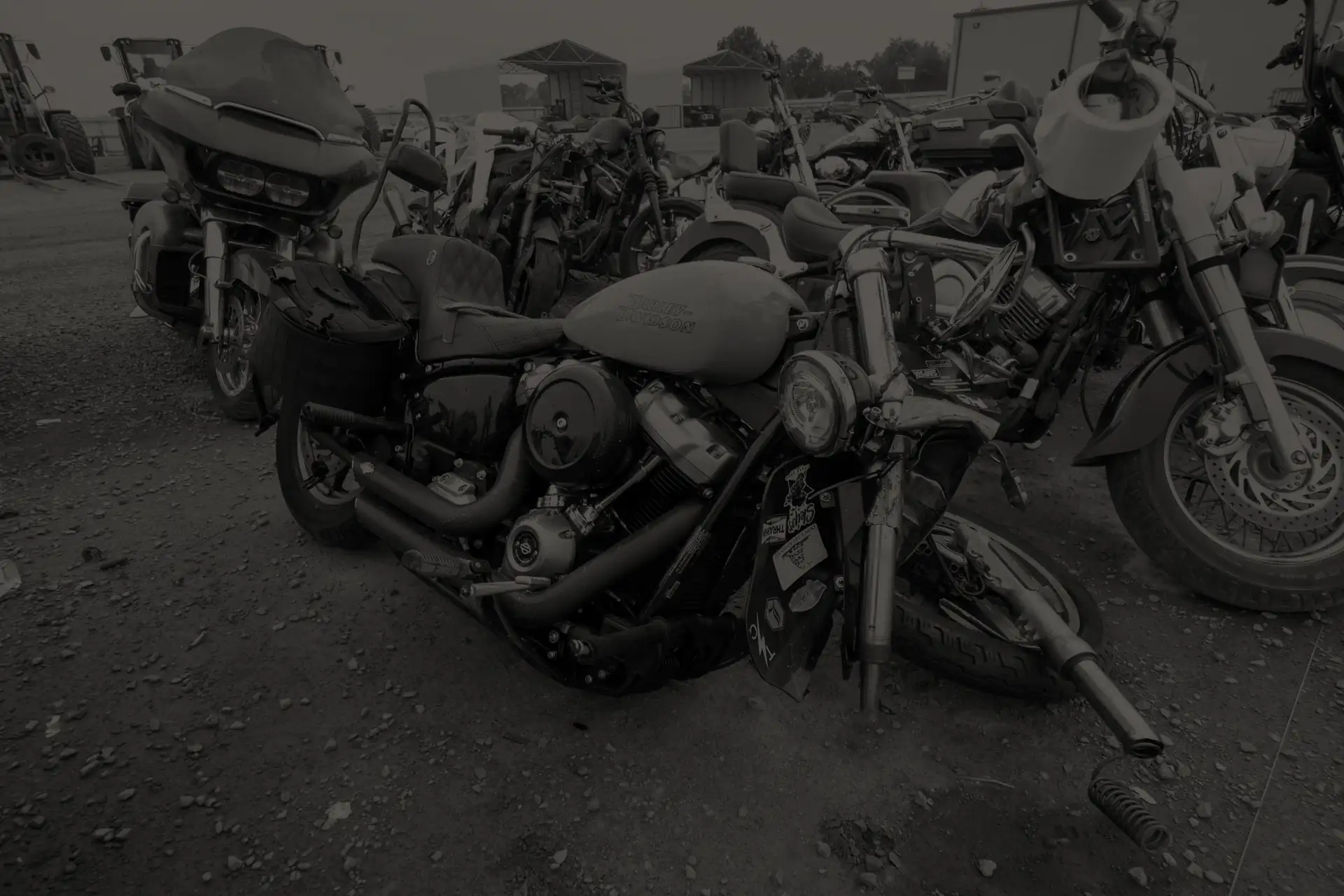
A serious motorcycle accident can change a rider’s life in an instant. Because riders have little protection from the force of a collision, these crashes often cause severe fractures, brain and spinal injuries, permanent disability, or death.
Hulburt Law Firm represents riders and families after serious and fatal motorcycle crashes throughout San Diego County. We investigate what happened, preserve key evidence, identify all responsible parties and insurance coverage, and work to show the full impact of the crash.
Injured in a San Diego motorcycle accident? Get help today.

Motorcycle crashes can happen in many different ways, and the type of collision often affects how the case should be investigated. Important issues may include the driver’s visibility, lane position, vehicle speed, turning movement, roadway condition, traffic video, motorcycle damage, and whether the rider was unfairly blamed.
Hulburt Law Firm represents riders and families after serious motorcycle crashes throughout San Diego County, including the types of cases listed here.
Many serious motorcycle crashes happen when a driver turns left across an oncoming rider’s path, enters an intersection without yielding, or misjudges the motorcycle’s speed and distance.
These cases often require careful review of sight lines, vehicle speed, signal timing, turn movements, witness accounts, video evidence, and the positions of the motorcycle and other vehicles before impact.
Motorcycle crashes often happen when a driver changes lanes without checking mirrors or blind spots, drifts across a lane line, or moves suddenly into a rider’s path. These collisions are especially common in congested freeway traffic.
Lane splitting is legal in California when done safely. The fact that a rider was traveling between lanes does not make the rider responsible for a crash. Important evidence may include traffic speed, lane position, turn signals, vehicle movement, witness accounts, video, and whether the driver looked before changing lanes.
A rear-end collision that causes minor vehicle damage can throw a motorcyclist from the bike and cause severe injuries. These crashes may happen when a driver follows too closely, looks away from traffic, fails to brake in time, or does not recognize that a motorcycle has slowed or stopped ahead.
Some cases also involve sudden stops caused by unsafe traffic movements, roadway hazards, or another vehicle entering the rider’s path. Important evidence may include following distance, braking, vehicle speed, traffic conditions, roadway marks, video, witness accounts, and damage to the motorcycle and other vehicles.
Alcohol, drugs, and distraction can impair a driver’s ability to see a motorcycle, judge its speed and distance, stay within a lane, respond to traffic, or yield before turning. Because motorcycles are smaller and less protected than passenger vehicles, even a brief lapse in attention can cause catastrophic injuries.
Important evidence may include phone records, video, witness accounts, vehicle data, braking and steering movements, field sobriety testing, toxicology results, bar or restaurant records, and the driver’s actions before and after the crash.
A motorcycle crash does not have to involve contact with another vehicle for someone else to be responsible. A driver may force a rider to brake, swerve, or leave the roadway, while potholes, loose gravel, uneven pavement, debris, poor lighting, unsafe construction zones, or missing warnings can cause a rider to lose control.
These cases require careful investigation of the roadway and the events leading up to the crash. Important evidence may include scene photographs, pavement conditions, skid or scrape marks, witness accounts, video, prior complaints, maintenance records, construction plans, and whether a driver, contractor, property owner, or public entity created or failed to correct the hazard.
A defective motorcycle, tire, brake system, steering component, helmet, or other safety equipment can cause a crash or make the resulting injuries more severe. In some cases, the defect may involve the motorcycle itself; in others, it may involve another vehicle that lost control because of a tire, brake, or mechanical failure.
These cases often require preserving the motorcycle, vehicles, helmet, and damaged components before they are repaired, altered, or destroyed. Important evidence may include inspection findings, maintenance history, recalls, design documents, prior similar incidents, and expert testing.
Motorcycle accident cases often involve severe injuries, disputed fault, insurance coverage issues, and unfair assumptions about riders. Hulburt Law Firm is intentionally selective about the cases it accepts so each client receives focused attention, careful preparation, and direct communication throughout the case.
Conor leads the firm’s legal strategy and litigation with a focus on bringing the truth to light. He has recovered more than $150 million for clients in serious injury and wrongful death cases and has taken on major corporations, insurance companies, public entities, and national defense firms, including a $28.16 million jury verdict against Caltrans.
Leslie is committed to finding justice for people and families affected by serious injuries. She brings extensive litigation, mediation, and trial experience, and her background in journalism and elementary school education gives her a unique ability to uncover the truth, organize complex facts, and explain them clearly and persuasively.

Our experienced attorneys have a proven track record of achieving extraordinary results in motor vehicle accident cases.
Jury verdict against Caltrans for a 13-year-old boy who was hit by a car while using a dangerous crosswalk.
A sudden tire failure caused an SUV to fishtail and crash into a tree on the side of a San Diego County highway, killing a beloved husband and father.
An event producer’s negligence led to a participant’s death in a vehicle collision.
A defective airplane engine ignition component caused a deadly crash in San Diego.
A dump truck driver failed to "get out and look" before backing up into a construction worker, crushing his leg against a bulldozer.
A careless driver swerved into a motorcycle on the I-8 freeway in San Diego, causing him to crash and suffer serious injuries.
During your free case review, we listen to what happened, what injuries you are facing, and what questions you have. We review any information already available, such as police reports, photographs, medical records, helmet-camera footage, and insurance letters, and give you an honest assessment of whether a motorcycle accident claim may make sense under California law.
We move quickly to investigate the crash and preserve key evidence. That may include documenting the scene, motorcycle, vehicles, helmet, and riding gear; obtaining police or CHP reports; interviewing witnesses; and preserving traffic-camera, dash-camera, security, or helmet-camera footage. Early investigation matters because video can be erased, vehicles can be repaired or destroyed, roadway conditions can change, and physical evidence can disappear.
Next, we investigate how and why the crash happened. Depending on the case, we may work with accident reconstructionists, motorcycle safety experts, roadway experts, medical specialists, life-care planners, economists, and other professionals. Their work can help explain issues such as visibility, speed, braking, lane position, lane splitting, roadway conditions, the extent of the injuries, and the rider’s future needs.
Motorcycle crashes may involve more than one responsible party or insurance policy. We evaluate the conduct of drivers, employers, vehicle owners, public entities, contractors, manufacturers, and others who may have contributed to the crash. We also identify all potentially available insurance coverage, including liability, commercial, umbrella, uninsured or underinsured motorist, and other applicable policies.
Once the evidence has been developed, we present how the crash happened and document its full impact, including medical care, lost income, pain, physical limitations, and changes to daily life. We handle communications with insurance companies and defense lawyers, challenge efforts to unfairly blame the rider, keep you informed about offers, and help you evaluate whether a proposed settlement is fair.
If the responsible parties and insurers are unwilling to resolve the case fairly, we are prepared to file a lawsuit. Litigation may involve written discovery, depositions, expert work, motions, mediation, and trial preparation. At trial, we use testimony, documents, expert analysis, physical evidence, and visual presentations to clearly show how the crash happened, why the defendant is responsible, and how the collision affected the rider and family.
California motorcycle accident cases may involve driver negligence, comparative fault, helmet and lane-splitting issues, insurance coverage, damages, and strict filing deadlines. The overview below explains some of the legal issues that may matter after a serious motorcycle accident in San Diego.
The person or entity whose negligence caused a motorcycle crash may be responsible for the resulting injuries and losses. Negligence may include failing to yield, making an unsafe turn or lane change, speeding, following too closely, distracted driving, impairment, or creating a dangerous roadway condition.
California follows a comparative fault system, which means responsibility may be divided among more than one person or entity. An injured rider may still have a claim even if the defense argues that the rider contributed to the crash, although any recovery may be reduced by the rider’s percentage of fault.
Because insurers sometimes rely on stereotypes about motorcyclists, fault should be determined from the evidence, including video, witness accounts, vehicle damage, roadway marks, speed, lane position, visibility, and the movements of everyone involved.
California law requires motorcycle operators and passengers to wear a compliant safety helmet while riding on public roads.
Not wearing a helmet does not automatically prevent an injured rider from bringing a claim. The issue is whether the lack of a helmet caused or worsened a particular injury. For example, helmet use may be relevant to a head or facial injury, but it generally would not explain why another driver caused the collision or affect unrelated injuries such as a broken leg.
When a rider was wearing a helmet, photographs and preservation of the helmet may help document the force and severity of the impact.
California motorcyclists must maintain liability insurance. For policies issued or renewed on or after January 1, 2025, the minimum limits are:
These are minimum requirements, not limits on the damages an injured rider may claim. Because motorcycle crashes often cause serious injuries, a minimum policy may not come close to covering the rider’s medical care, lost income, and long-term losses.
That makes it important to identify every potentially available source of insurance, including the at-fault driver’s liability policy, employer or commercial coverage, umbrella policies, and the rider’s own uninsured or underinsured motorist coverage. Medical payments coverage may also help with some early medical expenses.
The compensation available after a motorcycle crash depends on the injuries, the long-term effects of the collision, and the insurance coverage or other sources of recovery available.
In a serious motorcycle accident case, damages may include emergency care, hospitalization, surgery, rehabilitation, future medical treatment, lost income, reduced earning capacity, pain, physical limitations, emotional distress, loss of enjoyment of life, and damage to the motorcycle, helmet, riding gear, and other property.
When a crash causes permanent disability, brain injury, spinal injury, severe fractures, or wrongful death, it is important to understand both the immediate losses and the future impact on the rider and family. That may require input from doctors, life-care planners, economists, vocational experts, family members, and others who can help explain the full effect of the crash.
California motorcycle accident cases are subject to strict deadlines. In many personal injury cases, the general statute of limitations is two years from the date of the crash. Wrongful death claims are also generally subject to a two-year deadline, while claims involving only property damage may have a longer filing period.
Shorter deadlines may apply when a city, county, Caltrans, or another public entity may be responsible for a dangerous road condition, poor maintenance, missing signs, or unsafe construction work. These cases often require a written government claim within six months before a lawsuit may be filed.
Motorcycle cases also have practical evidence deadlines. Video may be erased, vehicles and motorcycles may be repaired or destroyed, roadway conditions may change, and witness memories may fade. Early investigation can help protect both the legal claim and the evidence needed to prove what happened.
We investigate the crash scene, motorcycle and vehicle damage, witnesses, video, roadway conditions, insurance coverage, and other key evidence.
Motorcycle cases often involve digital evidence, expert analysis, and visual presentation. We use technology to make complex crash evidence clear.
Defense attorneys and insurance companies know us and respect us. We assess the full extent of your damages and pursue all responsible parties.
Hulburt Law Firm focuses on serious injury and wrongful death cases involving motorcycle crashes, dangerous roads, commercial vehicles, vehicle defects, and catastrophic injuries.
A serious motorcycle crash can overwhelm a rider or family. We keep clients informed, prepare carefully, and take the time to understand how the crash has affected their health, work, family, and future.
Get medical care first. If you are able, report the crash, photograph the scene, motorcycle, vehicles, riding gear, injuries, roadway conditions, and any skid or scrape marks. Get witness information and preserve any helmet-camera or GoPro footage.
Avoid repairing or disposing of the motorcycle, helmet, or riding gear before they can be documented. You should also be cautious about giving a detailed recorded statement to an insurance company before you understand your rights.
You may have a claim if another driver, company, public entity, manufacturer, or other party acted negligently and contributed to the crash and your injuries. Examples include an unsafe left turn or lane change, distracted or impaired driving, a dangerous road condition, or a defective vehicle component.
You are not required to hire a lawyer, but serious motorcycle cases often involve disputed fault, severe injuries, limited insurance, and unfair assumptions about riders. An attorney can preserve evidence, investigate responsibility, identify available coverage, and handle the insurance and legal issues while you focus on recovery.
Important evidence may include photographs and video of the scene, motorcycle and vehicle damage, roadway marks, riding gear, witness statements, police or CHP reports, medical records, and insurance information.
Motorcycle cases may also involve helmet-camera or GoPro footage, traffic or security video, electronic vehicle data, phone records, roadway evidence, and expert analysis. Because video can be erased and vehicles or gear can be repaired or destroyed, preserving evidence early is especially important.
Responsibility may extend beyond the driver who caused the crash. Depending on the facts, potentially responsible parties may include the driver, the driver’s employer, the vehicle owner, a rideshare or delivery company, a public entity responsible for a dangerous roadway, a construction contractor, or a manufacturer of a defective vehicle or component.
Identifying every responsible party is especially important in serious motorcycle cases because more than one insurance policy or source of recovery may apply.
The compensation available depends on the injuries, the long-term effects of the crash, and the insurance or other sources of recovery available.
In a serious motorcycle accident case, damages may include medical expenses, future care, lost income, reduced earning capacity, pain, physical limitations, emotional distress, loss of enjoyment of life, and damage to the motorcycle, helmet, riding gear, and other property.
If the crash causes permanent disability or death, additional claims may be available for the rider’s future losses or the losses suffered by surviving family members.
Yes. California permits motorcyclists to travel between rows of stopped or moving vehicles, commonly known as lane splitting. Riders must still operate safely and account for traffic speed, spacing, visibility, and surrounding vehicle movements.
Lane splitting does not automatically make a rider responsible for a crash. Fault depends on the specific circumstances, including the rider’s speed and lane position, traffic conditions, and whether another driver changed lanes, opened a door, or otherwise moved into the motorcycle’s path.
You may still have coverage through your own uninsured or underinsured motorist policy. UM coverage may apply when the at-fault driver has no insurance or cannot be identified, while UIM coverage may apply when the driver’s limits are not enough to cover the rider’s injuries.
Other potential coverage may come from a household auto policy, the driver’s employer, a commercial or rideshare policy, an umbrella policy, or another responsible party. Serious motorcycle cases should be investigated carefully before assuming the first disclosed policy is the only available source of recovery.
Often, yes. California follows a comparative fault system, which means an injured rider may still recover compensation even if they share some responsibility for the crash. Any recovery may be reduced by the rider’s percentage of fault.
Insurance companies sometimes try to place extra blame on motorcyclists based on speed, lane position, lane splitting, or stereotypes about riders. Fault should be evaluated from the evidence, including video, witness accounts, vehicle damage, roadway marks, visibility, and the movements of everyone involved.
Certain surviving family members may have a wrongful death claim when another person, company, public entity, or manufacturer caused a fatal motorcycle crash. A claim may seek compensation for the loss of the person’s financial support, household services, love, companionship, care, and guidance.
The estate may also have a separate survival claim for losses the rider sustained before death. Because fatal motorcycle cases often require prompt investigation and careful coordination with the family, it is important to preserve evidence and identify all responsible parties and insurance coverage as early as possible.
Motorcycle accident cases are handled on a contingency fee basis. That means there is no attorney fee unless we recover compensation for you.
The initial case review is free, and we explain the fee agreement and case expenses before you decide whether to move forward.
Motorcycle crashes happen throughout San Diego County, from congested freeways and urban intersections to coastal highways, mountain roads, and neighborhood streets.
Hulburt Law Firm represents riders and families after serious motorcycle accidents across San Diego County, including San Diego, Chula Vista, National City, La Mesa, El Cajon, Santee, Poway, Escondido, Oceanside, Carlsbad, Encinitas, and surrounding communities.

Simply fill out the form or call 619.821.0500 to receive a free case review. We’ll evaluate what happened, your injuries, and potential defendants to determine how we can best help you.