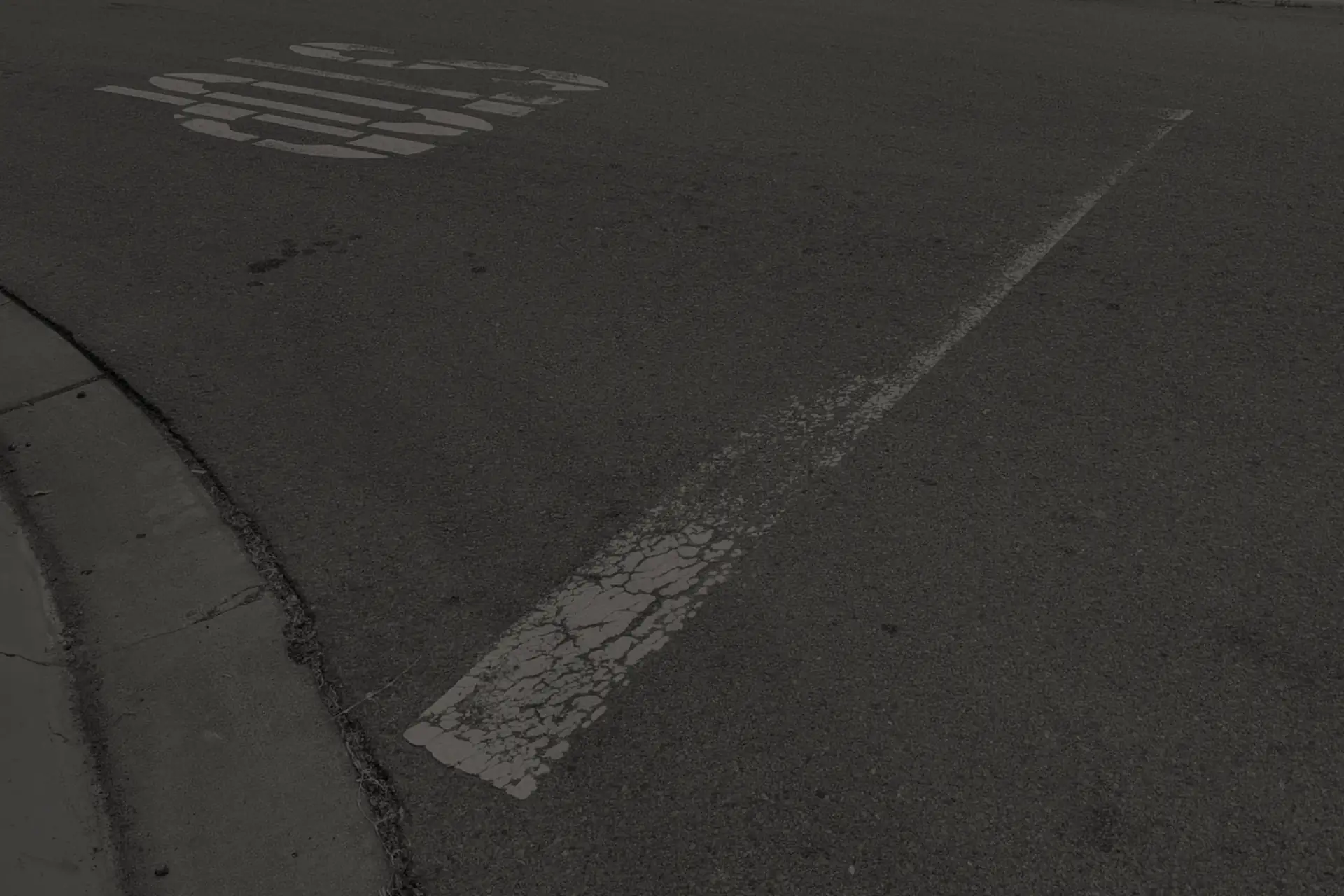
Dangerous roadways and unsafe crosswalks in San Diego—including poorly maintained streets, potholes, missing signage, and obstructed pedestrian paths—can lead to serious accidents and catastrophic injuries. At Hulburt Law Firm, our experienced San Diego personal injury lawyers help victims hold municipalities, property owners, and negligent drivers accountable while pursuing maximum compensation for medical expenses, lost wages, and long-term recovery.
Whether the accident involves a car, truck, motorcycle, bicycle, or pedestrian, our team provides dedicated legal guidance to ensure your rights are protected and justice is served.
Injured as a result of a dangerous roadway in San Diego? Get help today.

After an accident caused by dangerous road conditions or an unsafe crosswalk in San Diego, you may feel stressed, overwhelmed, and uncertain about your next steps. Coping with serious injuries, mounting medical bills, and insurance disputes can create significant emotional and financial strain.
Hulburt Law Firm helps victims navigate this complex process, providing compassionate guidance, protecting your rights, and pursuing maximum compensation to cover medical care, lost income, and long-term recovery needs.
Dangerous intersections and crosswalks in San Diego—caused by poor design, inadequate signals, or obstructed pedestrian paths—can lead to serious accidents and catastrophic injuries. Hulburt Law Firm helps victims hold municipalities, drivers, and responsible parties accountable while pursuing maximum compensation for medical expenses, lost wages, and long-term recovery.
Defective highway or freeway design and poor maintenance in San Diego—including potholes, lane misalignment, or guardrail failures—can cause severe crashes. Hulburt Law Firm assists victims in pursuing claims against responsible entities to recover compensation for medical care, lost income, and ongoing treatment.
Accidents caused by vehicles leaving the roadway due to edge drop-offs, shoulder failures, or poor road conditions in San Diego can result in catastrophic injuries. Hulburt Law Firm helps victims pursue claims against negligent municipalities or other responsible parties while seeking maximum compensation for medical expenses, lost wages, and long-term recovery.
Overgrown vegetation or obstructed visibility on San Diego roads can contribute to serious crashes involving cars, motorcycles, bicycles, and pedestrians. Hulburt Law Firm helps victims hold responsible parties accountable while pursuing compensation for medical care, lost income, and long-term impacts.
Poor or missing signage, malfunctioning traffic signals, and inadequate traffic control in San Diego can create hazardous conditions for drivers and pedestrians. Hulburt Law Firm assists victims in seeking legal recourse to recover damages for injuries, medical bills, and lost wages.
Unsafe construction zones or improperly maintained work areas in San Diego can lead to serious accidents, including collisions with vehicles, pedestrians, and cyclists. Hulburt Law Firm helps victims pursue compensation from contractors, municipalities, or other responsible parties for medical expenses, lost income, and long-term care.
Accidents in San Diego caused by a combination of dangerous road conditions and negligent drivers can be complex, but victims still have options to recover compensation. Hulburt Law Firm provides expert guidance to hold all responsible parties accountable while seeking full damages for injuries, medical costs, and lost wages.
Conor and Leslie Hulburt, founders of the Hulburt Law Firm, are dedicated San Diego dangerous roadway conditions lawyers with extensive experience helping clients recover maximum compensation after serious or catastrophic injuries. They understand the physical, emotional, and financial challenges victims face following dangerous roadway accidents, and are committed to guiding clients through every step of the legal process.
Known for their genuine care, dedication, and strategic advocacy, Conor and Leslie have built a reputation as trusted personal injury attorneys in San Diego, providing top-tier representation for dangerous roadway conditions victims and ensuring justice is served.

Our experienced attorneys have a proven track record of achieving extraordinary results in dangerous roadway cases.
Jury verdict against Caltrans for a 13-year-old boy who was hit by a car while using a dangerous crosswalk.
A sudden tire failure caused an SUV to fishtail and crash into a tree on the side of a San Diego County highway, killing a beloved husband and father.
A massive, improperly installed gate collapsed on a sub-contracted worker who was asked by the general contractor to paint it, causing his tragic death.
A concrete block wall wasn't properly supported and fell on a construction worker in El Cajon, killing him.
An event producer’s negligence led to a participant’s death in a vehicle collision.
A defective airplane engine ignition component caused a deadly crash in San Diego.
Forget surface-level research and mediocre inquiries. We dive deep to conduct extensive investigations and gather evidence in order to build your strongest case.
We use technology to your advantage. By using video and photography, scene recreations, and graphics, we tell your story in a visually-compelling way that other law firms cannot match.
Defense attorneys and insurance companies know us and respect us. We assess the full extent of your damages and pursue all responsible parties in order to maximize the compensation you deserve.
Catastrophic injury and wrongful death cases are rarely simple. We have taken on the largest corporations, insurance companies, and defense firms in the country and won.
We don’t just talk the talk, we walk the walk. From providing regular case updates to achieving life-changing results, we genuinely care about each and every one of our clients.
Throughout the process, we keep you informed, answer any questions you may have, and provide ongoing support. We limit the number of cases we take on so that we can dedicate the time and attention needed for each case.
With the Hulburt Law Firm by your side, you can focus on your recovery while knowing that your legal claims are being taken care of. If you or a loved one has been involved in a dangerous roadway accident, contact us today for a free case review.
Understand and manage the complexities of your case with an expert legal team on your side.
Our legal team collects crucial evidence to present a compelling case.
We handle negotiations with insurance companies and opposing parties in order to achieve the highest settlements possible.
Our experienced attorneys provide skilled representation if your case goes to trial.
During your free case review, we talk through where the crash happened, how it occurred, and what injuries you’re dealing with. We’ll ask questions about the roadway, intersection, or crosswalk itself—visibility, signage, lighting, lane layout, prior near-misses—and review any information you already have, such as police reports, photos, medical records, or insurance letters. We then give an honest assessment of whether a dangerous roadway or public-entity claim may be available under California law.
If you decide to work with us and the scope of representation is signed, we begin a focused investigation into both the crash and the roadway. That can include visiting and photographing the scene, documenting sight lines and lighting, measuring lanes and shoulders, and identifying anything that may have contributed (missing signs, obstructed views, confusing markings, guardrail gaps, edge drop-offs, or construction zone issues). We also obtain police reports and interview witnesses and first responders.
Next, we obtain public records from the agencies responsible for the roadway—such as design plans, “as-built” drawings, traffic studies, speed surveys, maintenance and trimming logs, and prior collision data. We work with traffic and highway-safety engineers, human-factors experts, accident reconstructionists, and medical specialists to analyze how the roadway was designed and maintained, how the crash unfolded, and what reasonable engineering or maintenance measures could have reduced the risk.
Using the facts and expert analysis, we evaluate whether the roadway meets California’s definition of a “dangerous condition of public property,” who is responsible for it, and how to navigate public-entity defenses like design immunity. We identify all potentially liable parties—such as cities, counties, state agencies, contractors, and any negligent drivers involved—and determine what claims and notices must be filed, including any required government claim under the Government Claims Act.
We work with you and your medical providers to understand the full impact of the crash—your injuries, treatment, future medical needs, time away from work, and changes to your daily life and family responsibilities. We organize this information into a clear presentation that combines liability evidence (engineering, design, maintenance, and crash history) with your damages. We then handle communications and negotiations with the public entity, contractors, and insurers involved.
If a fair resolution cannot be reached through negotiation, we are prepared to file a lawsuit and, if necessary, take your case to trial. Litigation in dangerous roadway cases can involve written discovery, depositions of public-entity representatives, engineers, contractors, and experts, motion practice over immunities and defenses, and detailed pre-trial preparation. At trial, we work to tell your story—using photos, diagrams, design plans, maintenance records, crash data, and expert testimony—to show how the roadway was unsafe, how that condition contributed to the crash, and what the incident has meant for you and your family.
California dangerous roadway cases often involve claims that a public entity created or allowed a “dangerous condition of public property” and failed to fix it or warn about it in time. These claims are governed by the Government Claims Act and related statutes and have stricter rules and deadlines than many other personal injury cases.
Under California Government Code section 835, a public entity can be liable for injuries caused by a dangerous condition of its property when certain requirements are met. A “dangerous condition” generally means a defect or condition that creates a substantial (not trivial) risk of injury when the property is used with due care in a reasonably foreseeable way.
In roadway cases, examples of conditions that may be alleged as “dangerous” include:
Whether something rises to the level of a “dangerous condition” is fact-specific and often requires expert analysis.
To recover against a public entity for a dangerous roadway condition under Government Code section 835, an injured person generally must prove:
In many cases, there may also be fault on the part of a driver or other party. California’s comparative negligence rules allow responsibility to be divided among multiple defendants (and sometimes the injured person), rather than all-or-nothing.
Public entities often raise design immunity as a defense in dangerous roadway cases. Under Government Code section 830.6, a public entity may be immune from liability for injuries caused by a plan or design of a roadway or other public improvement if it can prove that:
Design immunity is an affirmative defense, meaning the public entity has the burden to prove it. It is also not a blanket shield in every situation. Courts have recognized that design immunity may not apply—or may be lost—when conditions have significantly changed since the original design, when the entity has notice that a design has become dangerous, or when the issue is not the design itself but the failure to provide adequate warnings about a known hazard.
Evaluating whether design immunity applies in a particular case is highly fact-specific and often requires review of design plans, approval records, crash history, and expert testimony.
Yes. Many dangerous roadway cases involve shared fault between a public entity and one or more drivers. For example, a driver may be speeding or distracted, while a dangerous curve, unprotected drop-off, obstructed sight line, or unsafe crosswalk design turns a mistake into a catastrophic or fatal crash.
In those situations, California’s comparative negligence system allows a jury to assign percentages of fault to each responsible party—such as the driver, the public entity, and sometimes others (like contractors or property owners)—and any damages awarded are allocated accordingly. The fact that a driver made an error does not necessarily eliminate a claim against a public entity if the roadway condition also played a substantial role.
When a dangerous roadway or crosswalk is found to be a substantial factor in causing a crash, injured people and families may seek the same types of damages available in other California personal-injury and wrongful-death cases, including:
Economic damages
Non-economic damages
If a crash is fatal, surviving family members may bring wrongful death and related survival claims, which have their own rules about who may file and what can be recovered. In rare cases involving especially egregious conduct, punitive damages may be available against non-public-entity defendants (such as certain private contractors or drivers); punitive damages are generally not available against public entities under California law.
Dangerous roadway cases nearly always involve strict, additional deadlines beyond the usual personal-injury statute of limitations because they are governed by the California Government Claims Act.
In many cases involving personal injury, wrongful death, or damage to personal property caused by a dangerous public roadway:
These claim deadlines work in addition to the general statutes of limitations that apply in California civil cases (such as the two-year limit for many personal-injury claims and the three-year limit for many property-damage claims). Missing the government-claim deadline can, in many situations, completely bar a dangerous roadway claim against a public entity, even if the normal two-year limitations period has not yet expired.
Because these rules are technical and unforgiving, it is important to talk with an attorney as soon as reasonably possible if you believe a dangerous roadway, intersection, or crosswalk contributed to a crash in or around San Diego County.
In California, public entities are generally immune from liability for injuries resulting from dangerous conditions on public property. However, there are certain exceptions and defenses available to public entities in dangerous condition of public property lawsuits. These immunity defenses are outlined in the California Government Code and include:
Design Immunity (Government Code Section 830.6)
Public entities are immune from liability for injuries caused by dangerous conditions on public property if the design of the property was approved in advance by the responsible public entity or official and was based on discretionary decisions made with substantial evidence at the time of approval.
Natural Conditions (Government Code Section 831.2)
Public entities are immune from liability for injuries resulting from natural conditions of unimproved public property, such as undeveloped land or wilderness areas, unless the condition created a substantial risk of injury.
Recreational Use Immunity (Government Code Section 831.4)
Public entities are immune from liability for injuries resulting from dangerous conditions on public property intended or maintained for recreational use, such as parks, trails, or playgrounds, unless the injury was caused by a known dangerous condition for which no warning was provided.
Trail Immunity (Government Code Section 831.7)
Trail immunity specifically applies to public trails and provides immunity from liability for injuries resulting from dangerous conditions on the trail unless the condition was caused by a known dangerous condition for which no warning was provided, or the injury resulted from willful or malicious conduct.
A roadway, intersection, or crosswalk may be considered “dangerous” under California law when it creates a substantial, not trivial, risk of injury to people using it with reasonable care in a foreseeable way. That can include design issues, visibility problems, missing or confusing signs, or unsafe features that turn a driver’s mistake into a catastrophic crash.
Examples include poorly designed or marked intersections, unprotected high-speed crosswalks, obstructed sight lines, missing guardrails where vehicles can drop off steep embankments, abrupt pavement edges, unsafe shoulders, and confusing or inadequately controlled construction zones. Whether something qualifies as a “dangerous condition of public property” is fact-specific and often requires expert analysis.
Sometimes it’s obvious that another driver did something wrong—but a closer look shows the road itself made the situation much more dangerous than it needed to be. Signs that a dangerous roadway may have played a role include:
If you suspect something about the roadway felt unsafe before the crash—or others have complained about the same spot—it’s worth having a dangerous roadway attorney evaluate whether the road itself may be partly to blame.
In many cases, yes. California law allows injured people and families to bring claims against public entities, including cities, counties, and state agencies such as Caltrans, when a dangerous condition of public property is a substantial factor in causing a crash. These cases are governed by the Government Claims Act and have additional requirements and shorter deadlines than typical injury claims.
To succeed, you generally must show that a dangerous condition existed, that it created a foreseeable risk of the type of harm that occurred, that the public entity either created the condition or knew (or should have known) about it in time to fix or warn about it, and that the condition was a substantial factor in causing the injuries. An attorney experienced with dangerous roadway cases can help evaluate whether these elements may be met in your situation.
If you suspect the roadway, intersection, or crosswalk contributed to the crash, it’s important to:
Because dangerous roadway cases often involve public-entity claims with strict deadlines, it’s wise to talk with a lawyer as soon as reasonably possible so that key evidence can be preserved and required notices can be filed on time.
Common dangerous roadway issues include:
A thorough investigation by engineers and accident reconstructionists is often needed to determine whether these conditions meet California’s definition of a dangerous condition of public property.
There is no single timeline. Dangerous roadway cases are often more complex and take longer than a typical two-car collision because they involve:
Some cases can resolve within a year or two once liability and damages are fully developed. Others—especially those involving catastrophic injuries, disputed liability, or complex design-immunity issues—can take longer and may require going all the way to trial. A lawyer familiar with these cases can give you a more specific sense of timing after learning the details of your situation.
You are not required to hire an attorney, but dangerous roadway cases are among the most complex personal-injury matters. They involve public-entity procedures, engineering and human-factors evidence, design-immunity defenses, and strict claim deadlines that are easy to miss if you’re not familiar with them.
Many firms, including Hulburt Law Firm, handle these cases on a contingency fee basis. That typically means:
Case costs (such as court filing fees, expert costs, and records charges) are often advanced by the firm and reimbursed from any settlement or verdict, as explained in the written fee agreement.
Hulburt Law Firm proudly serves dangerous roadway victims throughout San Diego County, providing experienced legal guidance, compassionate support, and aggressive advocacy to help clients recover maximum compensation for injuries, medical expenses, lost wages, and long-term impacts.

Simply fill out the form or call 619.821.0500 to receive a free case review. We’ll evaluate what happened, your injuries, and potential defendants to determine how we can best help you.