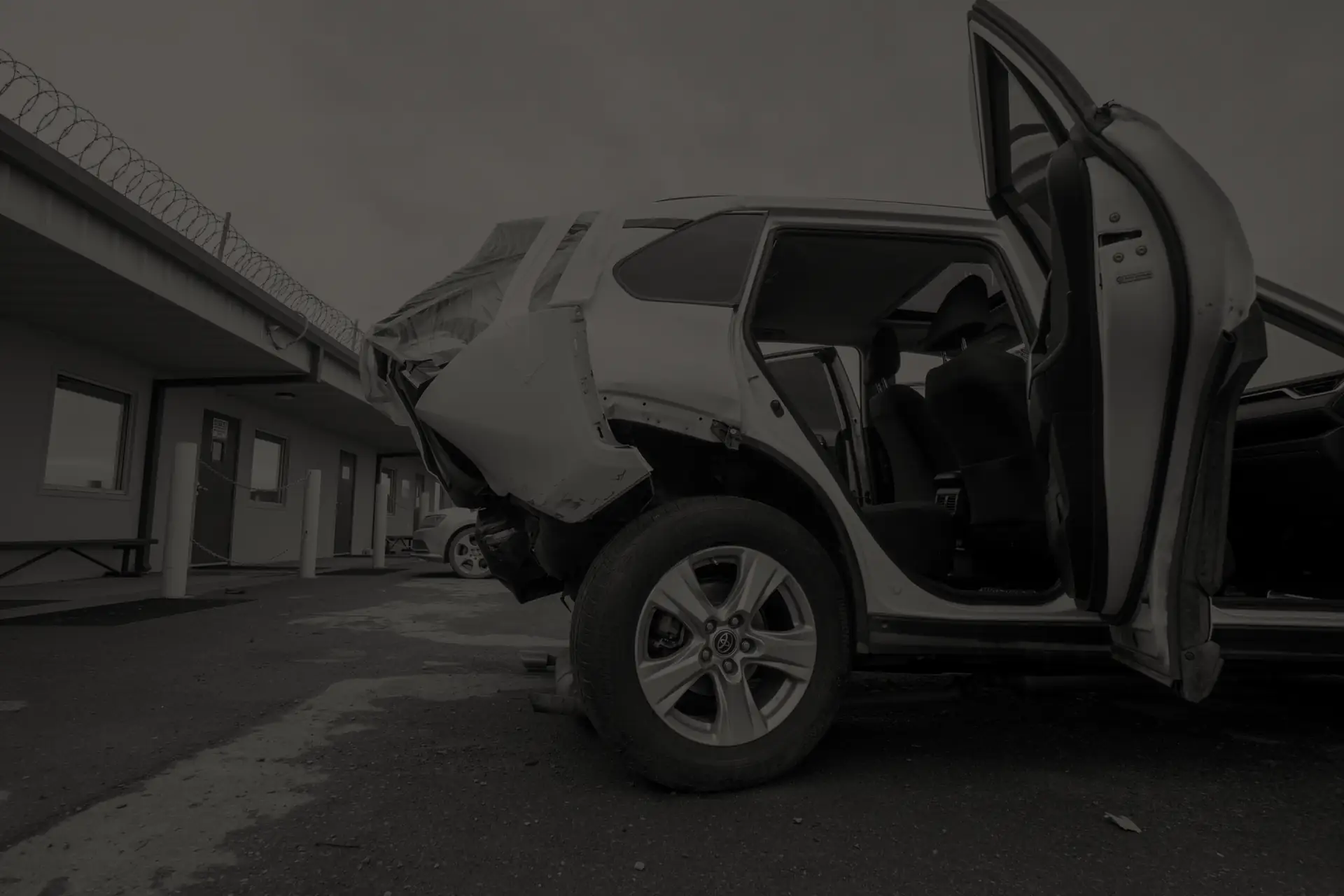
Automotive defects in San Diego—such as faulty brakes, airbags, seatbacks, or tires—can make crashes far more dangerous and lead to serious injuries. At Hulburt Law Firm, our experienced San Diego automotive defect lawyers help victims hold manufacturers and other responsible parties accountable while pursuing maximum compensation.
Whether the injury results from a car, truck, or motorcycle accident, our team provides dedicated legal guidance to ensure you receive the justice and financial support you deserve.
Injured as a result of an automotive defect in San Diego? Get help today.

After an injury caused by a defective vehicle or auto component, you may feel overwhelmed, frustrated, and uncertain about your legal options. Coping with physical injuries, expensive medical treatments, and insurance challenges can create significant emotional and financial stress.
Hulburt Law Firm helps automotive defect victims navigate this complex process, providing compassionate guidance, protecting your rights, and pursuing maximum compensation to cover medical care, lost income, and long-term impacts.
Defective brakes, steering, or stability control systems in San Diego vehicles can lead to catastrophic crashes and serious injuries. Hulburt Law Firm helps victims pursue claims against manufacturers or suppliers to recover compensation for medical expenses, lost wages, and long-term impacts.
Tire blowouts, tread separations, or other tire failures in San Diego can cause sudden loss of control and severe accidents. Hulburt Law Firm assists victims in holding manufacturers, distributors, or retailers accountable while seeking full compensation for injuries, vehicle damage, and ongoing recovery.
Malfunctioning airbags or restraint systems in San Diego vehicles can fail to protect occupants during collisions, increasing the risk of serious injury. Hulburt Law Firm represents victims in product liability claims, helping them recover compensation for medical care, lost income, and long-term rehabilitation.
Defective seatbacks and head restraints can worsen the severity of injuries in car accidents, including whiplash and spinal trauma. Hulburt Law Firm helps San Diego victims pursue claims against manufacturers and other responsible parties to secure compensation for medical expenses, lost wages, and ongoing treatment.
Fuel system malfunctions, post-crash fires, and other safety defects can cause catastrophic injuries or fatalities in San Diego vehicle accidents. Hulburt Law Firm assists victims in holding manufacturers or suppliers accountable while pursuing maximum compensation for injuries, property damage, and long-term recovery.
Vehicles prone to rollovers or insufficient roof protection can result in serious injuries or death in San Diego crashes. Hulburt Law Firm provides experienced representation for victims pursuing claims against manufacturers or other responsible parties to recover damages for medical care, lost income, and long-term impacts.
Failures of autonomous driving systems or advanced driver-assistance technologies in San Diego can lead to preventable crashes and catastrophic injuries. Hulburt Law Firm helps victims navigate complex product liability claims while pursuing compensation for medical expenses, lost wages, and long-term care.
Conor and Leslie Hulburt, founders of the Hulburt Law Firm, are dedicated San Diego automotive defect lawyers with extensive experience helping clients recover maximum compensation after serious or catastrophic injuries. They understand the physical, emotional, and financial challenges victims face following automotive defect accidents, and are committed to guiding clients through every step of the legal process.
Known for their genuine care, dedication, and strategic advocacy, Conor and Leslie have built a reputation as trusted personal injury attorneys in San Diego, providing top-tier representation for automotive defect victims and ensuring justice is served.

Our experienced attorneys have a proven track record of achieving extraordinary results in automotive defect cases.
A sudden tire failure caused an SUV to fishtail and crash into a tree on the side of a San Diego County highway, killing a beloved husband and father.
A defective airplane engine ignition component caused a deadly crash in San Diego.
A San Diego I-5 freeway collision resulted in brain and spine injuries.
A passenger seatback collapsed in a rear-end collision, causing the occupant life-changing spinal injuries and paralysis.
The driver's head restraint broke off when he was rear-ended at high speed on the 15 freeway, causing the driver to suffer a spinal cord injury and paralysis.
A defective front driveshaft broke apart and ripped a whole in the underbody of a truck, causing a vehicle fire. The driver suffered catastrophic third-degree burns.
Forget surface-level research and mediocre inquiries. We dive deep to conduct extensive investigations and gather evidence in order to build your strongest case.
We use technology to your advantage. By using video and photography, scene recreations, and graphics, we tell your story in a visually-compelling way that other law firms cannot match.
Defense attorneys and insurance companies know us and respect us. We assess the full extent of your damages and pursue all responsible parties in order to maximize the compensation you deserve.
Catastrophic injury and wrongful death cases are rarely simple. We have taken on the largest corporations, insurance companies, and defense firms in the country and won.
We don’t just talk the talk, we walk the walk. From providing regular case updates to achieving life-changing results, we genuinely care about each and every one of our clients.
Throughout the process, we keep you informed, answer any questions you may have, and provide ongoing support. We limit the number of cases we take on so that we can dedicate the time and attention needed for each case.
With the Hulburt Law Firm by your side, you can focus on your recovery while knowing that your legal claims are being taken care of. If you or a loved one has been involved in an automotive defect accident, contact us today for a free case review.
Understand and manage the complexities of your case with an expert legal team on your side.
Our legal team collects crucial evidence to present a compelling case.
We handle negotiations with insurance companies and opposing parties in order to achieve the highest settlements possible.
Our experienced attorneys provide skilled representation if your case goes to trial.
During your free case review, we talk through how the crash happened, what injuries you’re dealing with, and why you suspect something about the vehicle or its parts may have failed. We look at any information you already have—police reports, photos, repair or recall paperwork, insurance letters—and give an honest assessment of whether an automotive defect claim may be worth pursuing under California law. The conversation is confidential and there’s no obligation to move forward.
If you decide to work with us and the scope of representation is signed, our first priority is to protect critical physical evidence. In automotive defect cases, that usually means making sure the vehicle and any failed components are preserved, not sold for salvage or destroyed. We work to obtain crash reports and scene photos, identify witnesses, and gather available electronic data (such as event data recorder/“black box” downloads). Acting quickly can be the difference between having a strong defect case and having crucial evidence disappear.
Next, we arrange for the vehicle and key components—such as brakes, tires, airbags, fuel systems, or restraint systems—to be inspected by qualified experts. We collaborate with engineers, accident reconstructionists, and biomechanical experts to analyze how the crash occurred, how the vehicle and its safety systems performed, and whether a design defect, manufacturing defect, or inadequate warnings played a role. We also look at recall information, prior complaints, and industry standards to help show what a safer alternative design would have looked like.
Product cases often involve multiple defendants beyond any negligent driver. We identify all potentially responsible parties in the chain of distribution, which may include the vehicle manufacturer, component manufacturers, distributors, and sometimes dealerships or repair facilities, as well as any drivers or other entities whose negligence contributed to the crash. At the same time, we review available insurance coverage—commercial policies, product liability coverage, auto policies, and sometimes excess or umbrella coverage—to help ensure no potential source of recovery is overlooked.
Using the technical evidence and expert opinions, we build a clear narrative that explains what went wrong, how a defect contributed to the crash or worsened the injuries, and what that has meant for you and your family. We work with your medical providers to document your injuries, treatment, future care needs, lost income, and changes to your daily life. We then handle communications and negotiations with manufacturers, suppliers, insurers, and other defendants so you don’t have to. Throughout the process, we keep you updated, explain any settlement offers in plain language, and help you weigh the risks and benefits of settlement versus litigation.
If the companies involved are not willing to resolve your case fairly, we are prepared to file a lawsuit and, if necessary, take your case to trial. Litigation in automotive defect cases can involve detailed written discovery, depositions of engineers, corporate representatives, and experts, and motion practice over technical and legal issues. At trial, we work to present complex engineering concepts in a clear, understandable way—using vehicle inspections, diagrams, testing, and expert testimony—to show how the defect played a role in the crash and the full extent of the harm it caused.
Automotive defect cases in California are usually brought under product liability law, which focuses on whether a vehicle or component was unreasonably dangerous—not just whether someone drove carelessly. These cases can involve design defects, manufacturing defects, or failure to warn about known risks. Below is an overview of how California law treats defective vehicles and parts.
In broad terms, an automotive defect is a problem with the design, manufacture, or warnings/instructions of a vehicle or component that makes it unreasonably dangerous when used in a reasonably foreseeable way. Examples can include:
California product liability law is generally consumer-protective: in many situations, an injured person does not have to show that the manufacturer was “careless” in the traditional negligence sense, only that the product was defective and that the defect was a substantial factor in causing harm.
The exact legal standards can vary depending on the type of defect theory, but in most California automotive defect cases a plaintiff generally needs to show:
For design defect claims, California courts have recognized tests such as:
Defendants may argue that the design was reasonable, that the product was altered or misused in an unforeseeable way, or that the injury was caused by something else (such as another driver or a different component). Often, expert testimony is needed on both sides.
Automotive defect cases generally target the “chain of distribution”—the businesses that designed, made, and sold the product. Depending on the facts, potentially liable parties can include:
In addition, there may be other defendants whose negligence contributed to the crash, such as careless drivers, repair shops that performed improper work, or entities responsible for dangerous road conditions. California’s comparative fault rules allow responsibility to be divided among multiple parties, and sometimes between those parties and the injured person.
When a defective vehicle or component is found to be a substantial factor in causing a crash or worsening injuries, injured people and families may seek the same broad categories of damages available in other California personal injury and wrongful death cases, including:
For injured survivors (personal injury claims):
For families after a fatal crash (wrongful death and survival claims):
In cases involving especially egregious or reckless conduct by non-government defendants (for example, certain manufacturers or companies), punitive damages may be available to punish and deter such conduct. Punitive damages are case-specific and not awarded in every case.
Automotive defect claims are generally subject to California’s statutes of limitations—strict deadlines for filing lawsuits. While there are exceptions and special rules, in many cases involving defective vehicles or components:
In some situations, different rules may apply—for example, where the injury is not discovered right away, where the defendant is a government entity, or where other specialized statutes come into play. The specific deadlines can be technical, and missing them can bar a claim entirely, even if there is strong evidence of a defect.
Because of these time limits—and because key evidence like the vehicle and failed components can be lost or altered—it’s generally wise to speak with an attorney as soon as reasonably possible if you suspect an automotive defect played a role in a crash in or around San Diego or elsewhere in California.
In simple terms, an automotive defect is a problem with the design, manufacture, or warnings for a vehicle or part that makes it unreasonably dangerous when used in a reasonably foreseeable way. That can include things like brakes that fail under normal use, tires that are prone to tread separation, airbags that don’t deploy properly, or fuel systems that are more likely to ignite in foreseeable crashes.
For a more detailed explanation of design, manufacturing, and warning defects under California product liability law, see the California Automotive Defect Law section on this page.
If you think a defect may have played a role, do not let the vehicle be destroyed, scrapped, or repaired until you’ve talked with a lawyer. The car and its components are often the most important evidence in an automotive defect case.
If possible:
An attorney can help send preservation letters, arrange for secure storage, and coordinate expert inspections. Once the vehicle or key parts are gone, it can be extremely difficult—or impossible—to prove a defect.
To pursue an automotive defect lawsuit successfully, gathering strong evidence is essential to support the claim of a defect and its role in causing the accident or injuries. Here are some types of evidence commonly needed in automotive defect lawsuits:
Vehicle Inspection
Detailed examination of the vehicle involved in the accident is crucial. This includes documenting any visible defects, damage, or malfunctions, as well as preserving physical evidence such as broken parts, tire marks, and fluid leaks.
Accident Reports
Obtaining official accident reports from law enforcement agencies or insurance companies can provide valuable information about the circumstances of the accident, including the location, time, weather conditions, and statements from witnesses.
Medical Records
Medical records documenting the injuries sustained in the accident are essential evidence in proving the extent of harm caused by the defect. This includes hospital records, doctor's notes, diagnostic tests, and treatment plans.
Expert Opinions
Testimony from qualified experts, such as automotive engineers, accident reconstruction specialists, biomechanical engineers, and medical professionals, can help analyze the evidence and establish a causal link between the defect and the injuries.
Product Testing
In some cases, it may be necessary to conduct product testing or examination of the vehicle or its components to identify defects or manufacturing flaws. This could involve inspecting the vehicle, conducting laboratory tests, or reproducing the conditions of the accident to assess the performance of the vehicle and its safety features.
Vehicle Maintenance Records
Records of vehicle maintenance, repairs, and inspections can provide insights into the vehicle's history and whether any prior issues or warning signs of defects were addressed by the owner or manufacturer.
Manufacturer Documentation
Documentation related to the vehicle, such as owner's manuals, service bulletins, design drawings, engineering reports, internal memos, safety testing records, and warranty information, can help establish the manufacturer's knowledge of the defect and their responsibilities for addressing it.
Recalls and Complaints
Information about previous recalls, complaints, or lawsuits related to similar defects in the same make or model of vehicle can be relevant in demonstrating a pattern of negligence or misconduct by the manufacturer.
Photographs and Videos
Visual evidence, such as photographs and videos of the accident scene, the vehicle's condition, and the injuries sustained by occupants, can help illustrate the severity of the accident and support the plaintiff's claims.
Eyewitness Testimony
Statements from witnesses who observed the accident or its aftermath can provide additional perspective and corroboration of the events leading up to the accident.
Electronic Data Recorder (EDR) Data
Some vehicles are equipped with EDRs, also known as "black boxes," which record data related to vehicle speed, acceleration, braking, and other factors leading up to a crash. Accessing and analyzing this data can provide valuable insights into the vehicle's behavior before the accident.
Industry Standards and Regulations
Reference to applicable industry standards, such as Federal Motor Vehicle Safety Standards (FMVSS) or manufacturer specifications, can help establish whether the vehicle or its components met required safety standards and identify any deviations or deficiencies.
Often, yes. Many automotive defect cases involve both a negligent driver and a defective vehicle or component. For example, another driver might cause a collision, but a defective airbag, seatbelt, roof, or fuel system makes your injuries significantly worse than they otherwise would have been.
California uses comparative fault, which means responsibility can be divided among multiple parties, including drivers and companies in the chain of distribution for a defective product. A defect claim can focus on how the vehicle should have protected you in a foreseeable crash—even one caused by someone else’s negligence.
The fact that a vehicle or component was subject to a recall can be important evidence of a safety problem, but not receiving (or noticing) the recall notice does not automatically prevent you from bringing a claim. Likewise, the absence of a recall does not mean there was no defect; many dangerous conditions are litigated before or without any formal recall.
It can be helpful to:
In some cases, a recall can support an argument that the manufacturer knew about the issue and that safer designs or fixes were available. In other cases, we may allege that a recall should have been issued but wasn’t.
Fatal automotive defect cases are often complex and emotionally difficult, especially when there are unanswered questions about why the crash was so severe. In California, certain family members may be able to bring wrongful death and related survival claims when a defective vehicle or component is a substantial factor in causing a fatal crash or in making an otherwise survivable collision deadly.
Wrongful death claims focus on the family’s losses—such as loss of financial support, loss of household services, and the loss of your loved one’s love, companionship, care, and guidance—along with funeral and burial expenses. Survival claims focus on harms your loved one suffered before death, including medical bills, property damage, and, under current law, pre-death pain and suffering and, in some cases, punitive damages.
A San Diego attorney experienced in automotive defect and wrongful death litigation can help your family understand who may file, what claims may be available, and what steps are needed to preserve the vehicle and key evidence.
In many automotive defect cases, injured people and families may seek compensation for:
These categories mirror other serious injury and wrongful death matters under California law. For a more detailed discussion of potential damages in defect cases, see the California Automotive Defect Law section above.
There is no one-size-fits-all timeline. Automotive defect cases tend to take longer than a typical two-car collision because they often require:
Some cases may resolve within a year or two once liability and damages are fully developed. Others—especially those involving catastrophic injuries, multiple defendants, or significant engineering disputes—can take longer and may require going to trial. A San Diego automotive defect attorney can give you a more specific sense of timing after learning the details of your situation.
You’re not required to hire a lawyer, but automotive defect cases are some of the most technical and expert-driven personal injury matters. They often involve engineering analysis, product-liability doctrines, multiple corporate defendants, and careful evidence preservation. Trying to pursue this kind of case alone against a manufacturer or major insurer is challenging.
Many firms, including Hulburt Law Firm, handle automotive defect cases on a contingency fee basis. That typically means:
Case costs (such as expert fees, court costs, and records charges) are often advanced by the firm and reimbursed from any settlement or verdict, as explained in the written fee agreement.
In a California automotive defect case, you’re usually not limited to just the driver of the other car. Product liability law allows you to pursue claims against businesses in the “chain of distribution”—the companies that designed, made, and sold the defective vehicle or component—along with others whose negligence contributed to the crash.
Depending on the facts, potential defendants can include:
In many serious crashes in or around San Diego, responsibility is shared—partly on the driver(s) involved and partly on companies in the chain of distribution for a defective product. A California automotive defect attorney can help identify all of the potentially liable parties and the insurance coverages that may apply.
Automotive defect cases are highly technical, so expert witnesses are usually essential. The exact experts depend on the facts of the crash and the type of defect alleged, but many California cases involve a combination of:
A San Diego automotive defect attorney will typically assemble and coordinate a team of these experts to build a cohesive case—linking the defect to the crash, the crash to the injuries, and the injuries to the full scope of your losses under California law.
Hulburt Law Firm proudly serves automotive defect victims throughout San Diego County, providing experienced legal guidance, compassionate support, and aggressive advocacy to help clients recover maximum compensation for injuries, medical expenses, lost wages, and long-term impacts.

Simply fill out the form or call 619.821.0500 to receive a free case review. We’ll evaluate what happened, your injuries, and potential defendants to determine how we can best help you.