Spinal cord and serious back injuries can change nearly every part of a person’s life. They may cause chronic pain, weakness, loss of mobility, paralysis, and the need for ongoing medical care, rehabilitation, or assistance with daily activities.
At Hulburt Law Firm, our San Diego spine injury lawyers represent people seriously injured in car and truck crashes, falls, construction accidents, dangerous roadway conditions, and other preventable incidents. We investigate what happened, identify every responsible party, and build the evidence needed to pursue full compensation for medical care, lost income, future needs, and the lasting impact of the injury.
Suffering from a back or spine injury? Get help today.

Spine injuries can range from painful disc and nerve injuries to catastrophic damage to the spinal cord. Some require surgery and months of rehabilitation, while others result in permanent weakness, loss of sensation, or paralysis.
These injuries may arise from violent crashes, falls, unsafe property conditions, construction accidents, defective products, and other forms of negligence. The nature of the injury, its cause, and its long-term effects often determine both the medical needs and the value of the claim.
A paralysis claim is about the lifetime consequences of the injury, not just the medical bills incurred in the first weeks or months. The largest damages often involve future attendant care, rehabilitation, accessible transportation, home modifications, medical equipment, and the income and opportunities the injured person has lost.
Paraplegia and quadriplegia can create very different long-term needs. A cervical spinal cord injury may impair the use of both the arms and legs and require substantial assistance with daily activities, while an injury lower in the spine may leave greater upper-body independence. Accurately documenting the level of injury, expected complications, future care needs, and cost of that care is critical to proving the full value of the claim. Learn more about your legal options after a paralyzing injury.
Incomplete spinal cord injuries are often among the most disputed because some movement or sensation remains below the level of injury. Insurers may point to that retained function as evidence that substantial recovery is likely.
The reality is more uncertain. Some people make meaningful gains, while others improve only to a point and are left with permanent weakness, sensory loss, pain, or impaired mobility. The treating physicians’ classification of the injury, the course of recovery over time, and the resulting functional limitations can be critical to establishing prognosis and the full value of the claim. Learn more about complete and incomplete spinal cord injuries.
Not every serious back injury involves damage to the spinal cord. Herniated and ruptured discs can compress or irritate spinal nerves, causing radiating pain, weakness, numbness, and other limitations that may interfere with work and daily life.
These claims often turn on medical history. Insurers may argue that disc degeneration or other preexisting changes, rather than the accident, caused the symptoms. The key issue is whether the incident caused a new injury or aggravated a condition that was previously asymptomatic or less severe. California law addresses that issue directly, as discussed below. Learn more about herniated disc and back injury claims.
A vertebral fracture is different from a spinal cord injury, although the two can occur together. Some fractures are stable and heal with conservative treatment. Others are unstable, require surgery or spinal fusion, and can result in chronic pain, reduced range of motion, and permanent restrictions on lifting, sitting, standing, or other activities.
High-energy collisions are a common cause of serious vertebral fractures, including car accidents, truck accidents, and motorcycle accidents. Bicyclists and pedestrians face an especially high risk of severe spinal injury because they have little or no protection from the force of impact. Learn more about vertebral fractures from car accidents.
Falls from height can place enormous force on the spine, particularly when a person lands on the feet, buttocks, back, or head. Falls from balconies, unguarded edges, unsafe stairs, ladders, roofs, and other elevated surfaces can cause compression fractures, burst fractures, disc injuries, and damage to the spinal cord.
When an unsafe property condition causes the fall, responsibility may extend to the owner, occupier, contractor, or other party responsible for the condition. A premises liability claim often depends on how the hazard was created, whether the responsible party knew or should have known about it, and whether reasonable steps were taken to correct or warn of the danger. Learn more about the common causes of spinal cord injuries.
A serious workplace spine injury may give rise to more than a workers’ compensation claim. Hulburt Law Firm does not handle workers’ compensation cases. We represent injured workers in separate civil claims against third parties whose negligence contributed to the injury.
On a construction site, potentially responsible third parties may include a general contractor, subcontractor, property owner, equipment manufacturer or rental company, design professional, or vehicle driver. Unlike workers’ compensation, a third-party claim may allow recovery for the full range of damages, including pain and suffering, lost earning capacity, and future care needs.
The relationship between these two claims is explained below under Workers’ Compensation vs. a Third-Party Claim. Learn more about workplace spinal cord injuries, or see our construction accident practice area.
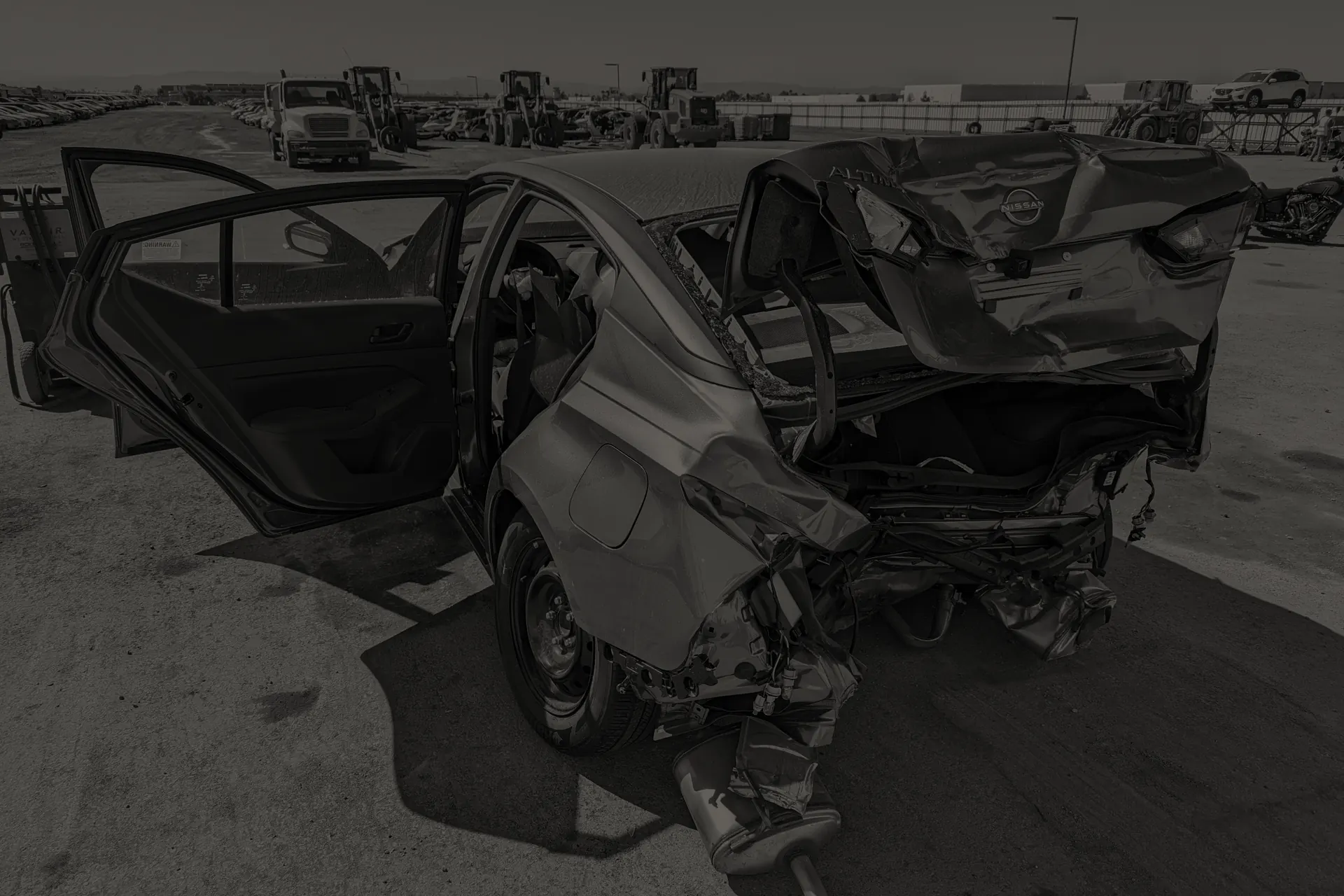
Sometimes a spinal cord injury is caused or made substantially worse by the way a vehicle or safety component performs in a crash. A collapsing seatback, defective restraint system, inadequate head restraint, or roof structure that fails in a rollover can expose an occupant to forces that cause catastrophic spinal injury.
These cases require a different investigation than an ordinary collision claim. The vehicle and failed components should be preserved, inspected, and documented before they are altered or destroyed. Proving the defect may require accident reconstruction, engineering analysis, testing data, design documents, and evidence concerning safer alternative designs. See our auto defect and product liability practice areas.
Conor Hulburt and Leslie Hulburt are the founders of Hulburt Law Firm and experienced trial lawyers who represent people and families facing serious and catastrophic injuries. They focus on a limited number of significant cases, giving each matter the investigation, preparation, and personal attention needed to show the full impact of a life-changing spine injury.
Conor has recovered more than $150 million for clients in catastrophic injury, wrongful death, and defective-product cases, including a $28,163,528 jury verdict for a child injured in a dangerous crosswalk. His advocacy has earned recognition from Best Lawyers in America, Super Lawyers, Best of the Bar, and Martindale-Hubbell.
Leslie brings extensive litigation experience involving trials, appeals, arbitrations, and mediations against major corporations, manufacturers, and government entities. Her background in journalism and education complements her legal experience, helping her uncover important facts and communicate complicated medical and legal issues clearly and persuasively. She has also been recognized by Super Lawyers and Best of the Bar.

Hulburt Law Firm's attorneys have achieved substantial recoveries for clients with catastrophic injuries, including cases involving spinal cord damage, permanent disability, and lifelong medical and care needs.
Settlement for a client who suffered brain and spinal injuries in a collision on Interstate 5 in San Diego.
A passenger seatback collapsed in a rear-end collision, causing the occupant life-changing spinal injuries and paralysis.
A negligent driver rear-ended a cyclist in Carlsbad who was lawfully using the bike lane, causing a severe spine injury.
We start by learning what happened, the injuries you suffered, the treatment you have received, and how your life has changed. We review the available records and evidence, identify potential claims and defendants, and determine whether any unusually short deadlines apply, including California's government claim requirements.
Important evidence can disappear quickly. Depending on the case, we may preserve vehicles or defective components, obtain video and electronic data, document roadway or property conditions, locate witnesses, and secure records before they are lost or destroyed.
Serious spine injuries often require medical and technical evidence beyond the ordinary treatment record. We gather imaging, hospital and surgical records, physician findings, rehabilitation records, and other evidence needed to establish the nature and extent of the injury.
We investigate why the injury occurred and identify every person or entity that may be legally responsible. Depending on the case, that may include a negligent driver, property owner, contractor, manufacturer, employer of another party, or public entity responsible for a dangerous roadway or other condition.
A serious spine injury should not be valued before its long-term consequences are reasonably understood. We develop the medical and financial evidence needed to account for future treatment, rehabilitation, attendant care, lost earning capacity, and the effect of the injury on mobility, independence, work, and daily life.
If the case cannot be fairly resolved, we are prepared to pursue it through litigation and trial. That process may include written discovery, depositions, expert evaluations, motions, mediation, and preparation of medical and technical evidence for presentation to a jury.
Spinal cord and serious back injury claims are governed by the same basic principles as other California personal injury cases: liability, causation, and damages. What makes these cases different is the nature and extent of the proof required.
A California negligence claim generally requires proof of four elements. Under California Civil Code section 1714(a), everyone is responsible for injuries caused by a failure to use ordinary care, subject to applicable exceptions.
In spinal cord and serious back injury cases, causation is often heavily disputed, particularly when there is a prior injury or degenerative condition. Medical imaging, treating physician opinions, prior medical records, and evidence showing how the person’s symptoms and function changed after the incident can be critical to establishing the connection between the defendant’s conduct and the resulting harm. Learn more about proving liability in a spinal cord injury case.
California follows a pure comparative fault system. An injured person can recover damages even if they were partly responsible for the incident, but the recovery is reduced by their percentage of fault. For example, a finding of 20 percent fault generally reduces the damages awarded by 20 percent. California does not impose the 50 percent bar used in some other states.
Separate rules may restrict certain categories of damages in particular circumstances, including claims involving uninsured drivers or injuries sustained during the commission of certain crimes. Those rules depend on the specific facts and should be evaluated separately.
Two defense arguments arise frequently in spine injury cases:
California law does not excuse a defendant simply because the injured person was more vulnerable to harm. Under the rule commonly called the eggshell plaintiff doctrine, a defendant takes the injured person as they find them and may be responsible when an accident activates or worsens a previously asymptomatic or less serious condition.
At the same time, a defendant is not responsible for harm the pre-existing condition would have caused independently of the accident. The important questions are therefore what the person's condition and function were before the incident, how they changed afterward, and what portion of the present and future limitations can fairly be attributed to the injury.
A serious spine injury at work may give rise to both a workers' compensation claim and a separate civil claim against a responsible third party. Hulburt Law Firm handles the third-party injury claim, not the workers' compensation case.
Under California Labor Code section 3602(a), workers' compensation is generally the exclusive remedy against an employer for an injury arising out of employment. It provides benefits defined by statute but does not compensate an injured worker for pain and suffering.
California law separately preserves an injured worker's right to pursue damages from someone other than the employer. Under California Labor Code section 3852(a), receiving workers' compensation does not prevent a claim against a third party whose negligence contributed to the injury. On a construction site, that may include a general contractor, subcontractor, property owner, equipment manufacturer or rental company, design professional, or vehicle driver, depending on the circumstances.
A third-party claim can provide compensation unavailable through workers' compensation, including pain and suffering and other losses caused by the injury. These cases require careful investigation of everyone involved in the work, the site, and the equipment that caused the injury. Any recovery may also be subject to lien or reimbursement rights arising from workers' compensation benefits already paid. See our construction accident practice area.
A spinal cord or serious back injury claim may include both economic and non-economic damages.
Economic damages compensate for financial losses caused by the injury, including:
Non-economic damages compensate for the human consequences of the injury, including:
A spouse or registered domestic partner may also have a separate loss of consortium claim for the effect a serious injury has on the marital or domestic relationship.
There is no reliable settlement range for a spinal cord injury claim. Two people with similar diagnoses may have very different damages depending on the level of impairment, age, occupation, future care needs, effect on independence, and the insurance or assets available to satisfy a judgment. Learn more about compensation for spinal cord injury victims.
In a permanent spine injury case, a substantial part of the claim may involve losses that will occur years or decades in the future. Proving those losses requires careful medical and financial analysis.
A life care planner, often a nurse or rehabilitation professional, reviews the medical records, works with treating physicians and other specialists, and develops an itemized plan for future needs, which may include:
An economist can then calculate the present value of those future costs. Lost earning capacity is analyzed separately and may require vocational and economic evidence showing not only wages already lost, but how the injury has affected the person's ability to work, advance, and earn income over the course of a career.
Defense lawyers and insurers often scrutinize these projections closely. The strongest future-damages claims are grounded in a complete medical record, supported by treating physicians, and based on realistic assumptions about the injured person's long-term needs and limitations. Learn more about the long-term costs of living with a spinal cord injury.
Most California personal injury lawsuits must be filed within two years after the claim accrues. California Code of Civil Procedure section 335.1 establishes the two-year limitations period for actions involving injury or death caused by another person's wrongful act or negligence.
Claims against public entities are different and can involve much shorter deadlines. If an injury involves a city street, state highway, public bus, government property, or public employee:
Missing the initial six-month claim deadline does not necessarily end the case. Government Code section 911.4 permits an application for leave to present a late claim in certain circumstances. The application must be made within a reasonable time and, subject to limited statutory exceptions, no later than one year after the claim accrues. If the agency denies the application, a petition may then be filed asking the court for relief. These procedures have additional deadlines, making prompt evaluation especially important in any case involving a public entity.
Different rules also apply to minors. For most ordinary personal injury claims, Code of Civil Procedure section 352(a) excludes the period of minority when calculating the statute of limitations, so the usual two-year period generally does not begin to run until the child turns 18.
That rule does not apply to claims requiring presentation to a public entity. California's Government Claims Act contains separate provisions addressing late claims involving minors, but those provisions should not be treated as an extension of the initial six-month deadline. When a child is injured in a matter involving a government agency or employee, the safest approach is to treat the six-month claim deadline as controlling and seek legal advice promptly.
When a spinal cord injury results in death, California law may allow two distinct claims.
A wrongful death claim compensates specified surviving family members for their own losses resulting from the death. Damages may include lost financial support and household services, as well as the loss of companionship, affection, guidance, and other aspects of the relationship.
A survival claim continues the claims the injured person could have pursued had they lived. It may include medical expenses, lost earnings, and other losses incurred between the injury and death, as well as punitive damages when the facts otherwise support them.
See our wrongful death practice area.
We preserve evidence, obtain key records and data, locate witnesses, and work with qualified experts to determine what happened and why.
We use photography, video, medical imaging, digital modeling, and demonstrative graphics to explain complex injuries and evidence clearly.
We identify every responsible party and develop the medical and economic evidence needed to prove the full value of the claim.
Our attorneys handle complex injury cases against corporations, manufacturers, insurers, and government entities, with trial preparation in mind.
We limit the number of cases we accept so clients receive personal attention, clear communication, and meaningful involvement from their attorneys.
Get appropriate medical care and follow the treatment recommendations you receive. Serious spine injuries can evolve over time, and a consistent medical record helps both your recovery and the accurate documentation of your condition.
Preserve whatever evidence you reasonably can. Photographs of the scene, vehicle, property condition, or equipment involved may be important, as can witness names and contact information. It is also useful to keep track of how the injury affects your work, mobility, sleep, daily activities, and independence as those limitations develop.
Be cautious about giving a recorded statement to the other party's insurance company before the nature and extent of the injury are clear. Spine injuries are not always fully understood in the first days or weeks, and early statements about symptoms or recovery can later be taken out of context. Read the full list of steps to take after a spinal cord injury.
A serious back injury can involve the vertebrae, discs, joints, muscles, ligaments, or spinal nerves without damaging the spinal cord itself. These injuries may still cause severe pain, weakness, numbness, limited mobility, and permanent functional limitations.
A spinal cord injury involves damage to the cord itself and can disrupt the transmission of signals between the brain and the body. Depending on the level and severity of the injury, it may cause loss of strength, sensation, bowel or bladder function, or paralysis below the injured area.
A person can suffer a vertebral fracture, herniated disc, or other serious back injury without spinal cord damage. The distinction matters because the medical evidence, prognosis, future care needs, and damages can differ substantially.
Yes. An MRI showing a herniated disc can be important evidence, but the imaging alone does not establish the value of a claim or prove that the accident caused the injury.
The key questions are whether the incident caused or aggravated the disc injury, whether the MRI findings are consistent with the symptoms, and how those symptoms affect work, mobility, sleep, and daily activities. Some herniated discs improve with conservative treatment, while others cause persistent nerve pain, weakness, numbness, or functional limitations and may eventually require injections or surgery.
Treating physician opinions, prior medical history, the timing of symptoms, and evidence showing how the person's function changed after the incident are often more important than the MRI image by itself.
Degenerative changes in the spine are common, and their presence on an MRI does not by itself establish that they caused a person's symptoms. The important questions are what symptoms and limitations existed before the incident, what changed afterward, and what the medical evidence shows about the cause of that change.
California law does not allow a defendant to avoid responsibility simply because an injured person was more susceptible to harm. If an accident causes a previously asymptomatic condition to become painful or disabling, or makes an existing condition worse, the injured person may recover for the harm caused by that aggravation.
Prior medical records, treating physician opinions, and evidence showing that the person was working, active, and functioning differently before the injury can be particularly important in separating pre-existing degeneration from the harm caused by the incident.
Serious spinal cord injuries commonly result from car and truck crashes, motorcycle and bicycle collisions, falls from height, dangerous property conditions, construction and jobsite accidents, and defective vehicle or safety components.
The cause of the injury matters because it often determines who may be legally responsible, what evidence should be preserved, and which deadlines apply. For example, a fall caused by a dangerous condition on public property may involve government claim requirements that do not apply to a similar fall on privately owned property.
The most important evidence usually falls into four categories:
Some of the most important evidence can disappear quickly. Vehicles may be repaired or destroyed, dangerous conditions can be changed, surveillance video may be overwritten, and electronic data may be lost. In a serious spine injury case, identifying and preserving that evidence early can materially affect what can later be proved.
Serious spinal cord and paralysis cases often involve several different experts, depending on the injuries and the issues in dispute. Treating physicians and spine specialists address diagnosis, causation, prognosis, and future medical needs. A life care planner may develop a detailed plan for long-term care, equipment, therapy, and assistance. Vocational experts evaluate the effect of the injury on the person's ability to work, while economists calculate future care costs and lost earning capacity in present-value terms.
Other experts may be needed to explain how the injury occurred. Depending on the case, that can include accident reconstruction experts, biomechanical engineers, safety experts, or engineers who evaluate defective vehicles, equipment, or products.
No reliable settlement range applies to every spinal cord injury case. The value depends on several factors, including:
Available insurance coverage and the defendant’s ability to satisfy a judgment can also affect the amount that is realistically recoverable. The same catastrophic injury may therefore lead to very different outcomes depending on who is responsible and what financial resources are available. Learn more about the factors behind spinal cord injury settlement values.
Serious spinal cord injuries often require rehabilitation well beyond the initial hospital stay. Depending on the injury, treatment may include physical therapy, occupational therapy, mobility training, pain management, assistive technology, and ongoing medical care. The type, frequency, and duration of rehabilitation depend on the person’s condition and prognosis.
In the short term, those costs may be paid through health insurance, applicable medical-payments coverage, or other available benefits. In a personal injury claim, the reasonable cost of future rehabilitation, attendant care, medical equipment, and related services may also be recovered as damages when they are supported by the medical evidence.
For catastrophic injuries, a life care plan can be especially important because it identifies the care and services likely to be needed over the person’s lifetime and helps establish their future cost. Learn more about spinal cord injury rehabilitation in San Diego.
Serious spinal cord injury cases often take longer than other personal injury claims because the medical picture can take time to develop. Before a case is resolved, it is important to understand the likely prognosis, future treatment, rehabilitation needs, and long-term effect on work and independence.
Cases that settle before a lawsuit is filed can move more quickly. Once litigation begins, the process may include written discovery, depositions, expert evaluations, mediation, and trial preparation, and a trial date may be a year or more away.
The goal is not to make the case last longer than necessary. It is to avoid resolving a catastrophic injury claim before the evidence is developed enough to account for the person's future needs and losses.
Not every injury claim requires an attorney. But a serious spinal cord injury often involves complex medical evidence, substantial future damages, multiple experts, and evidence that should be preserved early. Life care planning, vocational analysis, economic projections, accident reconstruction, and expert testimony can all become important depending on the case.
Hulburt Law Firm represents spine injury clients on a contingency fee, which means there is no attorney fee unless we obtain a recovery for you. The fee is a percentage of the recovery and is explained in the written fee agreement before representation begins. Case costs and how they are handled are also addressed in that agreement.
Hulburt Law Firm represents people with serious spinal cord and back injuries throughout San Diego County. Whether the injury occurred on a freeway, city street, construction site, private property, or elsewhere in the region, we bring the same careful investigation and trial-ready preparation to every case we accept.

Simply fill out the form or call 619.821.0500 to receive a free case review. We’ll evaluate what happened, your injuries, and potential defendants to determine how we can best help you.