
San Diego Shuttle Bus Accident: Legal Guide for Victims
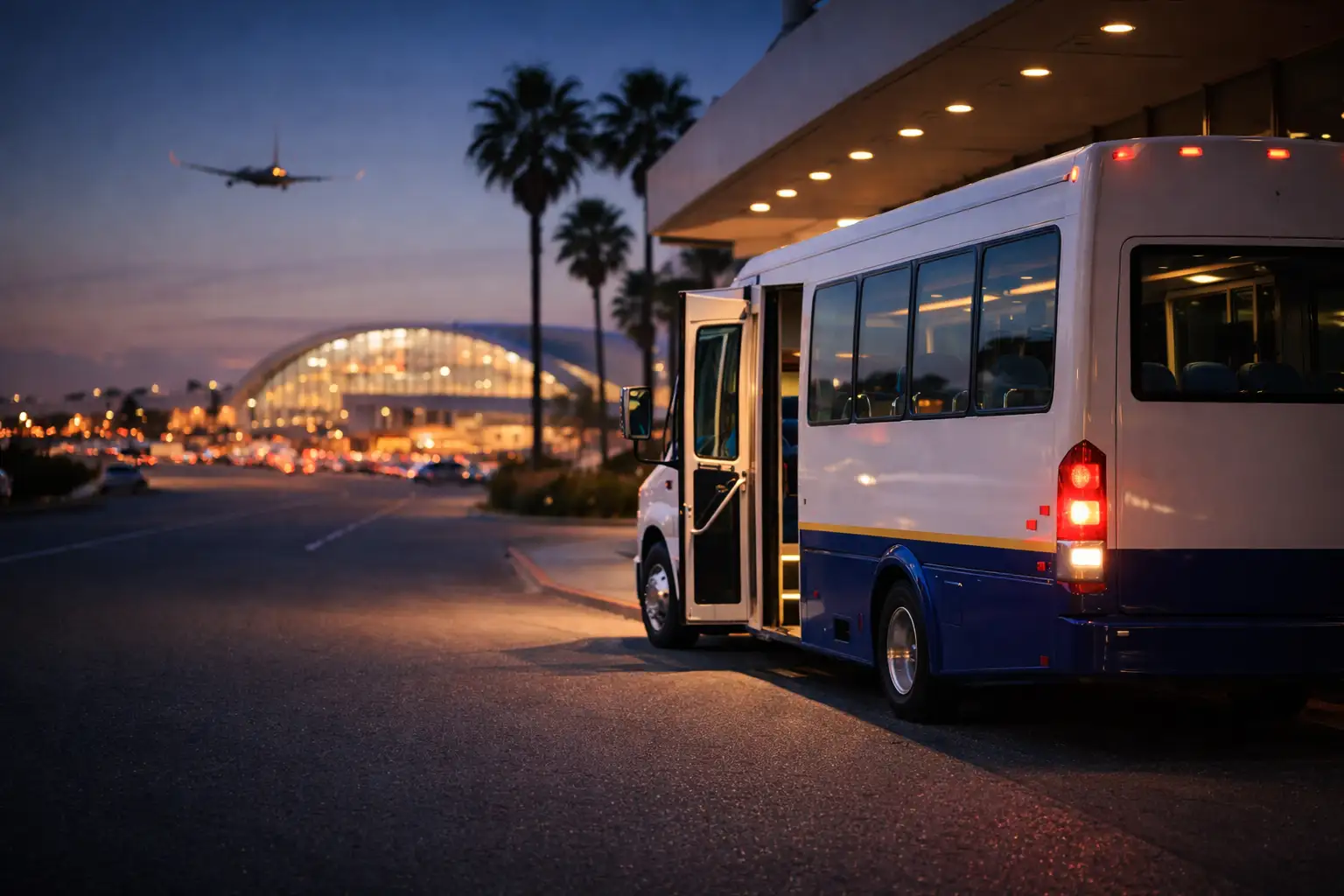
San Diego depends on shuttle buses: at the airport, hotels, theme parks, universities, stadiums, and other venues. When a shuttle bus crashes, injured passengers face complex liability questions that differ from typical car accident cases. If you’ve been hurt in a San Diego bus accident, understanding your rights is the first step toward recovering the compensation you deserve.
Below is an explanation of shuttle bus accident law in San Diego, designed to help you understand your rights and options if you were hurt.
Who can be liable for a San Diego shuttle bus accident?
Responsibility for a shuttle bus crash typically extends beyond the driver. California law permits injured people to bring claims against all negligent parties.
The shuttle bus driver and bus company
The driver may be liable for:
- Unsafe driving (speeding, failing to maintain control, aggressive maneuvers)
- Driver fatigue or hours-of-service violations
- Impairment or distraction
- Failure to follow safety procedures
Under California Civil Code § 2338 and the doctrine of respondeat superior, the bus company is typically liable for the driver’s negligence committed within the scope of employment, even if the driver is labeled an “independent contractor.”
The shuttle service owner or operator
Hotels, airports, theme parks, universities, stadiums, and other facilities that operate shuttle services may be liable if they:
- Negligently hire, train, or supervise drivers
- Fail to maintain vehicles in safe condition
- Fail to implement safety protocols
- Operate with inadequate insurance
- Knowingly allow unsafe drivers to operate vehicles
Similar liability principles apply to other types of commercial passenger vehicles. For example, charter and tour bus accidents in San Diego raise many of the same negligent hiring and supervision questions.
Third-party shuttle providers and contractors
When a facility contracts with a third-party shuttle company, both the facility and the contractor may share liability if:
- The contractor is negligent in providing the shuttle service
- The facility negligently selected, hired, or retained the contractor
- The facility had control over safety decisions
Bus manufacturer and maintenance companies
Manufacturers and mechanics may be liable for:
- Defective brakes, steering, tires, or suspension
- Inadequate or failed warning systems
- Door system defects
- Unsafe seat construction
- Negligent maintenance or repair
Government agencies and road hazard managers
City, county, or state entities may bear liability for:
- Failing to repair road defects or hazards
- Failing to post or maintain traffic signals and lane markings
- Failing to install or maintain guardrails, reflectors, or warning signs
- Vegetation overgrowth obstructing sight lines
- Inadequate street lighting
Government entities are liable only where a statute says so (Government Code § 815), but Government Code § 835 allows claims for a dangerous condition of public property, including negligently maintained roadways. Government-operated shuttle services, such as MTS buses and NCTD BREEZE buses, carry additional procedural requirements, including a six-month claim deadline that applies before you can file a lawsuit.
What evidence should be collected after a San Diego shuttle bus accident?
Evidence preservation is critical. Memory fades, physical evidence deteriorates or disappears, and records may be altered. Here’s what to preserve:
Photography and video documentation
Photograph or video:
- The accident scene (road conditions, visibility, hazards, signage, weather)
- Vehicle positions and damage patterns
- All vehicle damage from multiple angles
- Skid marks, debris, and other physical evidence
- Visible injuries (with consent from injured parties)
Witness information and statements
Collect names, phone numbers, and addresses from:
- Other passengers on the shuttle
- Drivers of other vehicles involved
- Bystanders who witnessed the crash
- First responders (police, fire, paramedics)
Record witness accounts of how the crash happened, if possible.
Your own written account
Immediately after the crash, write down:
- The date, time, and location
- Weather and lighting conditions
- What happened just before, during, and after the crash from your perspective
- Any unusual driver behavior (speeding, distraction, impairment)
- Your immediate injuries and symptoms
- Medical treatment received
Medical documentation
Obtain and preserve:
- Emergency room records and discharge papers
- Records from all doctors and hospitals who treated you
- Prescription records
- Records of physical therapy or rehabilitation
- Any imaging studies (X-rays, MRI, CT scans)
Physical evidence and the shuttle bus
Preserve information about:
- The shuttle bus identification and registration
- The bus company or operator name
- The condition of the shuttle (damage, warning signs of mechanical problems)
- Maintenance records (if accessible)
- The driver’s identity and employment status
The accident scene
Document:
- Road conditions and hazards
- Traffic signals and signage
- Visibility and lighting
- Vehicle final positions
- Debris patterns
What happens after a San Diego shuttle bus accident?
1. Emergency response and medical care
First responders (police, fire, paramedics) will arrive and provide emergency care. Injured passengers are transported to hospitals. Some injuries may not become apparent for hours or days.
2. Police investigation and reporting
Police will investigate, document the scene, interview drivers and witnesses, and prepare an incident report. Under California Vehicle Code § 20003, drivers involved in an injury crash must stop and provide their information.
3. Insurance notification and investigation
The bus operator will notify its insurance carrier. The insurance company will investigate the crash and may contact you to obtain a recorded statement. You have the right to decline a recorded statement and instead provide information through an attorney.
4. Medical documentation and treatment
Seek immediate medical attention and document all symptoms and treatment. Some injuries develop over time, so ongoing medical records are important.
5. Notice and claim preservation
Your attorney will send written notice to all potentially responsible parties, preserving your legal rights and signaling your intent to pursue a claim.
6. Demand letter and settlement negotiations
Your attorney will prepare a detailed demand letter describing the crash, your injuries, medical treatment, damages, and losses. The insurance company will investigate and typically make a settlement offer.
7. Litigation (if settlement fails)
If the insurance company’s offer is insufficient, your attorney will file a lawsuit and pursue discovery, depositions, expert analysis, and potentially a jury trial. For a more detailed breakdown of what the legal process looks like, see our San Diego bus accident claims legal guide.
What damages are available in a San Diego shuttle bus accident case?
Economic damages
Economic damages are quantifiable losses, including:
- Past and future medical expenses (emergency care, surgery, hospitalization, medication, rehabilitation, therapy)
- Past and future lost wages and earning capacity
- Medical devices, equipment, and home modifications
- Home care, nursing care, and disability services
- Vocational rehabilitation and job retraining costs
Non-economic damages
Non-economic damages compensate for subjective losses, including:
- Pain and suffering (past and future)
- Disfigurement and scarring
- Emotional distress and psychological injury
- Loss of enjoyment of life and activities
- Loss of consortium (harm to family relationships)
- Permanent impairment or disability
Insurance coverage
Shuttle operators typically carry commercial general liability insurance and commercial auto insurance covering passenger injuries. Which policy responds depends on who owned and operated the shuttle: a hotel, airport, or venue that runs its own shuttle answers through its own commercial auto and liability coverage, while a contracted shuttle company’s policy responds first when it operated the vehicle, with the venue’s coverage also in play if it negligently selected or controlled the contractor. Multiple insurance policies may apply, potentially increasing recovery.
Punitive damages
California law allows punitive damages against a private shuttle operator or driver only on clear and convincing evidence of oppression, fraud, or malice (Civil Code § 3294). They are intended to punish and deter, and they are never available against a public entity (Government Code § 818).
Time limits and legal deadlines
California law imposes strict deadlines for bringing injury claims. Generally:
- For private shuttle operators: two years from the date of injury to file a lawsuit (California Code of Civil Procedure § 335.1)
- For government-operated shuttles: as short as six months to present a government claim under Government Code § 911.2, followed by six months from the mailed rejection notice to file suit (Government Code § 945.6). This applies to shuttles run by public transit agencies, public airports, public universities, and other government entities.
Missing these deadlines can permanently bar your claim, so it is critical to speak with an attorney as soon as possible after a shuttle bus accident.
Why should you hire an experienced attorney?
Shuttle bus accident cases involve complex liability questions, multiple responsible parties, technical evidence, and competing insurance policies. Key advantages of hiring an experienced attorney include:
- Understanding liability theories specific to shuttle bus operators
- Identifying all responsible parties and insurance coverage
- Preserving critical evidence (the shuttle, maintenance records, dispatch logs, driver records)
- Investigating the crash thoroughly
- Calculating full damages including future medical costs and lost earning capacity
- Negotiating effectively with insurance companies
- Preparing the case for trial if necessary
If you or a loved one was injured in a San Diego shuttle bus accident, Hulburt Law Firm is here to help. Attorney Conor Hulburt represents shuttle bus accident victims throughout San Diego County and will fight to hold every responsible party accountable. Contact us today for a free consultation.
Related Content
Request a Free Case Review
Simply fill out the form or call 619.821.0500 to receive a free case review. We’ll evaluate what happened, your injuries, and potential defendants to determine how we can best help you.

Hulburt Law Firm handles serious personal injury and wrongful death cases throughout San Diego County.


