
NCTD BREEZE Bus Accident Claims | San Diego Guide
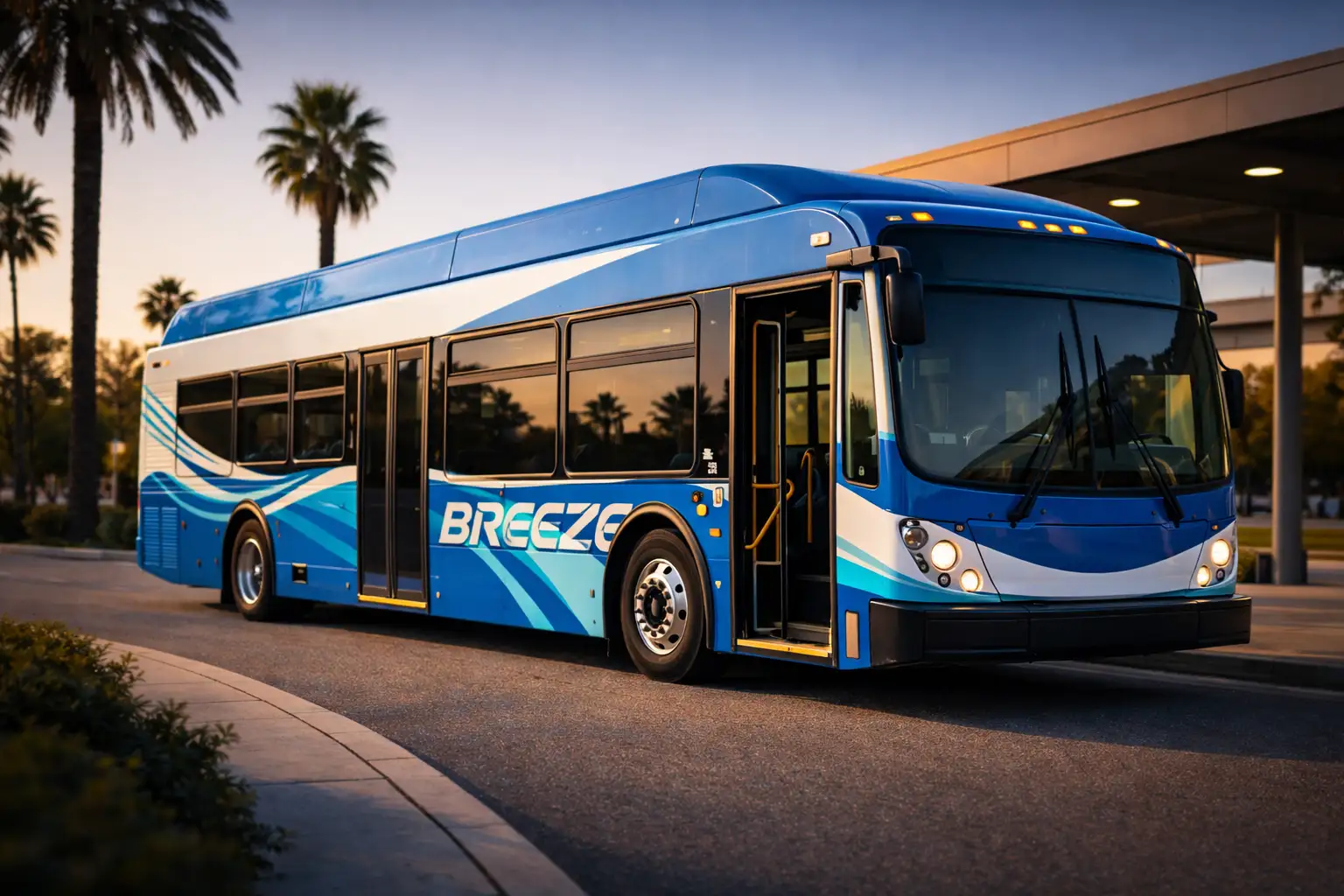
An NCTD BREEZE bus crash in North County San Diego is very different from a typical car accident claim. Because NCTD is a public agency, strict government claim rules, shortened deadlines, and special defenses apply from day one. At the same time, California law holds common carriers like public buses to a heightened safety duty when passengers are hurt or killed.
This guide from our San Diego bus accident attorneys explains how BREEZE bus cases differ from standard collisions, the immediate steps to take, Government Claims Act requirements, key evidence, and how liability and damages are handled under California law.
How NCTD BREEZE bus accidents differ from car crashes
NCTD (North County Transit District) is not a private company; it is a California public entity created under the Public Utilities Code (Cal. Pub. Util. Code §§ 125000 et seq.). That status triggers the California Government Claims Act, which generally requires an injured person to file a written claim with the agency within 6 months in most personal injury cases (Cal. Gov. Code § 911.2), instead of relying only on the usual 2‑year statute of limitations for car accidents.
Higher “common carrier” safety duties
Public buses that carry passengers for a fare are “common carriers.” Under California Civil Code §§ 2100–2102, common carriers must use the “utmost care and diligence” for passenger safety, a higher standard than ordinary negligence in typical car crashes. Courts have confirmed that public transit agencies owe this elevated duty to their passengers, including in:
- Acosta v. Southern Cal. Rapid Transit Dist. (1970) 2 Cal.3d 19
- Lopez v. Southern Cal. Rapid Transit Dist. (1985) 40 Cal.3d 780
Complex, layered liability and limited damages
Responsibility may involve multiple parties at once, including:
- NCTD as a public entity
- The bus driver
- Private contractors operating, servicing, or maintaining the route
- Other motorists
- Property owners, cities, or Caltrans responsible for roadway design or maintenance
Public entities also have special protections. Punitive damages are not available against them (Cal. Gov. Code § 818), and various immunities can bar or narrow claims. A San Diego bus accident attorney can sort out which deadlines apply to each defendant, navigate immunities, and build a case that fits these specific rules.
Immediate steps after an NCTD BREEZE bus accident
Get to safety and call 911
If you can move safely, get out of traffic and away from additional danger. Call 911 immediately to request police and medical response. In San Diego County, BREEZE crashes may be investigated by local police or the California Highway Patrol (CHP). Ask that a traffic collision report be prepared, as this can contain key evidence.
Seek prompt medical evaluation
Even if you feel “shaken up” but not badly hurt, get checked by paramedics and then at an emergency room or urgent care as soon as possible. Many serious injuries, including concussions and spine injuries, develop or worsen over hours or days. Early records create a clear timeline linking your symptoms to the crash, which is critical under California’s causation rules in negligence claims.
Document the scene and collect information
If you are able, or a family member can help:
- Note the bus number, route, direction of travel, time, and location
- Get the driver’s name and, if possible, badge or employee ID
- Photograph vehicles, damage, skid marks, traffic signals, weather, and any hazards at the stop or roadway
- Inside the bus, photograph handholds, standing areas, steps, and any visible defects
- Collect names and contact information for witnesses and other involved drivers
Be cautious with statements and contact an attorney
You may be contacted quickly by NCTD personnel, risk management, or insurance adjusters. Do not give recorded statements or sign authorizations or releases before understanding your rights, as these can be used later to dispute liability or injuries.
An experienced attorney can:
- Take over all communications with NCTD and insurers
- Request preservation of bus video and electronic data before it is overwritten
- Coordinate with investigators so your account is accurately documented
- Ensure Government Claims Act deadlines are tracked from the start
Who may be liable in a North County public bus crash
Liability in a BREEZE or other North County Transit District (NCTD) bus crash can extend well beyond the driver.
Under California Government Code section 815.2, NCTD may be vicariously liable for its employee driver’s negligence, while the driver can be personally liable under section 820 for unsafe conduct such as speeding, distraction, fatigue, or failing to yield.
NCTD often uses private companies to operate, service, or maintain buses. Those contractors can be responsible if poor maintenance, defective repairs, or negligent supervision contributed to the collision. Other negligent motorists who cut off a bus, run a red light, or violate traffic laws may also share fault for injuries to bus passengers, pedestrians, bicyclists, and occupants of other vehicles.
Government entities like cities, the County of San Diego, or Caltrans may be liable for a “dangerous condition of public property” under Government Code sections 830 and 835. That can include unsafe bus stops, obscured or poor sightlines, inadequate lighting, missing guardrails, or defective pavement that helps cause a crash or worsens injuries.
Multiple parties often share blame. Under California’s pure comparative fault rule (Li v. Yellow Cab Co. (1975) 13 Cal.3d 804), responsibility and damages are divided according to each party’s percentage of fault. Proposition 51 (Civ. Code § 1431.2) further limits each defendant’s responsibility for non‑economic damages to its share of fault, while keeping economic damages joint and several.
An attorney investigates all potential defendants, identifies available insurance (including public entity and contractor policies), and uses these liability rules to structure claims so that each liable party pays its fair share of economic and noneconomic damages.
Government Claims Act deadlines and procedures against NCTD
Before suing the North County Transit District (NCTD) or most public entities in California, an injured person must first present a written administrative claim under the California Government Claims Act. This requirement applies to most personal injury and wrongful death claims. If a claim is not properly presented, a lawsuit is typically barred. See Cal. Gov. Code §§ 905, 910–915, 945.4.
The 6‑month government claim deadline
For injury and death cases, the standard deadline is very short: a written claim must be presented within 6 months of the date of injury. Cal. Gov. Code § 911.2. Missing this 6‑month window usually prevents any later lawsuit against NCTD, unless very limited “late‑claim” relief is granted.
Because strict timelines also apply to related claims against private contractors or other motorists, it is important to get legal advice as soon as possible after a bus crash.
What a compliant claim must include
Under Cal. Gov’t Code § 910, a claim generally must state:
- Claimant’s name and address
- Date, place, and circumstances of the occurrence
- A general description of the injury or damage
- Names of public employees involved, if known
- The amount claimed, if under $10,000, or a statement that it exceeds $10,000
It must be delivered to the correct NCTD office and address. Mis-delivery, missing information, or filing with the wrong agency can lead to rejection or invalidation.
What happens after filing
NCTD typically has 45 days to act on the claim. Cal. Gov’t Code § 912.4. A written rejection under § 913 starts a 6‑month period, running from the date the notice is mailed, to file a lawsuit in court. Cal. Gov’t Code § 945.6. If no written rejection is ever mailed, the lawsuit deadline is two years from the date of injury, but no one should plan around that fallback.
Late‑claim applications and court relief
If the 6‑month deadline is missed, a written late‑claim application may sometimes be filed within 1 year of the injury. Cal. Gov’t Code § 911.4. If NCTD denies that application, a court petition for relief under § 946.6 may be possible.
An experienced attorney can:
- Analyze which deadlines apply to your claim
- Prepare and serve a compliant government claim
- Pursue late‑claim relief where legally available
- Coordinate these steps with any related claims against private parties
Common carrier duties and special accident scenarios
California treats NCTD BREEZE buses as “common carriers,” which means they must use the “utmost care and diligence” for passenger safety under Civil Code sections 2100–2102. This is a higher duty than ordinary negligence, but it does not guarantee that every injury automatically creates liability.
Sudden stops and jerking motions
Many claims involve a sudden stop or sharp jerk. To recover, an injured passenger generally must show that:
- The movement was unusual or extraordinary compared with normal bus operation, and
- It was unnecessary under the circumstances.
Courts often look for evidence beyond the passenger’s impression, such as:
- Comparison with typical bus driving patterns
- Surveillance video or onboard data
- Expert analysis of speed, braking, and driver reaction
An attorney can use case law, including decisions like Lopez v. Southern Cal. Rapid Transit Dist. (1985) 40 Cal.3d 780, to argue that a particular maneuver fell below the utmost care standard.
Standing, moving, boarding, and exiting passengers
Common carriers must anticipate that passengers will stand, walk to seats, and move toward exits. Reasonable protective measures include:
- Smooth, predictable driving and avoiding abrupt maneuvers when people are standing
- Adequate handholds and grab bars
- Clear warnings before movement or at hazardous areas
Injuries while boarding or getting off can implicate both common carrier duties and “dangerous condition of public property” theories, such as:
- Poor bus positioning at the curb
- Excessive step height or broken steps
- Slippery or wet floors
- Pulling away before a passenger is safely on or off
Attorneys often retain human factors and transit safety experts to show how NCTD’s procedures or driving fell short of the utmost care required in these specific scenarios.
Dangerous bus stops, routes, and public property conditions
Under California Government Code § 830(a), a “dangerous condition of public property” is a condition that creates a substantial risk of injury when the property is used with due care. A public entity such as a transit district or city can be liable under § 835 if:
- There was a dangerous condition;
- The type of injury was reasonably foreseeable;
- The condition was a substantial factor in causing the harm; and
- The public entity created it or had notice and time to protect against it.
For North County bus services, dangerous conditions can include:
- Bus stops placed near high‑speed traffic with no safe crossing point
- Poor sightlines for pedestrians crossing to or from the stop
- Inadequate lighting that hides curbs, steps, or oncoming vehicles
- Broken or uneven pavement at loading areas
- Missing, obscured, or confusing stop or turn‑only signs
- Unsafe merging or turning configurations on bus routes
Liability generally requires proof that the agency had actual or constructive notice. Evidence may include prior collisions at the same stop, citizen complaints, internal emails, inspection logs, or deferred maintenance records.
Design immunity and changed conditions
California Government Code § 830.6 provides “design immunity” when a dangerous feature stems from a plan or design that was approved by a responsible official. However, design immunity can be lost when conditions change so that the plan becomes unreasonable and the entity fails to update or warn despite notice (Cameron v. State of California (1972) 7 Cal.3d 318; Cornette v. Dept. of Transp. (2001) 26 Cal.4th 63).
Attorneys use California Public Records Act requests (Gov. Code § 7920.000 et seq.), site inspections, and roadway design experts to analyze plans, traffic data, and field conditions to support or challenge dangerous‑condition claims.
Key evidence in NCTD BREEZE bus accident claims
In BREEZE bus cases, critical evidence is often in NCTD’s hands and can disappear quickly.
Onboard video is especially important. Exterior dash‑cam and interior surveillance footage can show traffic conditions, passenger movements, driver distraction, and whether riders were standing or seated. Many transit agencies automatically overwrite digital video within days or weeks unless they receive a written preservation request.
Electronic data from GPS / Automatic Vehicle Location (AVL) systems and any event data recorders can show the bus’s speed, braking, route, stop locations, and timing immediately before impact. Driver logs and schedules help clarify fatigue, hours‑of‑service issues, and compliance with NCTD policies. Maintenance and inspection records can reveal overdue repairs or recurring brake, door, or steering problems that relate to negligence.
Other important evidence includes:
- NCTD incident and risk management reports
- 911 calls and dispatch audio
- Police or CHP collision reports under Veh. Code § 20013
- Eyewitness statements and passenger cell phone video
- Nearby business or residential surveillance footage
Some materials can be requested under the California Public Records Act (Gov. Code § 7920.000 et seq.), but key items such as raw video and internal investigative files often require subpoenas or formal discovery after a Government Claims Act claim and lawsuit are filed.
An attorney can send litigation hold and preservation letters, serve CPRA requests, conduct site inspections, and retain accident reconstruction and human factors experts to interpret technical data and build a persuasive liability picture.

Injuries, damages, and comparative fault in bus cases
Common injuries in bus crashes
Bus collisions often cause serious trauma because passengers may be standing, holding poles, or seated without restraints. Common physical injuries include:
- Fractures to wrists, arms, legs, ribs, and facial bones
- Traumatic brain injuries (TBI), including concussions and more severe brain trauma
- Spinal injuries, such as herniated discs or spinal cord damage
- Internal injuries to organs, including internal bleeding
- Severe lacerations, contusions, and orthopedic joint injuries
Psychological harm is also frequent. Passengers may develop post‑traumatic stress disorder (PTSD), anxiety, sleep disturbance, or phobias about travel. Some symptoms, particularly of TBI and PTSD, may not appear until days or weeks after the crash, so thorough, ongoing medical evaluation is important.
Recoverable damages in California bus cases
In a San Diego bus case, recoverable damages typically include:
- Past and future medical expenses
- Lost wages and benefits
- Diminished earning capacity for long‑term limitations
- Pain, suffering, emotional distress, and loss of enjoyment of life
- Property damage, such as broken phones, glasses, or vehicles
When the defendant is a public entity, California Government Code section 818 bars punitive damages, even for egregious conduct. An attorney can work with medical, vocational, and economic experts to fully document both current and future losses.
Comparative fault and special California rules
California follows pure comparative negligence under Li v. Yellow Cab Co. (1975) 13 Cal.3d 804. An injured person’s compensation is reduced by their percentage of fault, but they are not barred from recovery unless they are found 100% at fault.
Under Proposition 51, codified at Civil Code section 1431.2, each defendant is only severally liable for non‑economic damages (such as pain and suffering) in proportion to their percentage of fault. They remain jointly liable for economic damages like medical bills.
In bus cases, defendants may argue that a passenger’s actions contributed to their injuries. Issues can include:
- Standing instead of sitting when seats were available
- Walking in the aisle while the bus was moving
- Carrying bulky items that affect balance
Many city buses in San Diego do not provide seatbelts. California courts generally do not penalize passengers for failing to use safety equipment that is not provided or not reasonably available.
An experienced attorney can challenge efforts to exaggerate a rider’s comparative fault by:
- Obtaining surveillance video, incident reports, and eyewitness statements
- Using human‑factors or biomechanical experts to explain how passengers realistically react
- Demonstrating how bus design, operator training, and traffic conditions contributed to the harm
Careful allocation of fault among the transit agency, driver, other motorists, and third parties is crucial to maximizing available compensation under California’s comparative fault and Prop 51 framework.
Wrongful death and serious family impacts after a bus crash
Wrongful death claims in California bus cases
When a person is killed in a BREEZE bus crash, certain family members can bring a wrongful death claim under California Code of Civil Procedure § 377.60. Eligible claimants typically include:
- Surviving spouse or registered domestic partner
- Children (including certain stepchildren and, in some cases, grandchildren)
- Other dependent relatives, such as parents, if they were financially dependent on the deceased
Wrongful death damages focus on the losses suffered by the surviving family, such as loss of financial support, loss of household services, loss of guidance and companionship, and the value of benefits the deceased would have provided.
If NCTD or another public entity is involved, California’s Government Claims Act still applies. A written government claim must usually be filed within 6 months of the death (Gov. Code § 911.2), even in fatal bus crash cases.
Survival actions and estate‑related issues
A separate “survival action” under Code of Civil Procedure § 377.30 allows the decedent’s estate to recover damages the person could have claimed if they had lived, including medical bills, lost earnings, and other economic losses from the time of injury until death.
An attorney can coordinate wrongful death and survival claims, work with the probate court if an estate must be opened, and ensure deadlines are met while the family is grieving.
Special concerns for children and elderly victims
When children are hurt or lose a parent, families must often address long‑term therapy, education disruption, and future care needs. For elderly victims, families may face sudden loss of caregiving, housing changes, and increased medical or in‑home support costs.
Counsel can help document these long‑term emotional and caregiving impacts, structure future care plans, and manage interactions with insurers and public entities during an intensely emotional period.
Working with a San Diego bus accident attorney on your claim
Managing deadlines and legal strategy
NCTD is a public entity, so claims involving BREEZE buses are governed by the California Government Claims Act. An attorney tracks and coordinates all deadlines, including the 6‑month written claim requirement for public entities (Gov. Code §§ 905, 911.2) and the follow‑up deadline if a claim is rejected. At the same time, they preserve your right to sue private defendants, such as other drivers or contractors, within the 2‑year statute of limitations (Code Civ. Proc. § 335.1).
A San Diego bus accident lawyer evaluates all potential liability theories, including negligence by the driver or operator and dangerous condition of public property under Gov. Code § 835. They also anticipate common public entity defenses, such as design immunity (Gov. Code § 830.6) or discretionary immunity, and build evidence and expert support to counter those arguments.
Handling insurers, damages, and practical issues
Legal counsel typically takes over communication with NCTD risk management, third‑party administrators, and insurance carriers. They value your claim by looking at medical expenses, lost income, future care, and pain and suffering, and negotiate settlements while preparing for litigation if negotiations fail.
Attorneys also provide practical help, including:
- Coordinating medical records and reports
- Interacting with health insurers, Medicare/Medi‑Cal, ERISA plans, and hospital lien holders
- Advising on documentation, social media use, and other pitfalls that could weaken your case
Most personal injury lawyers use a contingency‑fee structure, meaning no upfront attorney fee and payment as a percentage of any recovery. An initial consultation allows injured people and families to ask questions, review options, and understand potential fees before deciding how to proceed.
How the Hulburt Law Firm Can Help
NCTD BREEZE bus cases are governed by strict public‑entity rules, short notice deadlines, and complex questions about who is responsible for your losses. Hulburt Law Firm focuses on serious injury and wrongful death cases in San Diego and is prepared to analyze the facts, preserve critical evidence, and protect your rights at each stage of the process.
If you or a loved one were hurt in an NCTD BREEZE bus accident in North County or anywhere in San Diego County, you do not have to navigate these issues on your own. Visit our San Diego bus accident attorney resources to learn more about serious bus injury claims, or contact Hulburt Law Firm today to request a professional, no‑obligation consultation about your specific situation.
Further Reading
Request a Free Case Review
Simply fill out the form or call 619.821.0500 to receive a free case review. We’ll evaluate what happened, your injuries, and potential defendants to determine how we can best help you.

Hulburt Law Firm handles serious personal injury and wrongful death cases throughout San Diego County.


