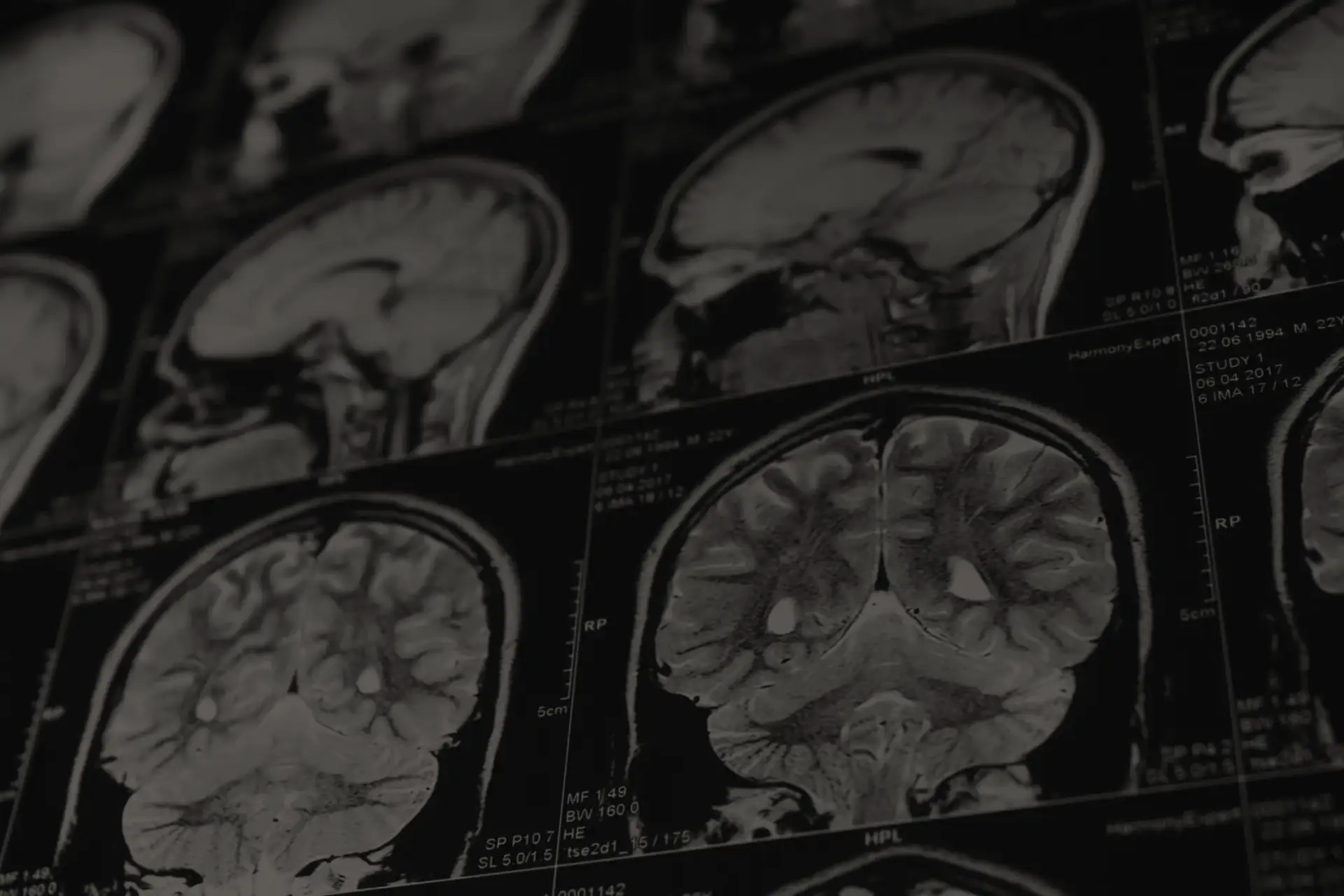
A traumatic brain injury can affect memory, concentration, judgment, mood, communication, and the ability to work or live independently. Some injuries are immediately apparent. Others become clearer only as symptoms persist and family members, coworkers, and medical providers begin to recognize meaningful changes.
Hulburt Law Firm represents people and families in San Diego brain injury cases arising from vehicle crashes, dangerous property conditions, construction incidents, defective products, and unsafe roadways. We investigate how the injury occurred, develop the medical and life-impact evidence, and pursue accountability from every responsible party.
Suffering from a TBI? Get help today.

The evidence needed to prove a brain injury claim depends heavily on how the injury occurred. We investigate both the underlying incident and the full effect of the injury, identifying every person, company, property owner, manufacturer, or public entity that may be responsible.
A concussion is a mild traumatic brain injury, but the word “mild” describes the injury’s initial clinical classification—not necessarily its effect on the person’s life. Common symptoms of traumatic brain injury include headaches, dizziness, sensitivity to light or noise, memory problems, slowed thinking, fatigue, sleep disruption, irritability, and difficulty concentrating. Symptoms may appear gradually, and a person does not need to lose consciousness to sustain a concussion.
Because many symptoms are not outwardly visible, concussion cases require careful documentation. Important evidence may include emergency and follow-up medical records, a consistent symptom history, observations from family members and coworkers, employment or academic records, and neuropsychological or other specialist testing when appropriate. We develop the evidence needed to show how the injury has affected the client’s work, relationships, independence, and daily life.
Concussion symptoms do not always appear immediately. Headaches, dizziness, fatigue, sleep disruption, sensitivity to light or noise, memory problems, slowed thinking, and mood changes may emerge hours or days after an accident. In other cases, symptoms continue well beyond the expected recovery period—a condition often described as post-concussion syndrome or persistent post-concussive symptoms. Learn more about delayed brain injury symptoms and why prompt medical evaluation matters.
These claims can be difficult because the injured person may have initially reported feeling fine, imaging may appear normal, and the symptoms may become most apparent only after a return to work, school, driving, or other demanding activities. Important evidence may include the timing and progression of symptoms, medical records, specialist evaluations, neuropsychological testing, employment or academic records, and observations from family members, friends, and coworkers.
Moderate and severe traumatic brain injuries may include cerebral contusions, intracranial bleeding, diffuse axonal injuries, penetrating injuries, and other structural damage to the brain. These injuries can cause prolonged loss of consciousness, impaired memory and judgment, communication difficulties, personality changes, physical limitations, and loss of independence. Some individuals require emergency surgery, extended hospitalization, inpatient rehabilitation, or lifelong assistance.
Developing these claims requires more than documenting the initial diagnosis. Important evidence may include brain imaging, surgical and hospital records, neurological and neuropsychological evaluations, rehabilitation records, testimony from family members and treating providers, and assessments of future medical, caregiving, vocational, and accessibility needs. We work with qualified experts to show how the injury has changed the client’s abilities, relationships, earning capacity, and long-term quality of life.
A forceful impact can cause a skull fracture, bruising of brain tissue, or bleeding within or around the brain. These injuries may require emergency monitoring, surgery, or extended hospitalization and can lead to problems with movement, speech, memory, judgment, behavior, and other essential functions. The seriousness of the injury depends on its location, extent, progression, and effect on surrounding brain tissue.
Recovery may continue long after the initial medical crisis. Depending on the injury, brain injury rehabilitation may include physical therapy, occupational therapy, speech-language therapy, cognitive rehabilitation, neuropsychological care, and assistance with returning to work or independent living. Important evidence may include CT and MRI imaging, hospital and surgical records, neurological examinations, rehabilitation records, and expert assessments of future medical, caregiving, vocational, and accessibility needs.
A closed head injury occurs when the brain is injured without an object penetrating the skull. Rapid acceleration, deceleration, or rotation can cause the brain to move within the skull, stretching or tearing nerve fibers. One serious form is diffuse axonal injury, which can disrupt communication across multiple areas of the brain and cause impaired consciousness, memory loss, cognitive changes, physical limitations, or long-term dependence on others.
Establishing responsibility requires connecting the forces involved in the incident to the resulting brain injury. Proving liability in a brain injury case may require photographs and video, electronic or physical evidence, witness testimony, accident reconstruction, medical records, neurological evaluations, and expert analysis of the injury mechanism. We develop this evidence to establish how the incident occurred, who was responsible, and how the injury has affected the client’s daily functioning, employment, relationships, and future needs.
Anoxic brain injury occurs when the brain receives no oxygen, while hypoxic brain injury results from an inadequate oxygen supply. These injuries may follow drowning, cardiac arrest, suffocation, smoke or carbon monoxide exposure, airway obstruction, electrical injury, or another event that interrupts breathing or blood flow. The resulting damage can affect memory, judgment, communication, movement, behavior, and the ability to live independently.
These cases require careful investigation of what caused the oxygen deprivation, how long it lasted, and whether faster intervention could have prevented or reduced the injury. Important evidence may include emergency-response records, medical records, oxygen and cardiac monitoring data, photographs and video, witness accounts, equipment records, safety procedures, and expert analysis. Depending on the circumstances, compensation for a brain injury may include medical and rehabilitation expenses, future care, lost earning capacity, pain and suffering, and the loss of independence and enjoyment of life.
Brain injuries can affect children differently because the brain is still developing. A child may appear to recover initially but experience increasing difficulty with memory, attention, learning, impulse control, emotional regulation, or social development as academic and developmental demands increase. Our guide to children and traumatic brain injury explains the medical, educational, and practical issues families may face after an injury.
Evaluating a child’s claim requires careful consideration of both present symptoms and needs that may emerge over time. Important evidence may include pediatric neurological and neuropsychological evaluations, medical and rehabilitation records, school performance, individualized education plans or accommodations, testimony from parents and teachers, and expert assessments of future education, treatment, earning capacity, and support needs. We develop this evidence to show how the injury may affect the child throughout development and into adulthood.
A severe brain injury may cause death at the scene or after emergency treatment, hospitalization, or a period of declining health. In the immediate aftermath, families may need to preserve evidence, obtain medical and incident records, identify witnesses, and avoid premature communications with insurance companies. Our guide explains important steps to take after a brain injury to protect the injured person’s health and the family’s legal rights.
When another person, company, property owner, manufacturer, or public entity caused the fatal injury, eligible family members may have a wrongful death claim. The decedent’s estate may also have a separate survival claim based on claims that belonged to the injured person before death. We investigate how the injury occurred, preserve medical and liability evidence, identify every responsible party, and document the full personal and financial consequences of the loss.
Brain injury cases are rarely proved by a diagnosis alone. They require a careful investigation of how the injury occurred and clear evidence showing how the injury has affected memory, concentration, behavior, employment, relationships, independence, and future needs.
Conor Hulburt has recovered more than $150 million for clients in catastrophic injury, wrongful death, and defective-product cases. In May 2025, he served as lead trial counsel in Quiroz v. Caltrans and obtained a $28,163,528 jury verdict for a child seriously injured in a dangerous crosswalk. His advocacy has earned recognition from Best Lawyers in America, Super Lawyers, Best of the Bar, and Martindale-Hubbell, which awarded him its AV Preeminent rating. He has also served in leadership roles with several San Diego legal organizations.
Conor and Leslie Hulburt founded Hulburt Law Firm to represent people and families facing serious injuries and wrongful death. They develop each case through detailed investigation, medical and life-impact evidence, qualified expert analysis when needed, and preparation for litigation and trial. This approach is particularly important when an insurance company disputes causation, points to normal imaging, attributes symptoms to a preexisting condition, or minimizes a concussion as a minor injury.

The following verdict and settlements include brain injury cases arising from dangerous roadways, vehicle collisions, and unsafe property conditions. Every case is different, and past results do not guarantee a similar outcome.
Jury verdict against Caltrans for a 13-year-old boy who suffered a catastrophic brain injury after he was struck by a vehicle while using a dangerous crosswalk.
Settlement for a client who suffered brain and spinal injuries in a collision on Interstate 5 in San Diego.
Settlement against a San Diego apartment building owner that failed to maintain a second-story guardrail, causing a woman to fall and suffer a severe brain injury.
Settlement against an apartment complex that failed to address dangerous second-story window seats, resulting in a toddler falling through a window and suffering a severe brain injury.
Settlement for a North San Diego County cyclist who suffered serious head and brain injuries after a negligent driver swerved across multiple lanes and struck him from behind.
Settlement against Caltrans and others for a cyclist who was struck from behind on State Route 67 and suffered a severe traumatic brain injury.
During your free case review, we listen to how the injury occurred, what symptoms you or your family have observed, and how those symptoms are affecting work, school, relationships, and daily life. We review any available accident reports, photographs, video, medical records, imaging, and insurance correspondence and explain whether we may be able to help. There is no obligation to hire the firm.
Once retained, we act promptly to investigate the incident and preserve evidence before it disappears. Depending on the case, this may include obtaining surveillance or traffic-camera footage, documenting the scene, inspecting vehicles or products, interviewing witnesses, securing electronic data, and requesting police, incident, maintenance, or inspection records.
We determine how the incident occurred and identify every person, company, property owner, contractor, manufacturer, or public entity that may be legally responsible. The investigation may involve accident reconstruction, engineering or safety analysis, product testing, industry standards, building codes, company records, and testimony from witnesses and experts.
We evaluate the full effect of the brain injury, including past medical expenses, future treatment and rehabilitation, lost income, reduced earning capacity, caregiving needs, loss of independence, and the injury’s effect on relationships and quality of life. Severe cases may require input from life-care planners, vocational experts, economists, and other qualified professionals.
We present the liability, medical, and life-impact evidence to the responsible parties and their insurers. When the defense argues that symptoms are unrelated, preexisting, exaggerated, or merely a minor concussion, we respond with the evidence developed throughout the case. We explain any settlement offers, answer the client’s questions, and provide the information needed to make an informed decision.
When a fair resolution cannot be reached, we are prepared to file a lawsuit and pursue the case through litigation and trial. This may include written discovery, depositions, expert examinations, motions, mediation, and testimony from treating providers and retained experts. At trial, we present the evidence in a clear and understandable way so the jury can see not only how the brain injury occurred, but how it has changed the client’s abilities, relationships, work, independence, and future.
California brain injury claims are governed by the law applicable to the incident that caused the injury. A case arising from a vehicle collision, unsafe property, defective product, construction accident, or dangerous public roadway may involve different legal standards and responsible parties. In every case, the evidence must connect the defendant’s conduct to the brain injury and document the resulting losses.
In a negligence case, the injured person generally must prove that the defendant owed a duty of care, breached that duty, and was a substantial factor in causing the brain injury and resulting damages. Product-liability and public-entity claims involve additional statutory requirements.
Causation is frequently disputed in concussion and mild traumatic brain injury cases. An insurance company may point to normal imaging, delayed symptoms, prior medical conditions, or the absence of a loss of consciousness. Proving liability in a brain injury case may require accident evidence, medical records, testimony from people who observed changes in the injured person, and qualified medical or technical expert analysis.
California follows a pure comparative-fault system. An injured person who shares some responsibility for an incident may still recover damages, but the recovery is reduced by that person’s percentage of fault.
For example, defendants may argue that an injured person was distracted, failed to use available safety equipment, or otherwise contributed to the incident. We investigate these allegations rather than accepting the insurance company’s allocation of responsibility.
A California brain injury claim may include compensation for:
The value of a claim depends on the severity and duration of the injury, the effect on the person’s life and earning capacity, future treatment and support needs, the strength of the liability evidence, and the available insurance or assets. Our guides to brain injury settlement values and the lifetime costs of traumatic brain injury explain these considerations in greater detail.
California generally allows two years from the date of injury to file a personal injury lawsuit against a private party. If a city, county, state agency, public school, transit district, or other public entity may be responsible, a written government claim generally must be presented within six months of the claim’s accrual. Additional deadlines apply after the government responds.
Different deadlines and accrual rules may apply depending on the defendant, the cause of action, and the injured person’s circumstances. Although some brain injury symptoms may be delayed, an injured person should not assume that a delayed diagnosis extends the filing deadline. Prompt investigation also helps preserve video, physical evidence, witness testimony, and other proof that may otherwise be lost.
When a brain injury results in death, eligible family members may bring a wrongful death claim for losses they have personally suffered, including the loss of financial support, care, companionship, and guidance.
A survival claim is separate. It allows the decedent’s personal representative or successor in interest to pursue claims that belonged to the injured person before death. Under current California law, survival actions filed on or after January 1, 2026 generally may not recover damages for the decedent’s pain, suffering, or disfigurement. Different rules may govern actions filed before that date, and other pre-death losses may remain recoverable.
We investigate how the incident occurred, preserve critical evidence, identify every responsible party, and work with qualified experts when needed.
We use modern technology to organize complex evidence, explain brain injuries clearly, and present the case effectively to insurers, opposing counsel, and juries.
We evaluate the full value of the claim, including medical care, rehabilitation, lost earnings, future support, caregiving needs, and diminished quality of life.
Conor Hulburt has recovered more than $150 million in catastrophic injury, wrongful death, and defective-product cases. We prepare serious cases with litigation and trial in mind.
We handle a limited number of serious cases so clients receive personal attention, meaningful communication, and direct access to their attorneys.
Seek prompt medical evaluation, describe every symptom accurately, and follow the treatment recommendations you receive. Avoid activities that create a risk of another head injury.
Preserve photographs, video, witness information, incident reports, damaged property, and insurance correspondence. Keep a written record of symptoms and how they affect work, school, sleep, driving, and daily activities. Our guide explains additional steps to take after a brain injury.
Yes. Concussions and other mild traumatic brain injuries may not appear on conventional CT or MRI imaging. Imaging is only one part of the evaluation.
Other evidence may include the injury mechanism, neurological examinations, symptom history, neuropsychological testing, treatment records, and observations from family members and coworkers. Learn more about how brain injuries are diagnosed.
Yes. A concussion can result from a blow to the body that causes the head and brain to move rapidly back and forth, even when the head does not strike another object. This can occur in a vehicle collision, fall, sports incident, or other event involving sudden acceleration, deceleration, or rotation.
A person also does not need to lose consciousness to sustain a concussion. Headaches, dizziness, memory problems, slowed thinking, fatigue, sleep disruption, or other symptoms of traumatic brain injury should be evaluated promptly after a significant jolt or impact.
Post-concussion syndrome is a term commonly used when headaches, dizziness, fatigue, sleep problems, cognitive difficulties, mood changes, or other concussion symptoms persist beyond the expected recovery period.
Recovery varies considerably. Some people improve within weeks, while others experience symptoms that interfere with work, school, relationships, and daily activities for months or longer. Read more about the long-term effects of traumatic brain injury.
Symptoms may include headaches, dizziness, nausea, balance problems, memory loss, slowed thinking, difficulty concentrating, fatigue, sleep disruption, sensitivity to light or noise, vision changes, and changes in mood or personality.
Seek emergency care for danger signs such as worsening confusion, repeated vomiting, seizures, unusual behavior, increasing drowsiness, weakness, or a worsening headache. Our guide describes additional symptoms of traumatic brain injury.
Brain injuries may result from vehicle collisions, falls on unsafe property, construction incidents, falling objects, defective products, dangerous roadways, assaults, drowning, smoke inhalation, or other events involving impact or oxygen deprivation.
Identifying the cause is essential because it determines what evidence must be preserved and which drivers, employers, property owners, contractors, manufacturers, or public entities may be responsible. Learn more about the different types of traumatic brain injuries.
A hypoxic brain injury occurs when the brain receives too little oxygen. An anoxic brain injury occurs when the oxygen supply is completely interrupted. Unlike a traumatic brain injury caused by physical force, these are acquired brain injuries caused by oxygen deprivation.
Possible causes include drowning, cardiac arrest, suffocation, smoke or carbon monoxide exposure, airway obstruction, and incidents that interrupt breathing or blood flow. The resulting damage can range from temporary cognitive problems to profound disability or death. Learn more about the different types of brain injuries.
A person is not legally required to hire an attorney. Brain injury cases can nevertheless be difficult to handle without counsel because insurers frequently dispute the diagnosis, causation, severity of symptoms, future care needs, and value of the claim.
An attorney can investigate the incident, preserve evidence, obtain relevant records, identify available insurance, retain qualified experts when appropriate, and document the injury’s long-term financial and personal consequences. Our guide explains the potential lifetime costs of traumatic brain injury.
Important evidence may include photographs and video, incident reports, witness testimony, electronic data, physical evidence, medical records, brain imaging, neurological evaluations, rehabilitation records, and neuropsychological testing when appropriate.
Employment, academic, and financial records can help document lost earning capacity or educational disruption. Family members, friends, teachers, and coworkers may also provide important evidence of cognitive, emotional, and behavioral changes. This documentation is especially important when dealing with delayed brain injury symptoms.
Recoverable damages may include medical treatment, rehabilitation, future care, lost income, reduced earning capacity, caregiving, assistive equipment, home modifications, pain, emotional distress, and diminished independence or enjoyment of life.
The available compensation depends on the evidence, the injury’s long-term effects, the applicable law, and the insurance or assets available to satisfy the claim. Learn more about compensation for brain injury victims.
Yes. Because a child’s brain is still developing, some consequences may not become fully apparent until the child is older and faces more demanding academic, social, or independent-living tasks. Difficulties with attention, memory, organization, impulse control, emotional regulation, or judgment may emerge or become more noticeable over time.
A child’s claim should therefore consider not only present symptoms but also potential future educational, medical, vocational, and support needs. Our guide to children and traumatic brain injury explains why continued monitoring and careful long-term evaluation may be important.
Depending on the disputed issues, a case may involve neurologists, neurosurgeons, neuroradiologists, neuropsychologists, rehabilitation specialists, life-care planners, vocational experts, economists, accident reconstructionists, engineers, or safety experts.
Medical experts may address diagnosis, causation, prognosis, and future care. Technical experts may explain how the incident occurred, while vocational and economic experts may evaluate lost earning capacity and future financial needs. Learn more about brain injury rehabilitation.
A neuropsychological evaluation examines how the brain is functioning through a clinical interview, review of relevant history, standardized testing, and analysis by a qualified neuropsychologist. It may assess memory, attention, processing speed, language, problem-solving, emotional functioning, and other cognitive or behavioral abilities.
In a brain injury case, the evaluation may help identify areas of impairment, guide treatment, and document how the injury affects work, school, and daily functioning. It is one part of the overall medical evidence and should be considered together with the injury mechanism, treatment records, imaging, and observations from others. Learn more about how brain injuries are diagnosed.
A life care plan is a detailed assessment of the medical care, rehabilitation, equipment, assistance, and support a seriously injured person is reasonably expected to need in the future. Depending on the injury, it may address therapy, medications, medical appointments, attendant care, transportation, assistive technology, and modifications to the home.
Life care plans are generally most useful in severe or permanent brain injury cases involving substantial long-term needs. A qualified life care planner reviews the available records and recommendations and may coordinate with treating providers and other experts to project future care and its cost. Our guide to the lifetime costs of traumatic brain injury discusses expenses that may continue long after the initial hospitalization.
California generally allows two years from the date of injury to file a personal injury lawsuit against a private party. Different deadlines may apply depending on the claim and the parties involved.
Claims against cities, counties, state agencies, school districts, transit agencies, and other public entities generally require presentation of a written government claim within six months of accrual. Do not assume that delayed symptoms or diagnosis automatically extend a deadline. Our guide describes the practical steps to take after a brain injury.
Eligible family members may have a wrongful death claim for losses such as financial support, household services, love, companionship, comfort, care, assistance, protection, and guidance. Funeral and burial expenses may also be recoverable.
The decedent’s estate may have a separate survival claim for claims and certain damages belonging to the injured person before death. Because the available claims and deadlines depend on the circumstances, families should obtain advice promptly. Our guide explains the categories of compensation available after a brain injury.
Hulburt Law Firm proudly serves brain injury victims throughout San Diego County, providing experienced legal guidance, compassionate support, and aggressive advocacy to help clients recover maximum compensation for injuries, medical expenses, lost wages, and long-term impacts.

Simply fill out the form or call 619.821.0500 to receive a free case review. We’ll evaluate what happened, your injuries, and potential defendants to determine how we can best help you.