
Head-On Collision Accidents in San Diego: Who Is Liable
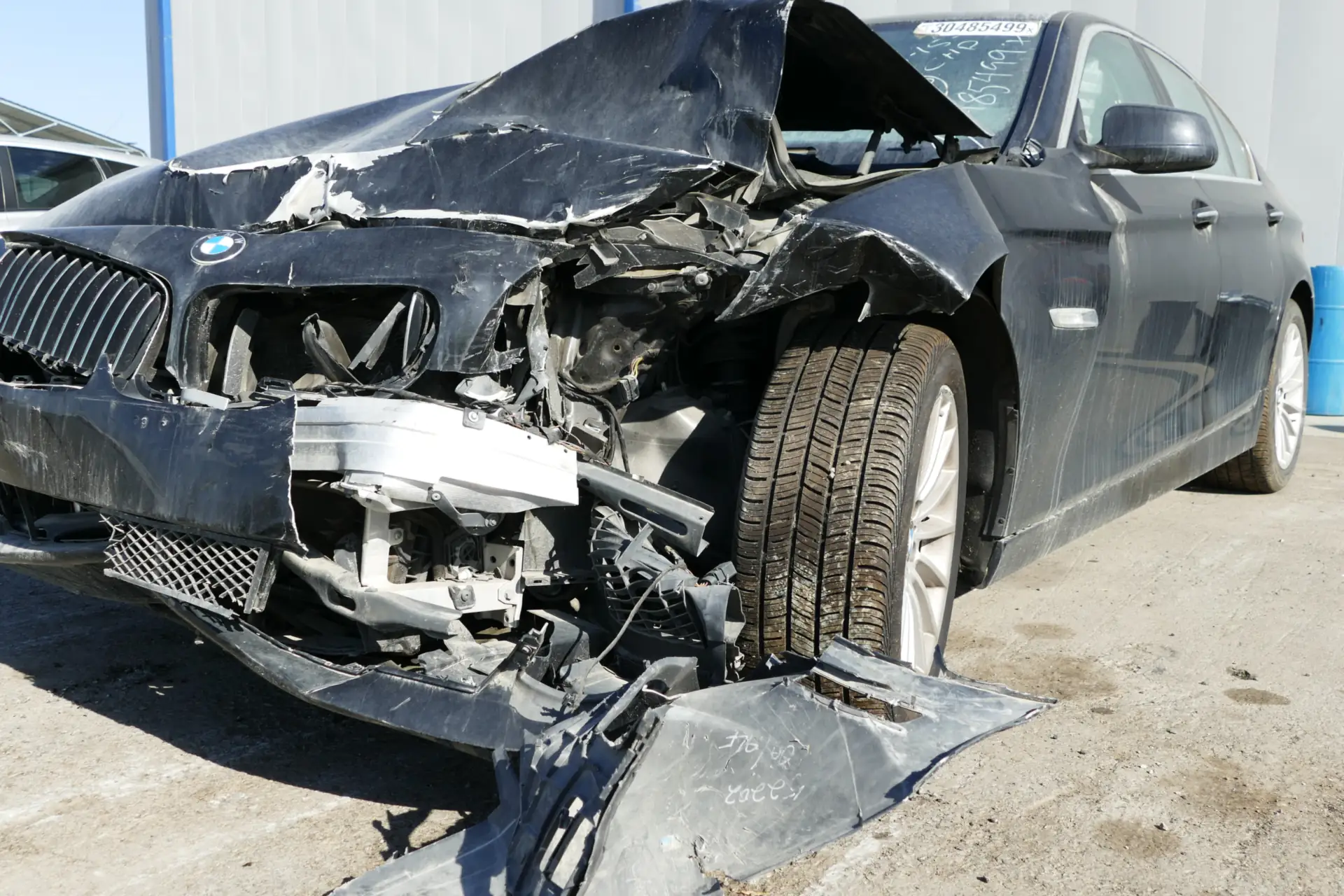
The driver who crossed into your lane is usually liable for a head-on collision. In certain serious cases, though, that driver may not be the only one responsible. A confusing off-ramp, a missing median barrier, or a car that failed to protect you can bring in a second defendant. That defendant often has far more insurance than the driver. Proving any of it depends on physical evidence at the scene that starts to disappear within hours.
Hulburt Law Firm represents people seriously injured in San Diego car accidents and families who lost someone in one. This guide explains why head-on crashes are so severe and how fault is proven. It also covers how crash reconstruction finds where the vehicles met, and who else can be held responsible.
Key Takeaways
- The driver who left their lane is usually at fault, and breaking a basic rule of the road can make that driver presumed negligent.
- Gouge marks, tire marks, and vehicle damage let a reconstruction expert locate the point of impact and show which car was in the wrong lane.
- A government agency responsible for a dangerous road, or a carmaker whose vehicle failed in the crash, can share liability.
- Most claims must be filed within two years, but a claim against a public agency is generally due in six months.
Why Head-On Crashes Are So Severe
In a head-on crash, each vehicle goes from highway speed to a stop, or is shoved backward, in a fraction of a second. A common belief is that two cars at 55 mph meet with the force of a single 110 mph crash. That is not quite right: for two cars of similar weight, each one takes roughly the impact it would take hitting a solid wall at 55 mph.
The picture changes when the vehicles are different sizes. The heavier vehicle pushes the lighter one backward. That puts more force on the people in the lighter vehicle, according to the Insurance Institute for Highway Safety. IIHS also reports that frontal crashes, the category that includes head-on collisions, account for more than half of passenger vehicle occupant deaths.
The injuries tend to be the ones that change a life: traumatic brain injuries, spinal cord damage, broken legs and pelvis from a crushed footwell, and internal injuries from the seatbelt and steering column. Our overview of common car accident injuries covers these in more detail.
Common Causes
Almost every head-on collision starts with one vehicle leaving its lane. The usual reasons:
- Wrong-way driving. A driver enters a freeway or divided highway through an off-ramp, often at night and sometimes while impaired.
- Crossing the center line. On a two-lane road, a driver drifts left while looking at a phone, falling asleep, or impaired.
- Unsafe passing. A driver pulls out to pass on an undivided highway and misjudges the gap in oncoming traffic.
- Crossing a median. A vehicle crosses a median where no barrier separates the two directions of travel.
The cause points to the defendants. A drunk wrong-way driver, a poorly marked ramp, and a missing median barrier each lead to a different party. Some causes need extra evidence. If the driver was impaired or on a phone, see our guides to being hit by a drunk driver and to proving fault in distracted driving crashes.
Who Is at Fault?
Usually the driver who left their lane, and California law makes that easier to prove.
The Rules of the Road
Three Vehicle Code sections cover most head-on crashes:
- Stay on the right. California Vehicle Code § 21650 requires drivers to use the right half of the road, with limited exceptions such as lawful passing.
- Do not cross double yellow lines. Vehicle Code § 21460 bars driving to the left of double solid yellow lines, except for turns permitted by the statute.
- Stay on your side of a divider. Vehicle Code § 21651 makes it unlawful to drive to the left of a barrier or dividing section that separates opposing traffic.
Negligence Per Se
Negligence per se means a driver is presumed careless because they broke a safety law. Under California Evidence Code § 669, the presumption applies when the violation caused the injury, the injury is the kind the law was meant to prevent, and the injured person is someone the law was meant to protect. The driver can try to rebut the presumption by showing they acted as a careful person would have under the circumstances.
If the wrong-way driver was drunk, in violation of Vehicle Code § 23152, the conduct may also support punitive damages, which are meant to punish rather than compensate.
When the Driver Claims an Emergency
Drivers who cross the center line often say something forced them to. Two defenses come up most:
- Sudden emergency. Under CACI No. 452, a driver is not negligent if they prove there was a sudden and unexpected emergency, they did not cause it, and they reacted as a reasonably careful person would have. The defense fails if the driver’s own negligence helped create the emergency, such as driving too fast for the road. Whether the defense applies is a question for the jury.
- Sudden medical episode. A driver who blacks out at the wheel is not automatically liable. California judges these cases by ordinary negligence, as the court held in Hammontree v. Jenner (1971), where a driver whose epilepsy was controlled by medication won a defense verdict. The question is whether the driver knew or should have known of the risk and took reasonable steps to manage it, so the driver’s medical history becomes central evidence.
If You Are Partly Blamed
The other driver’s insurer may argue you were speeding, distracted, or slow to react. California uses pure comparative negligence: your recovery is reduced by your share of fault, but a share of fault does not bar your claim. Our guide to how fault is determined in a car accident walks through how that split is decided.
How Reconstruction Proves Fault
When both drivers say the other one crossed the line, the physical evidence decides it. Accident reconstruction uses road marks, vehicle damage, and the cars’ own data. Together they show where each car was, how fast it was going, and what the driver did in the seconds before impact.
Gouge Marks and the Area of Impact
At the moment of maximum engagement in a head-on crash, the front ends are forced downward. Hard metal parts underneath, such as frame rails, suspension components, and the oil pan, dig into the pavement. These gouge marks are left at or very near the spot where the vehicles met, which reconstructionists call the area of impact.
The location of that area relative to the lane lines is often the clearest physical proof of fault. Gouges two feet into your lane are strong evidence the other car crossed over, whatever its driver tells the police. Scrapes and scratches leading away from the gouges show the direction each vehicle traveled after impact.
Gouges do not last. Traffic wears them down, road crews patch them, and the debris and fluid stains around them are cleared with the wreckage. Photographs and measurements taken in the first days, before the road is repaired, are often the only record.
Other Scene Evidence
Reconstructionists read the gouges together with the rest of the scene:
- Tire marks. Braking or swerving marks show a driver’s path before the crash. A sudden jog in a tire mark, where a wheel was knocked sideways, can confirm the impact point.
- Debris. Broken glass and plastic fall forward and scatter, so debris shows the general area of the crash but is less precise than gouges.
- Fluids. Coolant and oil trails trace each vehicle’s path to where it stopped.
- Final rest positions. Where each vehicle came to rest, and how far it traveled to get there, feeds the speed calculations.
Vehicle Damage and Black Box Data
The vehicles themselves are evidence. The pattern of crush shows how the front ends overlapped and at what angle, which helps place each car within its lane. The depth of the crush reflects how much energy each vehicle absorbed. Combined with the vehicles’ weights and rest positions, a reconstructionist can apply the conservation of momentum to estimate each vehicle’s speed at impact.
Many vehicles also carry an event data recorder, often called a black box. Federal rules in 49 C.F.R. § 563.7 list the data a recorder must capture, including vehicle speed, throttle, and brake use in the seconds before a crash, seatbelt use, and the vehicle’s change in speed during the impact. Under California Vehicle Code § 9951, that data generally cannot be downloaded without the registered owner’s consent or a court order.
The vehicles also show whether an airbag deployed, a seatbelt held, or the cabin collapsed. A car that is repaired, crushed, or sold at salvage auction takes that evidence with it.
Who Reconstructs the Crash
The responding police agency documents the scene and writes the collision report. For major collisions, the California Highway Patrol’s Multidisciplinary Accident Investigation Team (MAIT) can perform a full reconstruction, including speed calculations and a collision sequence. One of its teams is based in San Diego. Each MAIT team includes a Caltrans transportation engineer.
A police report is a starting point, not the final word. In a serious case, your attorney usually hires an independent reconstruction expert. The expert inspects the scene and vehicles, downloads the black box data, and tests the official conclusions. That check carries extra weight when the design of the road may be part of the case.
Other Liable Parties
For policies issued or renewed since January 1, 2025, California’s minimum liability coverage is $30,000 per person and $60,000 per accident under Vehicle Code § 16056. Minimum coverage will not go far against a brain or spinal cord injury, so a second, better-insured defendant is often what makes a full recovery possible.
The Agency Responsible for the Road
A confusing off-ramp, missing wrong-way signs, or the absence of a median barrier can contribute to a wrong-way or crossover crash. Under California Government Code § 835, a public entity such as Caltrans or a city can be liable for a dangerous condition of public property.
The agency will often argue that the other driver caused the crash, not the road. The California Supreme Court rejected that argument in Cordova v. City of Los Angeles (2015). You must show the dangerous condition contributed to your injuries, not that it caused the other driver’s conduct. Cordova relied on Ducey v. Argo Sales Co. (1979), which upheld the state’s liability for a freeway with no median barrier after another driver crossed the median.
Agencies also raise design immunity, a defense for road designs that were approved in advance. That immunity is not permanent. In Cornette v. Department of Transportation (2001), a case involving a freeway without a median barrier, the court held that immunity can be lost when changed physical conditions make the design dangerous, the agency knows it, and the agency has a reasonable time to fix it or, if it cannot, fails to warn. When those facts are disputed, a jury decides them. Our guides to suing the government for a dangerous road and whether you can sue Caltrans cover these claims in detail.
The Vehicle Manufacturer
A head-on crash is far more survivable when the vehicle does its job. When an airbag fails to deploy, a seatbelt unlatches, or the passenger compartment collapses, the carmaker can be liable. The legal question is whether the vehicle was crashworthy, meaning it reasonably protected the people inside in a crash the maker could foresee. California applies strict liability to defective products under Greenman v. Yuba Power Products: you must prove the product was defective and caused harm, not that the manufacturer was careless. For complex safety systems like airbags and seatbelts, the jury usually decides defect by weighing the design’s benefits against its risks. Soule v. General Motors Corp. (1994) limits the simpler ordinary-consumer test to failures within everyday experience. These claims are part of our auto defect practice.
The Driver’s Employer
The at-fault driver may have been working at the time, in a commercial truck, a delivery van, or on a job errand. If so, the employer can be liable under vicarious liability, the rule that makes an employer answer for an employee’s on-the-job negligence. That can bring the employer’s commercial policy into the case. Our discussion of an employer’s liability for its driver explains how these claims work.
Damages and Deadlines
What You Can Recover
California law lets you seek compensation for medical bills, future care, lost income and earning capacity, and pain and suffering. When a head-on crash is fatal, surviving family members may bring a wrongful death claim, covered in our guide to fatal car accidents.
No honest lawyer can quote a value up front. Value turns on a few things: how severe and lasting the injuries are, the cost of future care, how clearly the evidence shows fault, and how much insurance every responsible party carries. Our overview of compensation after a car accident walks through each category.
Deadlines to File
- Against a driver, employer, or manufacturer: generally two years from the crash under Code of Civil Procedure § 335.1.
- Against Caltrans, a city, or the county: a written claim generally within six months under Government Code § 911.2. A separate deadline governs the lawsuit that follows.
- If the six months have passed: a late-claim application may still be possible, but it must be made within one year of the crash under Government Code § 911.4.
Do not rely on the two-year deadline if the road may be part of the case. Our guide to the deadline to file a car accident claim explains the exceptions.
What to Do After the Crash
- Get emergency care. Prompt treatment protects your health, and the records tie your injuries to the crash.
- Make sure police respond. The report records the vehicles’ positions, lane markings, and any signs of impairment or wrong-way travel.
- Photograph the scene if you or someone with you can. Capture gouge marks, tire marks, debris, lane lines, signs, and where each vehicle stopped, with something in the frame for scale.
- Keep the vehicles. Ask your insurer not to salvage your car until it has been inspected. Have a preservation letter sent for the other vehicle so its black box data survives.
- Talk to a lawyer early. Road-design and vehicle-defect claims depend on an expert inspecting the scene before it changes.
Before giving the other driver’s insurer a recorded statement, get advice, while still meeting the notice and cooperation duties in your own policy. For a complete checklist, see the steps to take after a car accident.
Hulburt Law Firm
Attorney Conor Hulburt has tried a dangerous-road case against Caltrans and has litigated vehicle and tire defect cases against Ford, Chrysler, and Continental. In a head-on case, we look past the at-fault driver to the road, the vehicle, and the driver’s employer from the first day.
If you or someone you love was seriously hurt in a head-on collision in San Diego, Hulburt Law Firm can help. Call (619) 821-0500 or message us through our contact form for a free, confidential case review.
Request a Free Case Review
Simply fill out the form or call 619.821.0500 to receive a free case review. We’ll evaluate what happened, your injuries, and potential defendants to determine how we can best help you.

Hulburt Law Firm handles serious personal injury and wrongful death cases throughout San Diego County.


