
Hit by a Drunk Driver in San Diego: Your Legal Rights
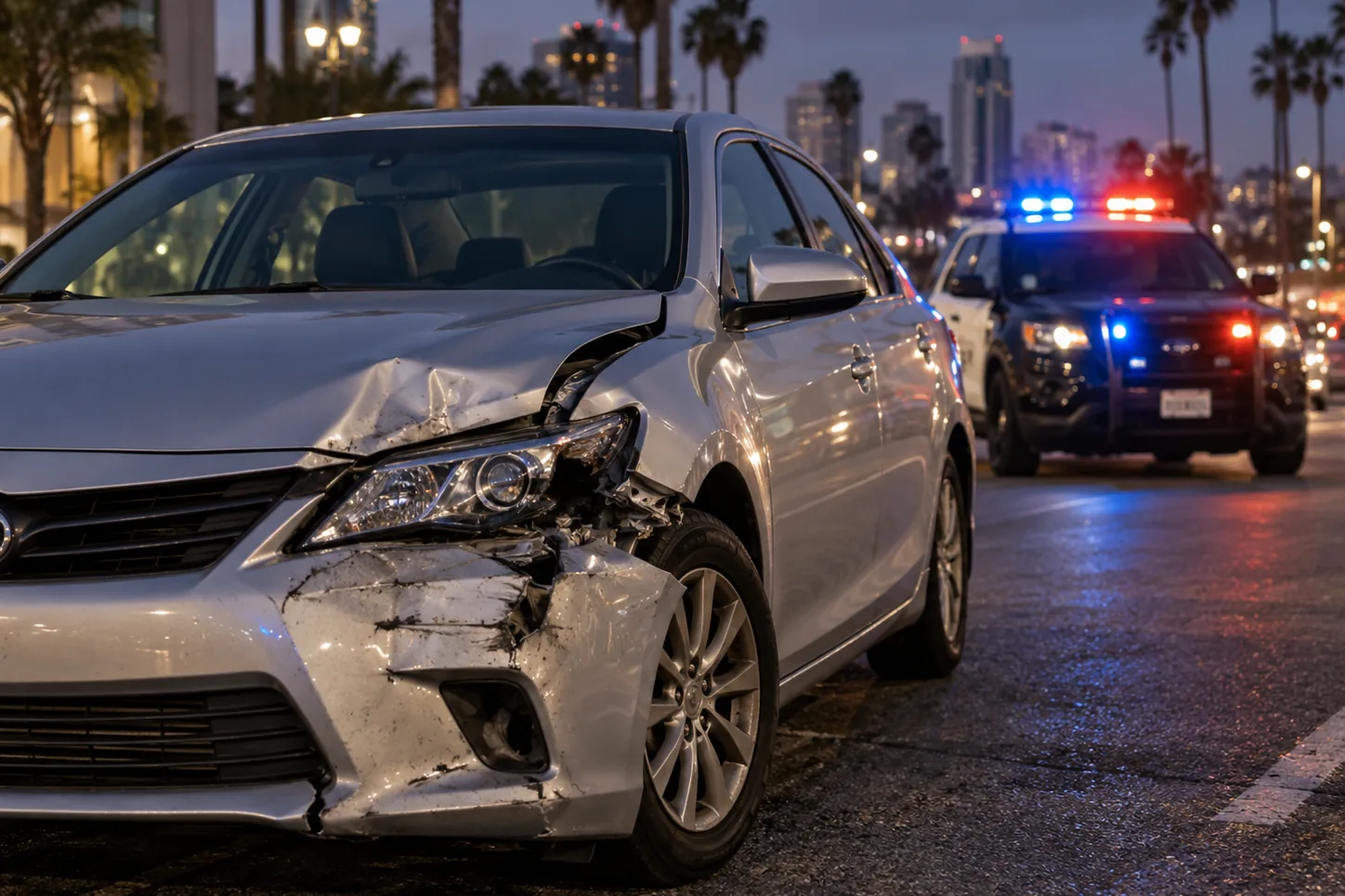
If a drunk driver injures you in San Diego, you can seek compensation for medical care, lost income, pain, and other losses. You may also have a claim for punitive damages, which punish especially harmful conduct. You do not need a criminal conviction to pursue an injury claim.
At Hulburt Law Firm, our San Diego car accident attorneys represent people and families after serious and fatal crashes. These cases require careful investigation of the driver’s conduct, the harm caused, and every responsible party and source of insurance.
What to Do After a Drunk Driving Crash
Your health comes first. Get medical attention and follow your treatment plan. When you are able, take these steps to protect your claim:
- Call 911. Report the crash and tell responding officers about any signs of impairment you observed.
- Preserve evidence. If safe, photograph the vehicles, roadway, and injuries. Save dashcam footage and obtain witnesses’ contact information.
- Document your losses. Keep medical records, bills, missed-work information, and notes about how your injuries affect daily life.
- Get advice before signing a release. Speak with an attorney before settling or giving a recorded statement to the other driver’s insurer. Promptly notify your own insurer as your policy requires.
An attorney can seek police records, chemical test results, body camera footage, and evidence of where the driver had been drinking. Video and other records may be lost if they are not preserved promptly. See our car accident checklist for more guidance.
What Compensation Can You Recover?
An injury claim can address both the financial costs of the crash and its effects on your life:
- Medical expenses: Emergency care, surgery, rehabilitation, and reasonably necessary future treatment.
- Lost earnings: Income you have missed and reduced earning capacity if your injuries affect your ability to work.
- Pain and suffering: Physical pain, emotional distress, disfigurement, disability, and loss of enjoyment of life.
- Property damage: Repair or replacement of your vehicle and other damaged property.
The value of a claim depends on the evidence, the severity and duration of the injuries, and the losses involved. Available insurance and the defendants’ assets also affect what can be collected. Our guide to car accident compensation explains these categories in more detail.
Can You Get Punitive Damages?
Yes, but punitive damages are not automatic. They punish wrongdoing and discourage similar conduct. Under Civil Code section 3294, a drunk driving claim generally requires clear and convincing evidence of malice. Without an intent to injure, this means despicable conduct carried out with willful and conscious disregard for others’ rights or safety.
In Taylor v. Superior Court (1979) 24 Cal.3d 890, the California Supreme Court recognized that knowingly driving while intoxicated can support punitive damages. Today’s statutory standard still requires proof beyond ordinary negligence.
What Evidence Supports the Claim?
The investigation should address what the driver knew and did before the crash. Relevant evidence may include:
- Blood or breath alcohol results and officers’ observations.
- Witness accounts, receipts, or video showing the driver’s drinking and plans to drive.
- Warnings the driver ignored, including objections from passengers.
- Prior DUI convictions or alcohol education showing awareness of the danger.
- Dangerous driving, such as extreme speeding or running traffic signals.
A prior DUI is not required. The facts must support the punitive claim in the complaint and ultimately satisfy the higher burden of proof at trial.
How Much Can a Jury Award?
There is no fixed amount. Under California’s punitive damages jury instruction, CACI No. 3940, jurors consider the seriousness of the misconduct, the relationship between the award and the harm, and the defendant’s financial condition. A punitive award also faces legal limits and may be difficult to collect from a defendant with few assets.
Who Else May Be Responsible?
The investigation should go beyond the driver when the facts support it. Another party’s negligence may have contributed to the crash, and additional insurance may be available.
An Employer or Vehicle Owner
An employer may be liable when an employee causes a crash while acting within the scope of employment. Simply leaving work does not establish employer liability. The purpose of the trip and its connection to the job matter.
Work-related drinking can also create liability. In Purton v. Marriott International (2013) 218 Cal.App.4th 499, the court held that an employer could be responsible for a fatal crash caused by an employee who became intoxicated at a company party, even though the employee had already returned home before driving again.
A person or business that provides a vehicle to someone it knows or should know is unfit to drive may also face a negligent entrustment claim. Learn more about employer liability and direct negligence claims.
Employer liability for compensation does not automatically establish liability for punitive damages. Section 3294 imposes additional requirements, including qualifying advance knowledge and conscious disregard, authorization, ratification, or the employer’s own malice. For corporate employers, the relevant conduct must involve an officer, director, or managing agent.
A Bar, Restaurant, or Social Host
California generally protects alcohol providers from liability for a drinker’s later conduct. Serving an intoxicated adult ordinarily does not make a bar, restaurant, or private host liable for the resulting crash. Two important exceptions involve people under 21:
- Alcohol furnished to an obviously intoxicated minor. Business and Professions Code section 25602.1 permits certain claims against licensed or required-to-be-licensed providers, and others who sell alcohol, when the statutory requirements and causation are established.
- Alcohol knowingly furnished at an adult’s residence. Under Civil Code section 1714(d), an adult may be liable for knowingly furnishing alcohol at their residence to someone the adult knows or should know is under 21.
Where the driver drank is worth investigating, but it does not by itself establish a claim against the person who supplied the alcohol.
Will Insurance Pay?
Auto liability insurance generally can cover compensatory damages arising from a drunk driving crash, subject to the policy’s terms and limits. The driver’s intoxication does not by itself mean there is no coverage.
California’s standard minimum liability limits increased in 2025 to $30,000 for bodily injury to one person, $60,000 per accident, and $15,000 for property damage under Vehicle Code section 16056. Those limits can fall far short of the losses in a serious injury case.
Potential sources of recovery include the driver’s policy, a vehicle owner’s coverage, an umbrella policy, applicable commercial insurance, and your own uninsured or underinsured motorist coverage.
Your Own UM and UIM Coverage
If you have uninsured motorist coverage, it may cover injuries caused by a driver without applicable insurance. Underinsured motorist coverage may help when the at-fault driver’s bodily injury limits are lower than your UIM limits.
UIM coverage does not stack on top of the driver’s policy. California law credits the amount paid by the responsible parties against your UIM limit. Policy conditions and exhaustion requirements also apply under Insurance Code section 11580.2. Review these requirements before settling with the driver.
Punitive Damages Are Different
California generally prohibits insurance coverage for punitive damages imposed for the insured’s own misconduct. The California Supreme Court explains that rule in PPG Industries v. Transamerica Insurance Co. (1999) 20 Cal.4th 310. A punitive claim against the driver therefore requires a separate assessment of personal assets and collectability.
For more on evaluating coverage and settlement offers, see our guide to the car accident insurance claims process.
How the DUI Case Affects Your Claim
The criminal case addresses punishment for violating the law. Your civil claim seeks compensation for your injuries. You can pursue an injury claim even if the driver is never charged or convicted. The ordinary civil burden of proof is lower than the criminal standard, although punitive damages require clear and convincing evidence.
The criminal investigation may provide valuable evidence, but the effect of a charge or plea varies:
- A DUI violation can support a presumption of negligence. Evidence Code section 669 applies when its requirements are met, including that the violation caused the type of harm the law was designed to prevent. You still must establish causation and damages.
- A final felony conviction can help prove essential facts. Evidence Code section 1300 allows qualifying felony judgments into evidence, including those based on no-contest pleas.
- A misdemeanor no-contest plea is different. Under Penal Code section 1016, it cannot be used as an admission in a civil case arising from the same conduct. The underlying crash and intoxication evidence may still support your claim.
A criminal court may also order victim restitution for economic losses. Restitution does not replace a civil claim for pain and suffering. Payments and settlement terms should be coordinated to avoid duplicate recovery for the same losses.
If a Drunk Driver Killed a Family Member
Eligible family members may bring a wrongful death claim for losses such as financial support, companionship, and funeral expenses. A separate survival claim may allow the estate or successor in interest to pursue claims the person had before death.
Punitive damages are ordinarily unavailable in wrongful death claims, but Civil Code section 3294(d) provides an exception for a death resulting from a homicide for which the defendant has been convicted of a felony. Punitive damages may also be available through a survival claim under Code of Civil Procedure section 377.34 when the requirements are met.
Our guide to fatal car accident claims explains the issues families may face.
How Long Do You Have to File a Lawsuit?
California generally gives an injured person two years from the crash to file a personal injury lawsuit under Code of Civil Procedure section 335.1. Exceptions and different deadlines may apply.
Do not wait for the DUI case to end. A pending prosecution does not automatically protect every civil deadline. A felony conviction may create an additional filing period against the convicted defendant under section 340.3, but that rule should not be assumed to preserve claims against other parties.
Have the deadlines evaluated early, including any insurance claim requirements. Read our guide to California car accident filing deadlines.
How Hulburt Law Firm Can Help
Hulburt Law Firm represents people facing catastrophic injuries and families who have lost someone in a fatal crash. Conor and Leslie Hulburt accept a limited number of serious cases so each client receives direct attorney attention and careful preparation.
We work to preserve evidence, identify responsible parties and insurance, document the full impact of the injuries, and pursue punitive damages when the facts support them. We prepare each case to withstand the defense and persuade a jury.
Call (619) 821-0500 or use our contact form for a free, confidential case review. We handle injury cases on a contingency fee basis, with no attorney’s fee unless we recover compensation. Learn more about contingency fees and case costs.
Request a Free Case Review
Simply fill out the form or call 619.821.0500 to receive a free case review. We’ll evaluate what happened, your injuries, and potential defendants to determine how we can best help you.

Hulburt Law Firm handles serious personal injury and wrongful death cases throughout San Diego County.


