
Equipment-Related Construction Accidents in San Diego
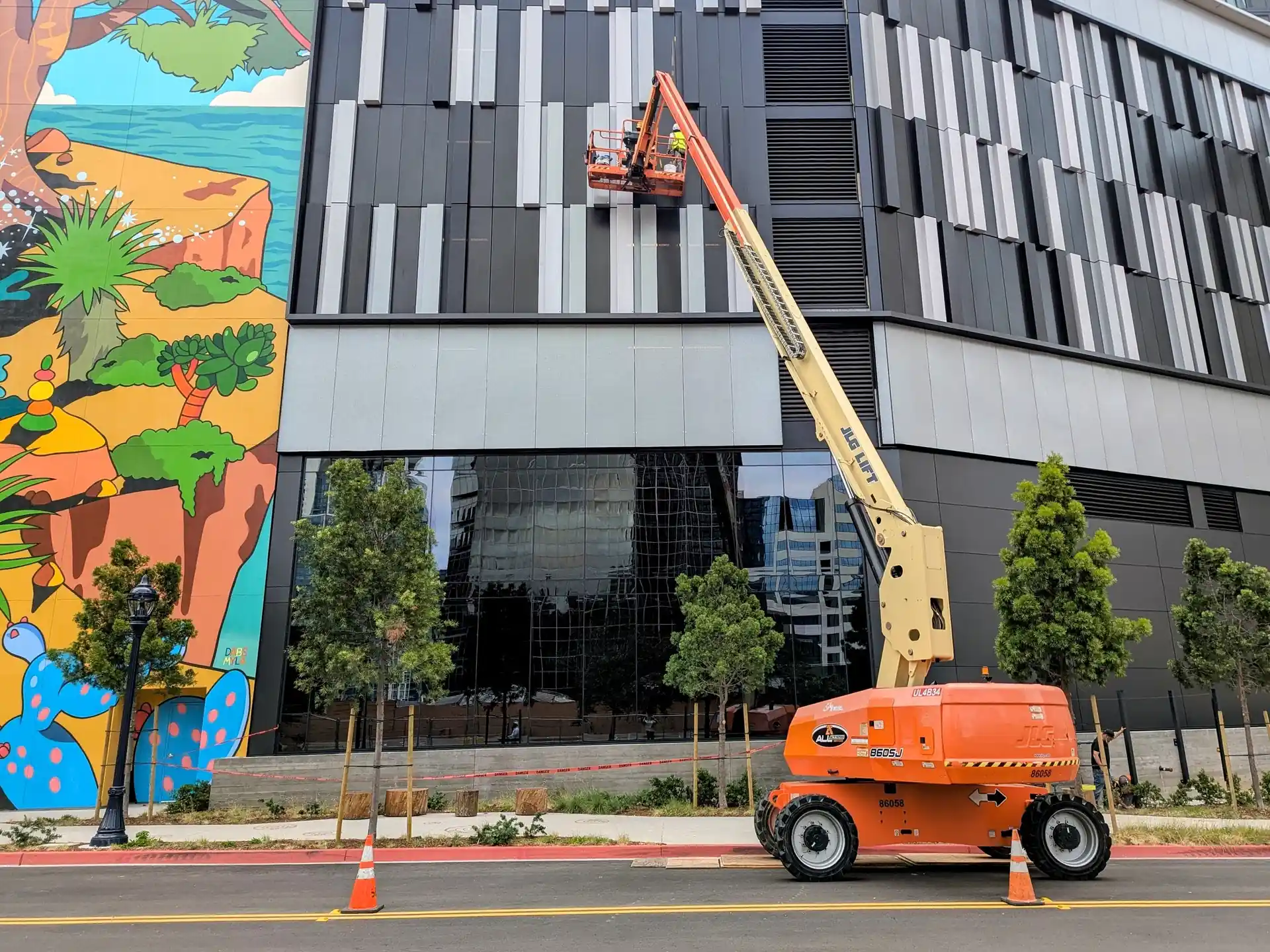
Most catastrophic equipment-failure cases in California trace back to one of four sources, and three of them are third-party defendants the workers’ compensation system cannot reach: the manufacturer that built the defective tool, the rental company that put it on your jobsite, the maintenance contractor that signed off on a machine it never properly inspected, or the general contractor that controlled which equipment got used and how.
Hulburt Law Firm handles the third-party side of California construction equipment cases. We do not handle workers’ compensation claims. This article walks through the four defendant categories that produce most real recoveries, the Cal/OSHA equipment-safety standards that drive those cases, the recall-and-failure-to-remove problem that quietly creates strict liability for the GC, and the evidence that has to be preserved in the first 30 days before the equipment is repaired, scrapped, or rented out to the next project.
The Short Version
- An equipment-failure case is rarely just a workers’ compensation case. The real recovery comes from a third-party claim against the manufacturer, the rental house, the maintenance contractor, or the general contractor.
- Strict product liability against the manufacturer is the most powerful theory available. Under Greenman v. Yuba Power Products, the worker does not have to prove negligence; only that the equipment was defective and the defect caused the injury.
- California’s pure comparative negligence rule means a worker who was partially at fault still recovers, reduced by their share of fault.
- The single most important first step is preserving the equipment in its as-found condition. Spoliation letters need to go out within days, not weeks.
- Cal/OSHA equipment standards (8 CCR §3328 for general machinery, §4885 for cranes, §3650 for forklifts, §1644 for powered equipment maintenance, §1670 for fall protection) become evidence of negligence per se under Evidence Code §669 when violated.
- Two-year statute of limitations under CCP §335.1 for most claims. Six-month claim deadline under Government Code §911.2 if any defendant is a public entity. Recall-related claims may also have separate notice obligations.
Why an Equipment Failure Is Almost Never Just a Workers’ Comp Case
Workers’ compensation in California is a no-fault system that pays for medical care and a fixed percentage of lost wages. It does not pay for pain and suffering. It does not pay for the full economic loss when a catastrophic injury ends a career. It does not pay loss of consortium to the worker’s family. And the disability ratings consistently undervalue equipment-failure injuries, particularly crush injuries, amputations, and the soft-tissue and nerve damage that develops over months.
California Labor Code §3852 expressly preserves the injured worker’s right to sue any party other than the employer for the full measure of damages. That third-party claim runs in parallel with the workers’ compensation claim. The compensation carrier has a lien on the third-party recovery for what it paid out, but the worker still receives the difference, and that lien is itself negotiable in almost every serious case. The practical result is that on a real catastrophic equipment-failure case, the third-party recovery is several multiples of what workers’ compensation alone would ever pay.
Defendant Category #1: The Equipment Manufacturer
Strict product liability is the single most powerful claim available in an equipment-failure case. Under the California Supreme Court’s foundational opinion in Greenman v. Yuba Power Products, Inc. (1963) 59 Cal.2d 57, a manufacturer is strictly liable when its product is sold in a defective condition that causes injury to the user, even without proof of negligence. The doctrine has been refined in Cronin v. J.B.E. Olson Corp. (1972) 8 Cal.3d 121 (consumer expectations test) and Soule v. General Motors Corp. (1994) 8 Cal.4th 548 (risk-benefit test for complex products).
Three theories typically run together in an equipment case:
- Design defect. The product itself was designed in a way that made it dangerous beyond what an ordinary user would expect, or whose risks outweighed its benefits. Examples include a power saw without a riving knife, a nail gun without sequential trigger lockout, a chop saw with an inadequate blade guard.
- Manufacturing defect. The specific unit that injured the worker departed from the intended design (a casting flaw, a missing weld, a contaminated batch of hydraulic fluid). This is a per-unit theory, not a product-line theory.
- Failure to warn. The manufacturer did not adequately warn users about a non-obvious hazard, or did not provide sufficient instructions for safe use, even though the design itself was acceptable.
The defendant is not only the manufacturer of the finished product but everyone in the chain of distribution: the component-part manufacturer if a sub-assembly caused the injury, the distributor, the retailer, and any successor entity. In a case involving an installed fixed system (a built-in hoist, a permanent lift, an integrated electrical panel), California Code of Civil Procedure §337.15 may extend the latent-defect claim window up to ten years from substantial completion of the improvement.
Defendant Category #2: The Tool or Equipment Rental Company
Rental houses are in the chain of distribution and can be held strictly liable under Greenman for renting a defective machine. They are also independently liable for negligence when they failed to perform the pre-rental inspection their own service procedures required, when they returned equipment to the fleet after an obviously inadequate repair, or when they rented a unit they knew or should have known was subject to a manufacturer recall.
The rental-house defendant matters because most San Diego construction sites are running on rented equipment, and the rental contract usually contains an indemnification clause running back to the contractor that rented the unit. When the manufacturer is judgment-proof, foreign, or out of business, the rental company is often the most solvent defendant in the case. The rental house’s maintenance records, inspection logs, and return-condition documentation are discoverable and frequently devastating at deposition.
Defendant Category #3: The Maintenance Contractor
Many large fleets and most permanent jobsite equipment are serviced under contract by a third-party maintenance company. When that company performed a negligent service (missed a recalled component, overlooked a visible crack, signed off on a safety device they never tested), it is independently liable for the resulting injury under straightforward negligence principles. The contract under which they performed the work is usually the first document subpoenaed; the work-order history is the second.
The Cal/OSHA standard at 8 CCR §1644 requires powered equipment to be inspected before each shift and maintained to manufacturer specifications, with documented service records. When the maintenance contractor’s records show they were responsible for that maintenance and the records do not match the manufacturer’s specifications, the negligence case practically writes itself.
Defendant Category #4: The General Contractor (Privette, Sandoval, and Hooker)
The default rule under Privette v. Superior Court (1993) 5 Cal.4th 689 is that the general contractor is not liable to a subcontractor’s employees, because the GC has delegated safety to the subcontractor. But California has carved two important exceptions that come up constantly in equipment cases.
Under Sandoval v. Qualcomm Inc. (2021) 12 Cal.5th 256, the GC is liable when it failed to undertake a non-delegable safety duty it retained, such as control over equipment selection or sitewide hazard identification. Under Hooker v. Department of Transportation (2002) 27 Cal.4th 198, the GC is liable when it retained control over how the work was performed and exercised that control in a way that affirmatively contributed to the injury, such as directing the use of a specific piece of equipment, restricting access to alternate equipment, or controlling the maintenance schedule on shared equipment.
The pattern that fits these exceptions in equipment cases: the GC owned or controlled the equipment used by all the trades, the GC dictated the service schedule, the GC knew about a defect or recall and continued the work, or the GC affirmatively prevented the subcontractor from getting different equipment. When any of those facts exist, the GC is a defendant. Our guide to third-party liability in construction accidents covers these exceptions in more depth.
The Cal/OSHA Equipment Standards That Drive These Cases
California Evidence Code §669 establishes the doctrine of negligence per se: when a defendant violates a statute or safety order designed to protect the class of persons injured, and the violation caused the injury, the defendant is presumed negligent. Cal/OSHA standards are exactly the kind of “safety order” the statute reaches.
The equipment-specific standards that show up most often in San Diego construction cases include:
- 8 CCR §3328: machinery and equipment, general industry safety order for safe condition, maintenance, and operation.
- 8 CCR §4885 et seq.: construction crane safety orders, covering inspection, certification, and operator qualifications.
- 8 CCR §3650 et seq.: industrial trucks, tractors, and haulage vehicles (including forklifts), inspection and training requirements.
- 8 CCR §1644: tools and equipment safety for construction, including the duty to remove defective equipment from service.
- 8 CCR §1670 et seq.: fall protection requirements applicable to scaffolds, ladders, and elevated work platforms.
- 8 CCR §3203: the written Injury and Illness Prevention Program required of every California employer.
The federal counterparts are also useful at the negligence-per-se stage: OSHA’s cranes and derricks standards at 29 CFR 1926 Subpart CC and the powered industrial trucks standard at 29 CFR 1910.178. A documented violation of any of these supports a negligence per se instruction at trial and often shifts settlement posture before discovery even closes. The broader Cal/OSHA framework is the spine of every serious construction injury case in California.
The Recall Problem: When the Defect Was Already Known
One of the most consequential facts to investigate in any equipment-failure case is whether the unit was already subject to a recall, service bulletin, or open notice from the manufacturer at the time of the accident. Construction equipment recalls are quietly common; manufacturers issue them through the federal Consumer Product Safety Commission, through their own dealer networks, or through industry trade publications like ENR. The rental house’s obligation is to remove recalled units from service. The contractor’s obligation under 8 CCR §1644 is to take defective equipment out of service. When neither happens and a worker is hurt, the liability picture changes dramatically.
A recall is not the only kind of pre-accident notice that matters. OEM service bulletins, technical service notices, and field safety notices issued between major recalls are equally probative. The discovery request for “all communications from the manufacturer regarding this model” is one of the standard tools in an equipment case, and it routinely produces documents the defendants did not expect us to ask for.
The Injuries Equipment Failures Cause
Construction equipment is heavy, fast, and unforgiving. Equipment-failure injuries skew catastrophic: traumatic brain injury from being struck by a falling load or a tool kickback, spinal cord injury from a fall after a scaffold or ladder failure, severe burns from a hydraulic line rupture or electrical fault, traumatic amputations from crush injuries and powered cutting tools, and the long-term orthopedic, neurological, and vocational consequences that follow. Fatal cases trigger a wrongful death claim under CCP §377.60 alongside the survival action under CCP §377.30. The fuller breakdown is in our article on common construction accident injuries.
The Evidence to Preserve in the First 30 Days
The most important work in an equipment-failure case happens before the lawsuit is even filed. The following items should be locked down within days of the accident.
The equipment itself. The single most important step. A spoliation letter to the employer, the GC, the rental company, and the manufacturer should go out within the first week, demanding preservation of the unit in its as-found condition pending inspection by the plaintiff’s expert. Without that letter, equipment routinely gets repaired (destroying the evidence), returned to the rental fleet (where it disappears into the inventory), or scrapped.
All maintenance and inspection records. The pre-shift inspection log required by 8 CCR §1644, the rental house’s service file, the OEM service bulletins, the manufacturer’s recall notices, and the written IIPP required by 8 CCR §3203. These records establish what was known and when.
The Cal/OSHA inspection file. Cal/OSHA opens an investigation on every reported serious construction accident. Once the file is closed, citations issued, and settlements reached with the employer, the entire investigative file becomes obtainable under the California Public Records Act. This file is frequently the single most useful document in the case.
Photographs and video of the scene. Worksites change within days. The position of the equipment, the surrounding hazards, the weather conditions, and the layout that explains the accident must be documented before they are altered.
Witness statements from co-workers. Construction crews rotate off projects. The operator, the foreman, and the crew members who saw the failure may be on a different project two weeks later and unreachable when the case is filed.
The rental and purchase paperwork. Rental agreements, purchase orders, and the chain-of-distribution documents that identify every entity that handled the unit between the manufacturer and the jobsite.
Time Limits You Cannot Miss
The two-year statute of limitations under CCP §335.1 applies to most third-party personal injury claims, running from the date of the accident. The six-month government claim deadline under Government Code §911.2 applies any time a defendant is a public entity, which can include a public works project, a municipal utility, or the public agency that owns the property. The ten-year statute of repose under CCP §337.15 caps latent-defect claims involving improvements to real property; this matters for installed equipment, permanent hoists, fixed lifts, and similar systems.
The workers’ compensation reporting and filing deadlines run independently of the third-party deadlines. Filing or not filing workers’ compensation does not extend or shorten the third-party SOL. The full deadline detail is covered in our resource on the San Diego personal injury statute of limitations.
What to Do After an Equipment-Failure Accident on a San Diego Construction Site
Get medical care immediately, even if the injury looks manageable at the scene. Equipment-failure injuries frequently present with delayed complications: internal bleeding from crush injuries, compartment syndrome, head injuries from a fall after the failure. Report the accident to your supervisor in writing the same day and ask for a copy of the incident report. Do not move the equipment if it can be safely left in place; if it must be moved, photograph the position first. Do not discuss the cause of the accident with anyone other than your treating providers and your own attorney. Do not give a recorded statement to any insurance adjuster. Do not sign anything from the employer, the GC, or a “benefits coordinator” without independent legal review.
If you can, photograph the equipment, the surrounding area, any visible damage to the unit, and the manufacturer plate or serial number. Get the names and phone numbers of every witness on the crew before they leave the project. If the equipment was rented, ask the foreman which rental house it came from. If you suspect a defect (the safety device did not engage, the guard was missing, the unit had been reported as having problems), say so in your written incident report.
How Hulburt Law Firm Handles Equipment-Failure Cases
Hulburt Law Firm represents injured workers and the families of workers killed in third-party construction equipment cases throughout San Diego County. We do not handle the workers’ compensation side. We handle the case against the manufacturer, the rental company, the maintenance contractor, and the general contractor: the case that captures pain and suffering, full lost earnings, and loss of consortium that workers’ compensation cannot reach. We work with mechanical engineering experts, accident reconstructionists, and human factors specialists to take equipment apart, model the failure, and tie it to the design choice, the maintenance gap, or the missing warning that actually caused the injury. We pay all costs up front. There is no fee unless we recover.
To talk through what happened, call (619) 821-0500 or reach us through our contact page. Initial consultations on equipment-failure and other catastrophic construction accident cases are free, and the evaluation includes a written assessment of which Cal/OSHA standards apply, who the likely third-party defendants are, and what evidence has to be preserved this week before it disappears.
Request a Free Case Review
Simply fill out the form or call 619.821.0500 to receive a free case review. We’ll evaluate what happened, your injuries, and potential defendants to determine how we can best help you.

Hulburt Law Firm handles serious personal injury and wrongful death cases throughout San Diego County.


