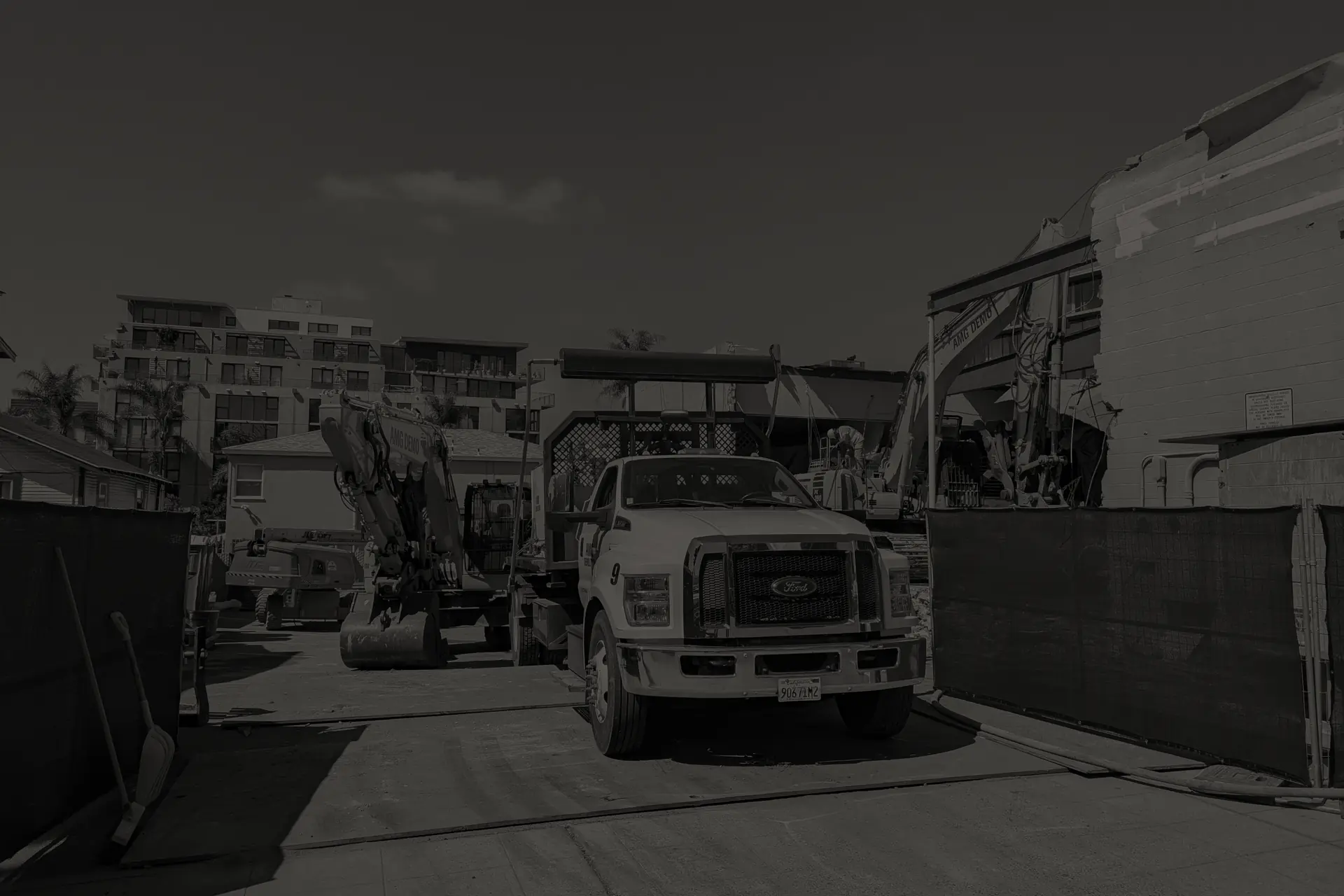
Construction accidents can cause devastating injuries and deaths. Although an injured worker may be entitled to workers’ compensation benefits, a general contractor, subcontractor, property owner, equipment manufacturer, vehicle operator, or another company on the jobsite may also share responsibility.
Hulburt Law Firm represents injured workers and families after serious and fatal construction accidents throughout San Diego County. Our attorneys have recovered more than $150 million for personal injury and wrongful death clients, including construction accident results ranging from $1.85 million to $16.55 million.
Injured in a construction accident? Get help today.

Construction accidents can happen in many different ways, and the type of incident often determines which companies may be responsible, which safety rules apply, and what evidence must be preserved. A fall, equipment failure, trench collapse, electrical injury, structural failure, or vehicle accident may involve several contractors, employers, property owners, manufacturers, and insurance policies.
These cases often require careful review of contracts, site-control responsibilities, safety plans, training and inspection records, photographs, video, equipment, witness accounts, and Cal/OSHA materials. Hulburt Law Firm represents workers and families after serious construction accidents, including those listed here.
Falls from heights are a leading cause of serious injury and death on construction sites. These accidents may involve roofs, scaffolds, ladders, open floors, unprotected edges, lifts, or improperly covered openings.
California’s personal fall-arrest system requirements generally require fall protection when workers are exposed to specified height hazards. A serious fall may result from missing guardrails, unsafe scaffolding, inadequate tie-off points, defective equipment, poor supervision, or a failure to coordinate safety among contractors.
Important evidence may include photographs of the site, the scaffold or fall-protection equipment, safety plans, inspection records, training documents, contracts, witness accounts, and Cal/OSHA investigation materials.
Trench cave-ins, excavation failures, and structural collapses can cause catastrophic crushing injuries, suffocation, amputation, and death. These incidents may result from inadequate shoring, unsupported soil, water intrusion, nearby equipment loads, poor access, or a failure to inspect changing site conditions.
Cal/OSHA’s excavation safety standards generally require an appropriate protective system, such as shoring, shielding, or properly sloped or benched soil, for qualifying excavations. They also require inspections by a competent person who can identify hazards and order corrective action.
Important evidence may include shoring plans, site photographs, soil and engineering reports, daily inspection records, trench permits, safety plans, contracts, equipment placement, weather conditions, witness accounts, and Cal/OSHA investigation materials. Depending on the facts, responsibility may extend to the general contractor, excavation subcontractor, property owner, engineer, equipment operator, shoring contractor, or another company that controlled or created the hazard.
Cranes, forklifts, hoists, excavators, loaders, and other heavy equipment can cause catastrophic injuries when loads shift, equipment tips over, operators lose visibility, or workers enter an unsafe operating zone. Scissor lifts, boom lifts, and other aerial work platforms carry their own risks: tip-overs on uneven ground and falls from the platform when guardrails or controls fail. These incidents may involve improper rigging, excessive loads, unstable ground, poor signaling, inadequate maintenance, or unqualified operators.
Important evidence may include operator certifications, lift and rigging plans, load charts, inspection and maintenance records, equipment data, ground-condition assessments, spotter and signal procedures, photographs, video, and witness accounts.
Depending on the facts, responsibility may extend to the general contractor, equipment operator, subcontractor, rental company, maintenance provider, rigging contractor, equipment manufacturer, or another company that controlled the work or created the hazard.
Struck-by accidents happen when a worker is hit by a falling object, swinging load, moving vehicle, equipment, or building material. Construction trucks are a recurring cause: dump trucks, cement mixers, and water trucks backing up or moving through congested jobsites without a spotter. Conor Hulburt recovered $6 million for a construction worker whose leg was crushed when a dump truck driver failed to "get out and look" before backing up.
Caught-in/between accidents occur when a worker is crushed, pinned, pulled into machinery, or trapped between equipment, structures, walls, or materials. These incidents may result from unsecured loads, missing barricades, unsafe equipment operation, poor communication, inadequate spotters, unguarded machinery, or a failure to separate workers from active vehicle and equipment zones.
Important evidence may include site photographs and video, equipment data, lift or rigging plans, delivery records, spotter procedures, safety plans, contracts, witness accounts, and Cal/OSHA investigation materials. Depending on the facts, responsibility may extend to the general contractor, subcontractors, equipment operators, trucking companies, material suppliers, property owners, or equipment manufacturers.
Electrocution accidents can occur when workers contact overhead or underground power lines, energized equipment, damaged wiring, temporary power systems, improperly grounded tools, or defective welding equipment. Welders may also suffer electrical shock when leads, electrode holders, cables, or grounding systems are damaged or improperly maintained. Electrical arc flashes can cause devastating burns even without direct contact.
Welding, cutting, and other hot work can ignite combustible materials, chemical vapors, fuel, or compressed gases. Welding accidents may also involve exploding cylinders, inadequate ventilation, toxic fumes, missing fire watches, or work performed near materials that were not properly cleaned, isolated, or protected.
These incidents can cause severe burns, smoke or fume inhalation, permanent scarring, brain injury, amputation, and death. Important evidence may include photographs and video, electrical diagrams, utility markings, welding leads and equipment, cylinder and regulator condition, grounding records, lockout/tagout documents, hot-work permits, fire-watch records, ventilation plans, inspection records, safety plans, witness accounts, and Cal/OSHA investigation materials.
Depending on the facts, responsibility may extend to the general contractor, electrical or welding subcontractor, property owner, utility company, equipment or gas supplier, manufacturer, or another party that controlled the work or created the hazard.
Roofing and ladder work exposes workers to serious fall hazards, including unstable surfaces, unprotected edges, steep slopes, roof openings, and improperly placed or defective ladders. Accidents may result from missing fall protection, inadequate anchor points, unstable ladder footing, damaged rungs, or pressure to work in unsafe conditions.
Important evidence may include the ladder or fall-protection equipment, photographs and video of the site, roof pitch and surface conditions, inspection records, safety plans, training documents, contracts, witness accounts, and Cal/OSHA investigation materials.
Depending on the facts, responsibility may extend to the general contractor, roofing or framing subcontractor, property owner, ladder or equipment manufacturer, safety consultant, or another company that controlled the work or created the hazard.
Demolition and tear-out work can expose workers to unstable structures, falling debris, hidden electrical or gas lines, hazardous materials, and rapidly changing site conditions. Serious injuries may occur when walls, ceilings, roofs, or other components collapse unexpectedly or when workers encounter utilities that were not properly identified or shut off.
Cal/OSHA’s demolition standards require planning and supervision before demolition begins, including evaluation of the structure, control of utilities, safe removal of debris, and protection against fire and other hazards.
Important evidence may include engineering surveys, demolition plans, utility shutoff records, permits, site photographs and video, safety plans, contracts, witness accounts, and Cal/OSHA investigation materials. Depending on the facts, responsibility may extend to the general contractor, demolition subcontractor, property owner, engineer, utility company, or another party that controlled the work or failed to address the hazard.
Construction accident cases often involve multiple contractors, overlapping safety responsibilities, workers’ compensation issues, and evidence controlled by the companies on the jobsite. Conor and Leslie Hulburt bring substantial experience handling serious injury and wrongful death cases against general contractors, subcontractors, property owners, manufacturers, insurers, and public entities.
Conor focuses on uncovering how the accident happened, who controlled the work, and which safety failures contributed to the injury. His construction results include recoveries of $16.55 million for a fatal gate collapse, $7.225 million for an unsupported concrete wall collapse, $6 million for a dump-truck backing accident, and $1.85 million for a fall through an unsecured opening.
Hulburt Law Firm intentionally accepts fewer cases so the team can devote the time, attention, and resources each serious construction case requires. That approach allows for closer client communication, more thorough investigation, careful preparation, and stronger presentation at settlement, mediation, or trial.

Our experienced attorneys have a proven track record of achieving extraordinary results in construction accident cases.
A massive, improperly installed gate collapsed on a subcontracted worker who was asked by the general contractor to paint it, causing his tragic death.
A concrete block wall wasn't properly supported and fell on a construction worker in El Cajon, killing him.
A dump truck driver failed to "get out and look" before backing up into a construction worker, crushing his leg against a bulldozer.
During your free case review, we listen to what happened on the jobsite, how you were injured, and what questions you and your family have. We review any incident reports, photographs, safety notices, medical records, or insurance letters already available and explain the difference between workers’ compensation benefits and a potential third-party claim.
We move quickly to investigate the site and preserve important evidence. That may include photographs and video, equipment, incident reports, Cal/OSHA records, contracts, safety plans, inspection documents, witness interviews, and communications among the companies involved.
Next, we investigate how the accident happened, who controlled the work, and which safety failures contributed to the injury. Depending on the case, we may work with construction-safety professionals, engineers, accident reconstructionists, medical specialists, life-care planners, economists, and other experts.
Construction accidents may involve several responsible companies. We evaluate the roles of the general contractor, subcontractors, property owner, developer, equipment manufacturers, vehicle operators, safety consultants, and others connected to the work.
Once the liability evidence and damages are sufficiently developed, we present how the accident happened and document its full impact, including medical care, lost income, future needs, pain, disability, and changes to daily life.
If the responsible companies and insurers are unwilling to resolve the case fairly, we are prepared to file a lawsuit. Litigation may involve project records, written discovery, depositions of supervisors and company representatives, expert inspections, motions, mediation, and trial preparation.
A worker injured on a San Diego construction site may have rights under two separate legal systems: a workers’ compensation claim through the employer and a third-party personal injury claim against another company or person who contributed to the accident.
Most California employees injured in the course of their work may qualify for workers’ compensation benefits without proving that the employer was negligent. The basic no-fault framework is set out in Labor Code section 3600.
Depending on the injury and the worker’s circumstances, benefits may include:
California employers generally must obtain workers’ compensation insurance or receive authorization to self-insure under Labor Code section 3700.
Workers’ compensation is an important safety net, but it generally does not provide damages for pain and suffering, loss of enjoyment of life, or the full measure of lost earning capacity available in a civil lawsuit. When another company or person contributed to the accident, a separate third-party claim may provide additional compensation. Our guide to compensation available to construction accident victims explains how these forms of recovery may work together.
Workers’ compensation benefits do not prevent an injured worker from pursuing a separate claim against someone other than the direct employer. Labor Code section 3852 preserves the worker’s right to seek damages from a third party whose conduct contributed to the injury.
Depending on how the accident happened, potentially responsible third parties may include:
A third-party claim may provide compensation that workers’ compensation generally does not, including pain and suffering, loss of enjoyment of life, full lost earning capacity, and future medical or life-care needs. In unusual cases involving oppression, fraud, or malice, Civil Code section 3294 may also permit punitive damages.
The applicable safety duties may be informed by Cal/OSHA’s Construction Safety Orders, which address falls, scaffolding, excavations, cranes, electrical work, demolition, and other jobsite hazards. A safety-order violation can provide important evidence when determining how the accident occurred and which company failed to meet its responsibilities.
When workers’ compensation benefits have been paid, the employer or insurer may assert a lien against part of the third-party recovery under Labor Code section 3856. Reviewing and negotiating that lien can significantly affect the amount the injured worker ultimately receives.
Our guide to third-party liability in San Diego construction accidents explains these claims in greater detail.
California construction cases involving subcontracted workers are often shaped by the Privette doctrine. As a general rule, a property owner or general contractor that hires an independent contractor is not responsible for injuries to the contractor’s employees merely because the contracted work was dangerous or the worker’s employer failed to provide a safe workplace.
The rule is based in part on the idea that responsibility for performing the contracted work safely is ordinarily delegated to the independent contractor and that injured employees generally have access to workers’ compensation benefits through their employer.
Important exceptions may apply, including:
Determining whether an exception applies often requires careful review of the contracts, safety plans, meeting records, site practices, and testimony from superintendents, project managers, safety personnel, and workers. The practical question is not simply whether the general contractor had broad authority over the project, but whether it exercised control or engaged in conduct that contributed to the specific hazard and injury.
Construction accident claims are subject to strict deadlines. The correct deadline depends on the type of claim, the parties involved, and the circumstances of the injury.
In many third-party personal injury and wrongful death cases, the general deadline is two years under Code of Civil Procedure section 335.1.
Much shorter deadlines may apply when a city, county, state agency, school district, or another public entity owned the property, controlled the project, operated equipment, or otherwise contributed to the accident. A claim involving personal injury or death generally must be presented to the public entity within six months under Government Code section 911.2.
Workers’ compensation claims have separate notice and filing requirements. An injured worker should report the accident to the employer promptly and determine which workers’ compensation deadlines apply, even when a third-party civil claim is also being investigated.
Construction cases also have practical evidence deadlines. Jobsite conditions can change quickly, equipment may be moved or repaired, video may be erased, and workers may leave the project. Early investigation can help preserve photographs, equipment, contracts, safety records, witness testimony, and other evidence needed to determine what happened.
Our guide to fatal workplace accident claims explains the legal options and deadlines that may apply after a construction-related death.
We investigate the companies, contracts, safety plans, equipment, witnesses, and Cal/OSHA records needed to understand how the accident happened and who controlled the work.
Construction cases often involve complex sites, equipment movements, and competing accounts. We use photography, 3D scanning, drone imagery, animation, and visual presentation to make the evidence clear.
Defense attorneys and insurance companies know us and respect us. We assess the full extent of your damages, pursue every responsible contractor and owner, and negotiate workers’ compensation liens down.
Hulburt Law Firm's attorneys have obtained construction accident recoveries ranging from $1.85 million to $16.55 million in cases involving collapses, falls, unsafe equipment, and fatal jobsite hazards.
A serious construction injury can overwhelm a worker or family. We keep clients informed, prepare carefully, and take the time to understand how the injury has affected their health, work, family, and future.
Get medical care first. Report the accident to your employer or supervisor as soon as possible and make sure an incident report is completed.
If you can do so safely, photograph or record the accident scene, equipment, opening, scaffold, trench, vehicle, or other condition involved. Save damaged safety equipment and write down the names of coworkers, supervisors, and other witnesses.
Construction sites can change quickly, and important evidence may be moved, repaired, or discarded. It may also be helpful to speak with attorneys who understand both workers’ compensation and third-party construction claims so you can identify all available rights and deadlines.
These steps can be especially important after falls from heights, where the condition of the scaffold, ladder, roof, opening, or fall-protection equipment may become critical evidence.
Responsibility may extend beyond the injured worker’s direct employer. Depending on how the accident happened, potentially responsible parties may include the general contractor, subcontractors, property owner, developer, equipment manufacturer, vehicle operator, safety consultant, or another company whose work created or failed to correct the hazard.
The direct employer’s responsibility is usually handled through workers’ compensation. A separate third-party claim may be available against other people or companies that controlled the work, supplied defective equipment, created the dangerous condition, or contributed to the accident.
Identifying the responsible parties often requires reviewing contracts, safety plans, site-control responsibilities, equipment records, witness accounts, and the actual practices followed on the jobsite.
The most serious construction accidents often involve the same recurring hazards:
Other serious incidents include crane and heavy-equipment accidents, demolition collapses, welding and explosion injuries, and burns from electrical arc flashes or hazardous materials.
These accidents often trace back to missing fall protection, poor site coordination, unsafe equipment operation, inadequate inspections, or another failure to follow required safety practices. Our guide to the most common types of construction accidents in San Diego explains these hazards in more detail.
The compensation available depends on whether the case involves workers’ compensation, a third-party claim, or both.
Workers’ compensation may provide medical treatment, temporary disability payments, permanent disability benefits, and other limited benefits. A third-party claim against a negligent contractor, property owner, manufacturer, vehicle operator, or another responsible party may also provide compensation for:
Because workers’ compensation liens and reimbursement rights may affect the final recovery, it is important to evaluate how the two systems work together. Our guide to compensation for construction accident victims explains these categories in more detail.
The value of a construction accident case depends on the injuries, the long-term effects of the accident, the strength of the liability evidence, and the responsible parties and insurance coverage available.
Important factors may include:
No lawyer can determine the value of a serious construction case from a formula or the injury diagnosis alone. The case must be investigated carefully to understand how the accident changed the worker’s life and which companies may be responsible.
Hulburt Law Firm's attorneys have obtained construction accident recoveries ranging from $1.85 million to $16.55 million, although past results do not guarantee a similar outcome. Our guide to common injuries in construction accidents explains the medical and long-term consequences that often affect case value.
Both claims may proceed at the same time.
Workers’ compensation provides no-fault benefits through the employer’s insurer, including medical treatment and disability payments. A separate third-party lawsuit may seek additional compensation from a general contractor, subcontractor, property owner, equipment manufacturer, vehicle operator, or another party that contributed to the accident.
If the worker recovers compensation from a third party, the workers’ compensation insurer may assert a lien or reimbursement claim for certain benefits it paid. Reviewing and negotiating that lien can significantly affect the amount the injured worker ultimately receives.
Our guide to third-party liability in California construction accidents explains how the civil claim and workers’ compensation case may work together.
A denied workers’ compensation claim does not necessarily end the case. The worker may be able to challenge the denial through the workers’ compensation system by requesting further medical review, filing an application with the Workers’ Compensation Appeals Board, and presenting the dispute at a conference or hearing.
A denial also does not prevent a separate third-party claim against another company or person who contributed to the accident. For example, the worker may still have a civil claim against a general contractor, subcontractor, property owner, equipment manufacturer, or vehicle operator.
Workers’ compensation and third-party claims have different procedures and deadlines, so each should be evaluated separately and promptly.
Usually, an injured employee’s claim against the direct employer is limited to workers’ compensation. Labor Code section 3602 generally makes workers’ compensation the exclusive remedy for injuries arising out of and occurring in the course of employment.
California law recognizes narrow exceptions, including certain claims involving:
When an employer is illegally uninsured, Labor Code section 3706 may permit the injured employee to bring a civil action against the employer.
Even when the employer cannot be sued directly, the worker may still have a third-party claim against a general contractor, subcontractor, property owner, equipment manufacturer, vehicle operator, or another company whose conduct contributed to the accident.
You do not need to gather every document before contacting a lawyer. Still, the following information can help the attorney understand what happened and identify evidence that should be preserved:
Do not alter, repair, test, or discard equipment involved in the accident. Physical evidence may be critical, particularly in equipment-related construction accident cases.
The first meeting should focus on understanding the accident, your injuries, the companies involved, and the immediate steps needed to preserve evidence and protect your rights.
Every case is different, but a serious construction accident claim often moves through several stages:
Construction cases often involve multiple defendants and insurers, so the process may take time. Throughout the case, the attorney should explain significant developments, prepare the client for major decisions, and provide a realistic assessment as the evidence develops.
Cases involving dump trucks, forklifts, cranes, and other heavy machinery may require additional evidence such as operator qualifications, inspection records, maintenance histories, telematics, and onboard data. Learn more about construction vehicle accident claims.
A construction accident investigation begins with preserving evidence before the jobsite changes, equipment is repaired, video is erased, or witnesses move on to other projects.
Depending on the accident, the investigation may include:
The investigation should determine how the accident happened, which companies controlled the relevant work or condition, what safety measures were required, and whether a contractor, owner, manufacturer, or another party contributed to the injury.
Our guide to jobsite accidents on San Diego construction sites discusses the evidence and legal issues that commonly arise in these cases.
A fatal construction accident may give rise to several different claims, depending on who caused the accident and the family members involved.
Workers’ compensation may provide death benefits and burial expenses to qualifying dependents. These benefits are generally pursued through the deceased worker’s employer and workers’ compensation insurer.
The surviving family may also have a wrongful death claim against a third party whose negligence contributed to the accident, such as a general contractor, subcontractor, property owner, equipment manufacturer, or vehicle operator. A wrongful death claim may seek compensation for the family’s loss of financial support, household services, companionship, guidance, and other legally recoverable losses.
The decedent’s personal representative or successor in interest may also bring a survival action for claims the worker could have pursued before death. A survival action is legally distinct from the family’s wrongful death claim and may include medical expenses, lost earnings before death, property damage, and, where supported, punitive damages.
Fatal construction cases should be investigated promptly because the jobsite may change, equipment may be repaired or removed, and contractors may have different insurance policies and responsibilities.
Learn more about fatal workplace accidents and wrongful death claims.
When workers’ compensation benefits are paid for an injury caused by a third party, the employer or workers’ compensation insurer may seek reimbursement from the worker’s third-party settlement or judgment. This reimbursement claim is commonly called a workers’ compensation lien.
The lien may include amounts paid for medical treatment, temporary disability, permanent disability, and other workers’ compensation benefits. The amount initially claimed is not necessarily the amount that must ultimately be repaid.
Several issues may affect the lien and the worker’s net recovery, including:
Under Labor Code section 3860, attorney’s fees and reasonable expenses may be deducted before the employer or insurer is reimbursed when the recovery was obtained through the worker’s attorney.
Lien resolution can materially affect how much compensation the injured worker ultimately receives. It should therefore be addressed as part of the overall settlement strategy rather than treated as an administrative issue after the case resolves.
Cal/OSHA enforces California workplace safety regulations. After a serious or fatal construction accident, the agency may inspect the jobsite, photograph conditions, interview witnesses, review safety records, examine equipment, and determine whether an employer violated an applicable safety order.
Cal/OSHA may issue citations and penalties, but it does not represent the injured worker, award civil damages, or decide which companies are legally responsible in a third-party lawsuit. Its investigation is separate from the worker’s compensation claim and any civil case.
Employers must immediately report qualifying work-related deaths and serious injuries or illnesses to Cal/OSHA. Under Title 8, section 342, “immediately” means as soon as practically possible, but no longer than eight hours after the employer knows or should know of the incident.
Cal/OSHA records can provide important evidence, including:
A citation may be important evidence, but it does not automatically establish civil liability. The legal investigation must still determine which companies controlled the work, created the hazard, or otherwise contributed to the accident.
Hulburt Law Firm handles third-party construction accident cases on a contingency-fee basis. That means there is no upfront retainer or hourly attorney’s fee. The firm receives an agreed percentage of the recovery only if compensation is obtained.
Construction cases may also require expenses for court filings, medical records, depositions, site inspections, engineers, construction-safety experts, accident reconstruction, and other investigation. The written fee agreement explains how these costs are handled and whether they are reimbursed from a settlement or verdict.
The initial case review is free. Before hiring any attorney, you should understand the contingency percentage, how case costs are treated, and whether the percentage changes if a lawsuit or trial becomes necessary.
Hulburt Law Firm represents injured construction workers and families throughout San Diego County, including San Diego, Chula Vista, Oceanside, Carlsbad, Escondido, El Cajon, La Mesa, Poway, Encinitas, San Marcos, and surrounding communities.

Simply fill out the form or call 619.821.0500 to receive a free case review. We’ll evaluate what happened, your injuries, and potential defendants to determine how we can best help you.