
Proving Negligence in California Premises Liability Cases

In California, premises liability generally rests on negligence: a failure to use reasonable care that causes harm. An injury on someone else’s property does not, by itself, establish liability. The questions include who controlled the property, what precautions were reasonable, what the responsible parties knew or should have known, and how the unsafe condition caused the injury. Claims against public entities follow separate statutory rules, discussed below.
Hulburt Law Firm represents people seriously injured on someone else’s property in San Diego County. Our San Diego premises liability attorneys investigate who was responsible for the property, how the hazard developed, and what could reasonably have prevented the injury. This guide explains the elements of a claim, the duty of care, notice, causation, the evidence used to prove liability, and comparative fault.
What You Must Prove
Under CACI No. 1000, the jury instruction courts use in these cases, an injured person must prove four things:
- Ownership or control. The defendant owned, leased, occupied, or controlled the property.
- Negligence. The defendant was negligent in the use or maintenance of the property.
- Harm. You were harmed.
- Causation. The defendant’s negligence was a substantial factor in causing the harm.
The California Supreme Court explained in Kesner v. Superior Court (2016) 1 Cal.5th 1132 that premises liability and general negligence share the same elements: duty, breach, causation, and damages. Any of these issues can be disputed. Leases and management agreements may help establish control; inspection records and testimony may establish negligence; and medical evidence may establish the nature and extent of injury. The sections below explain how these issues fit together.
The Duty Property Owners Owe
Everyone is responsible for injuries caused by a failure to use ordinary care. That rule comes from Civil Code § 1714, and it applies to property the same way it applies to driving. As the Court of Appeal put it in Brooks v. Eugene Burger Management Corp. (1989) 215 Cal.App.3d 1611: “The owner of premises is under a duty to exercise ordinary care in the management of such premises in order to avoid exposing persons to an unreasonable risk of harm. A failure to fulfill this duty is negligence.”
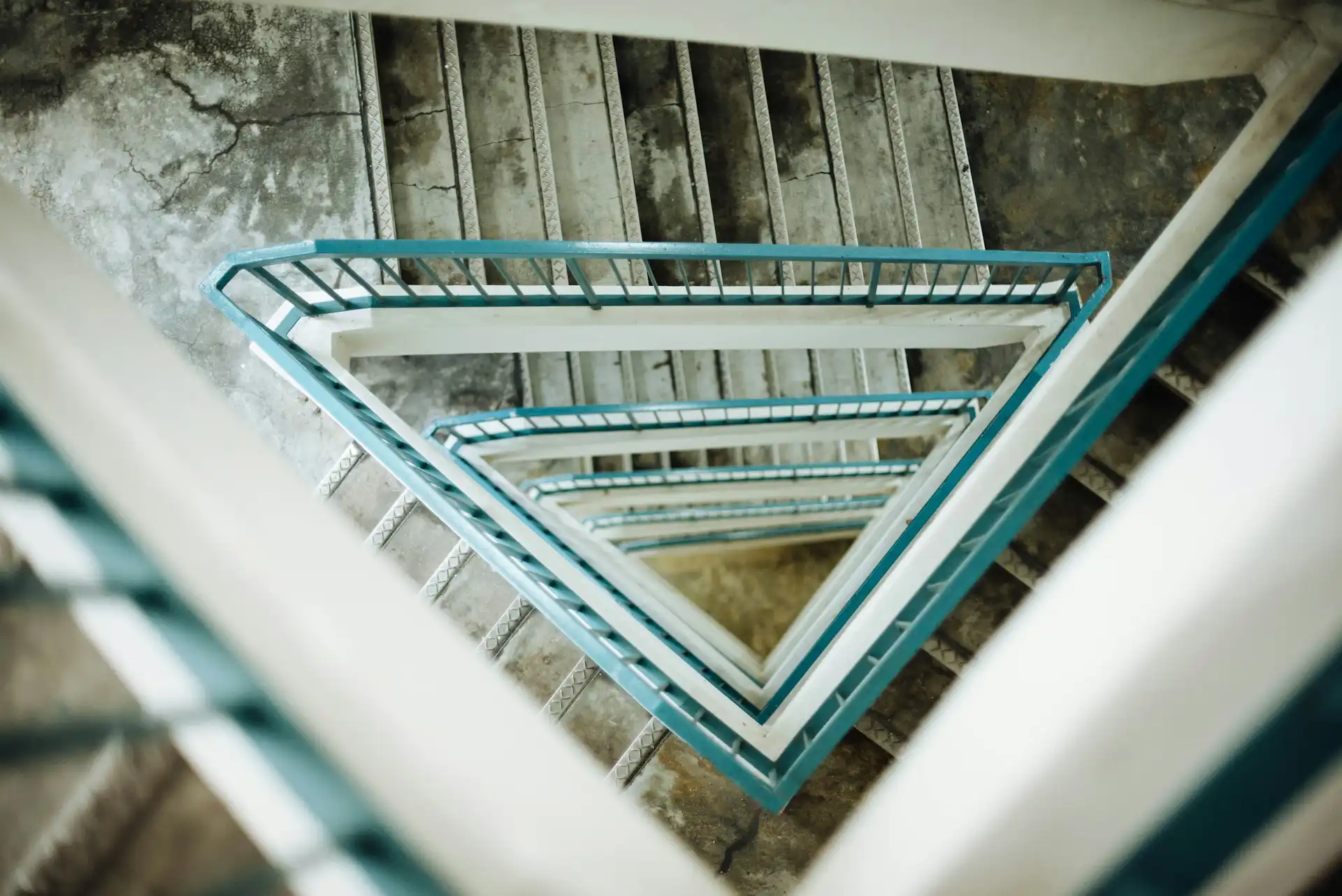
The duty belongs to anyone who owns, leases, occupies, or controls the property. A tenant who runs a store owes it to customers. A landlord owes it for the parts of a building the landlord controls. A homeowner owes it to guests. A management company that controls a parking lot owes it to the people who park there.
CACI No. 1001 describes what the duty requires. An owner must use reasonable care to discover unsafe conditions and to repair, replace, or adequately warn of anything that could reasonably be expected to harm others. Depending on the circumstances, reasonable precautions may include:
- Inspect. Look for hazards on a reasonable schedule.
- Repair. Repair or replace unsafe conditions when reasonably necessary.
- Warn. Provide an adequate warning when needed to protect people from a known or reasonably discoverable hazard.
What “reasonable care” depends on
Reasonable care is not a fixed checklist. CACI No. 1001 tells jurors to weigh, among other things:
- the location of the property;
- how likely it was that someone would come onto the property in the way the injured person did;
- how likely harm was, and how serious it was likely to be;
- whether the owner knew or should have known of the condition;
- how difficult it was to protect against the risk; and
- how much control the owner had over the condition.
Because the answer depends on the circumstances, it is usually a question for the jury. In Staats v. Vintner’s Golf Club, LLC (2018) 25 Cal.App.5th 826, a golfer attacked by a swarm of yellow jackets on the course sued the club, and the court held that the operator owed a duty of reasonable care to protect patrons from nests on the property. The measures required to meet that duty “depend on the circumstances, and the issue is a question for the jury unless the facts of the case are not reasonably in dispute.” A busy grocery store, an apartment stairwell, and a private backyard each call for different measures.
What Counts as a Breach
A breach is a failure to do what reasonable care required. The clearest way to see it is through the three parts of the duty.
Inspection
A grocery store that walks its aisles on a set schedule and logs each sweep can show what it did to find spills. A store with no inspection routine cannot. That gap matters legally, not just practically. In Ortega v. Kmart Corp. (2001) 26 Cal.4th 1200, the California Supreme Court held that evidence an owner failed to inspect within a reasonable time before the accident “may warrant an inference that the defective condition existed long enough so that a person exercising reasonable care would have discovered it.” Lack of actual knowledge does not end the inquiry: the question is also whether reasonable inspection would have revealed the condition.
Repair
When a tenant reports a loose railing on a common stairway controlled by the landlord, reasonable care may require prompt repair. The response should reflect the seriousness of the risk, how frequently people use the stairs, and what protective measures are available. If repair cannot be completed immediately, restricting access or providing another safe route may be appropriate. Common repair issues include damaged handrails, broken stairs, uneven walkways, leaks, malfunctioning elevators, and unsafe wiring.
Warning
An adequate, visible warning may protect people from a temporary hazard such as a freshly mopped floor. But a warning may be insufficient when reasonable care requires repair, restricted access, or another protective measure. For example, a sign beside a broken walkway may not adequately protect visitors who must use that route to enter a building. Whether the response was reasonable depends on the danger, the effectiveness of the warning, and the available precautions. A hidden or illegible sign may fail to communicate the risk.
Landlords
A landlord’s inspection obligations depend on possession and control. CACI No. 1006 addresses reasonable periodic inspections when the landlord has the legal right of possession, including before transferring possession and after retaking it. The renewal inspection applies to commercial leases; whether it applies when a residential lease renews is unsettled.
After a tenant moves in, the landlord must take reasonable precautions concerning known or reasonably discoverable unsafe conditions in areas the landlord controls, such as common stairways or parking lots. For tenant-controlled areas, actual knowledge and the right and ability to correct the condition can be central. These distinctions matter when identifying who was responsible for a particular hazard. Our article on hazards that attract children discusses additional issues involving features such as unfenced pools.
Security
Reasonable care can include measures against foreseeable criminal conduct. Broken entry locks, inadequate lighting, and prior similar incidents may be relevant. The analysis considers both foreseeability and the burden and effectiveness of the proposed security measures; a prior crime does not automatically require every possible precaution. The existence and scope of the duty are questions for the court, while the adequacy of the measures taken may be for the jury. See CACI No. 1005.
These categories overlap with the types of premises liability cases we handle, from slip and falls to inadequate security, and the injuries they cause range from fractures to brain and spinal cord injuries.
Knew or Should Have Known
An owner is not liable for every hazard on the property. Under CACI No. 1003, you must show the owner knew, or through reasonable care should have known, about the unsafe condition in time to fix it or warn about it. This is called notice, and it comes in two forms.
Actual notice means the owner knew. An employee saw the spill. A tenant emailed about the railing. A prior customer reported the same hazard. Incident reports, maintenance requests, and internal emails are where this evidence lives, which is why preserving them early matters.
Constructive notice means the owner should have known. Under CACI No. 1011, an owner must make reasonable inspections to discover unsafe conditions, and a hazard that existed long enough to be found by a reasonable inspection is one the owner is charged with knowing about. This is where Ortega does its work: evidence that a store failed to inspect within a reasonable period may permit an inference that the hazard existed long enough to have been discovered. The inference depends on the evidence and circumstances; a missing log entry does not automatically establish notice.
When the owner or an employee creates the hazard. A separate prior complaint or lengthy duration is not always necessary. When the owner or an employee acting within the scope of employment negligently creates the dangerous condition, knowledge can be imputed to the owner. The authorities accompanying CACI No. 1003 explain this distinction.
A denial of actual knowledge does not necessarily defeat a claim. Inspection records, witness testimony, and the condition’s appearance may help establish what a reasonable inspection would have revealed. Missing records or footage raise separate evidence-preservation questions; their absence alone does not establish when a hazard arose or what the owner should have known.
Linking the Hazard to the Injury
Proving an unsafe condition and a failure to address it is not enough. The defendant’s negligence must also have been a substantial factor in causing the harm. CACI No. 430 explains that the contribution must be more than remote or trivial; it need not be the only cause.
For example, a broken handrail matters if its failure contributed to a fall or prevented someone from stopping it. Photographs, testimony, and video can help explain that connection. Medical records and, when needed, expert testimony help connect the incident to the claimed injuries, including any worsening of a preexisting condition. A code violation or maintenance problem unrelated to how the injury occurred does not establish that connection by itself.
Evidence That Proves the Claim
Records, photographs, physical evidence, and testimony help establish what happened and whether reasonable care could have prevented it. Each type of evidence answers a different question:
- Photos and video of the hazard. They answer what the condition looked like before it was cleaned up or repaired. If it is safe to do so, document the condition promptly, including the surrounding area, any signs or the absence of them, and the lighting. Keep the shoes and clothing you were wearing.
- Surveillance footage. It answers how long the hazard was there and who walked past it. Relevant cameras may capture the incident, earlier inspections, or how the condition developed. Footage may be overwritten quickly, depending on the system and retention settings. Promptly identifying the cameras and sending an appropriate written preservation request can help protect this evidence.
- Inspection and maintenance records. They answer whether the owner looked and whether the owner fixed what it found. Sweep logs, work orders, and repair invoices show the schedule the owner actually kept, and may help establish whether inspections were reasonably frequent. Under Ortega, inadequate inspection can support an inference of constructive notice; a gap in a log must be evaluated with the other evidence.
- Prior complaints and incident reports. They answer whether the owner already knew. Tenant emails, customer complaints, and earlier incident reports about the same area are the most direct proof of actual notice.
- Code violations. They answer what the standard was. An applicable handrail, stairway, or elevator requirement may help establish the relevant safety standard. Whether a violation affects liability depends on the rule, its application to the property, and its relationship to the injury. A violation does not automatically prove the entire claim.
- Witnesses. Bystanders answer what happened; employees and tenants answer what the owner knew and for how long. Get names and contact information before people leave.
Experts fill the gaps the records leave. A safety or building expert explains what a reasonable owner does and where this owner fell short; a medical expert assesses whether and how the incident caused or aggravated the claimed injury; when the mechanism is disputed, a reconstruction expert explains how it happened. For the records that prove the damages side of the case, from medical bills to lost earnings and future care, see our guide to compensation for premises liability victims.
Injuries on Government Property
When an injury involves public property, such as a city sidewalk, county park, or transit station, public-entity liability requires a statutory basis. Under Government Code § 835, a dangerous-condition claim requires a dangerous condition at the time of injury, a causal connection, and a reasonably foreseeable risk of the kind of injury that occurred. It also requires either a negligent or wrongful act or omission by an employee acting within the scope of employment that created the condition, or sufficient actual or constructive notice for the entity to have taken protective measures. Statutory defenses and immunities may also apply.
The deadline is different too. For a personal injury claim, a written claim generally must be presented to the public entity within six months after the claim accrues under Government Code § 911.2. Do not rely on the general two-year personal injury lawsuit deadline under Code of Civil Procedure § 335.1. Exceptions and procedures for seeking permission to present a late claim may apply, but they have their own requirements and deadlines. A separate deadline governs the later lawsuit. Prompt review is important even if the ordinary claim deadline may have passed. For the private-property deadlines and the exceptions that can extend them, see our guide to the statute of limitations for personal injury claims.
Comparative Fault
Even when the owner’s negligence is clear, expect the owner’s insurer to argue that you share the blame. California follows pure comparative negligence, adopted in Li v. Yellow Cab Co. (1975) 13 Cal.3d 804. If the defendant’s negligence contributed to your harm, your own percentage of fault reduces your recovery rather than automatically barring it, even if your share exceeds 50 percent. If the jury finds the owner 70 percent responsible and you 30 percent responsible, you recover 70 percent of your damages.
An insurer may argue that the injured person was distracted, ignored an adequate warning, or failed to use reasonable care under the circumstances. Those arguments require evidence. An owner’s negligence does not automatically establish the injured person’s negligence, and it does not rule it out. The inquiry considers each party’s conduct and whether it contributed to the harm.
A related issue is whether the hazard was obvious. Under CACI No. 1004, there is generally no duty to warn of a condition that a person could reasonably be expected to observe. But reasonable care may still require protection against the risk when it is foreseeable that someone will encounter the condition out of necessity: a broken walkway that provides the only practical access to an entrance, for example. This duty question is distinct from assigning comparative fault.
Because adjusters value claims with the fault split in mind, it helps to understand how liability insurance coverage works in these cases and who is actually paying once fault is resolved.
How Hulburt Law Firm Can Help
Conor Hulburt has represented people seriously injured on unsafe stairs, by second-story windows, railings, backyard hazards, unfenced ponds, and potholes, against property owners, managers, businesses, associations, and government entities.
If you or someone you love was seriously hurt on someone else’s property in San Diego, Hulburt Law Firm can help. Call (619) 821-0500 or message us through our contact form for a free, confidential case review. To see how these cases move from investigation to resolution, read our guide to the legal process for premises liability claims.
Request a Free Case Review
Simply fill out the form or call 619.821.0500 to receive a free case review. We’ll evaluate what happened, your injuries, and potential defendants to determine how we can best help you.

Hulburt Law Firm handles serious personal injury and wrongful death cases throughout San Diego County.


