
California Bicycle Helmet Laws and Your Injury Claim
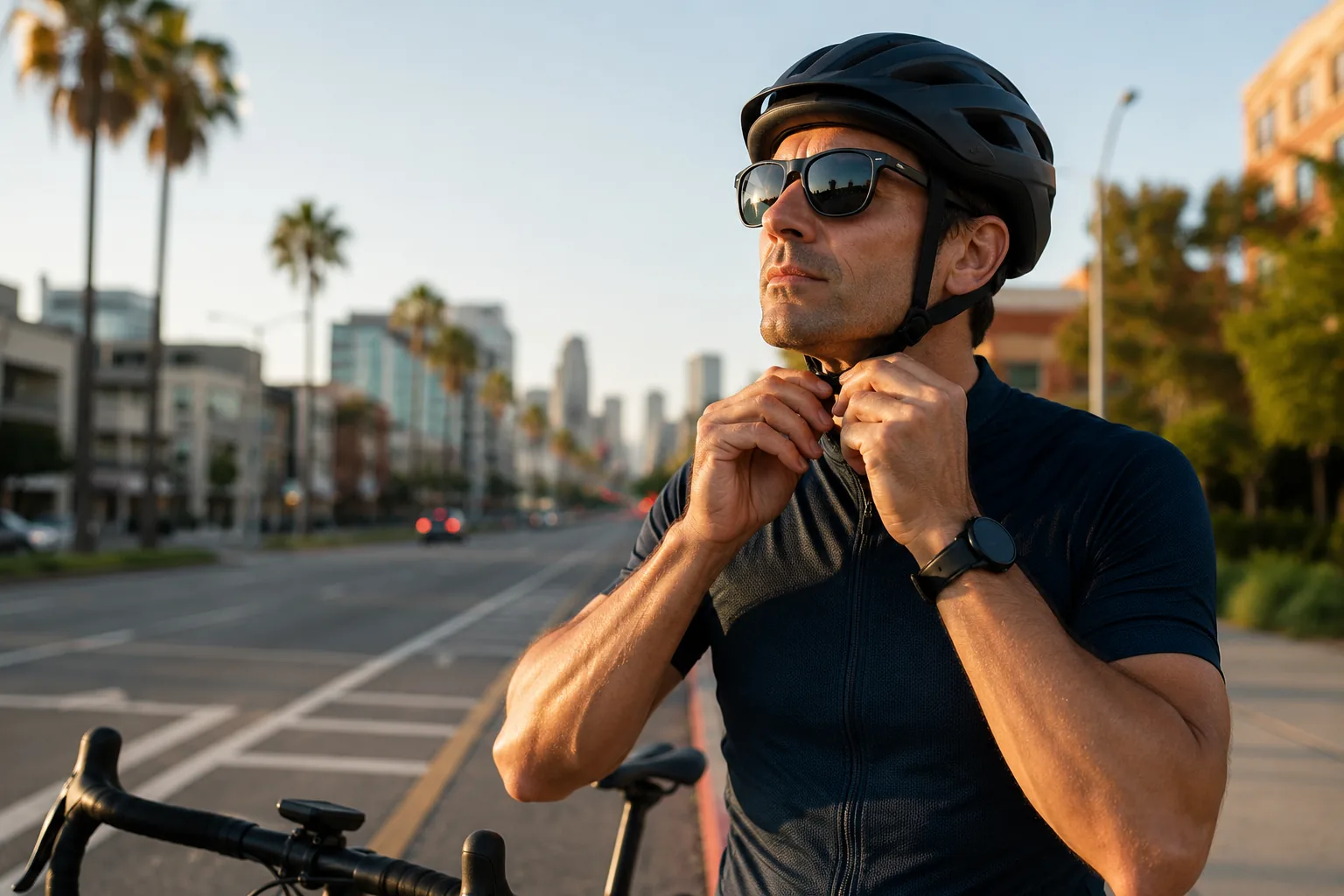
In California, adults are free to ride a bicycle without a helmet, and going without one does not stop you from recovering money when a driver injures you. But that choice can hand the insurance company its favorite argument for paying you less.
There are really two questions wrapped up in “California bicycle helmet laws.” The first is who is actually required to wear a helmet. The second, and the one that matters most after a crash, is whether riding without one can be used against you in an injury claim. Here is the short version of both.
- Adults (18 and older): no helmet required anywhere in California.
- Minors (under 18): a helmet is required by law on any street, bike path, or trail.
- Class 3 e-bikes: a helmet is required for every rider, regardless of age.
- After a crash: not wearing a helmet is not automatic fault, but the defense can sometimes use it to reduce the part of your damages tied to a head injury.
Are adults required to wear a bicycle helmet?
No. California has no statewide law requiring anyone 18 or older to wear a bicycle helmet. You can ride on a city street, a bike lane, or a trail without one and you are not breaking any law. No ticket, no fine.
That has been true for years, and efforts to pass an all-ages helmet law in California have never become law. So if you are an adult, wearing a helmet is a safety decision, not a legal one. Cities and counties cannot override this either, because the state controls the rules of the road for cyclists.
Are minors required to wear a bicycle helmet?
Anyone under 18 must wear a helmet while riding. Under California Vehicle Code § 21212, a minor cannot operate or ride as a passenger on a bicycle on a street, bikeway, or any public bike path or trail without a properly fitted and fastened helmet that meets federal safety standards.
A few details people often miss:
- It covers passengers, too. A child riding in a rear seat or a towed trailer has to wear a helmet, not just the person pedaling.
- It is more than bikes. The same statute covers nonmotorized scooters, skateboards, and roller or in-line skates for anyone under 18.
- The fine is small. A violation is a $25 infraction, and a parent or guardian can be held responsible for paying it.
- Private property is exempt. The law applies to public streets and paths, not a child riding in your own driveway or yard.
The point of the law is straightforward: kids’ skulls are still developing, and a helmet is the single most effective way to protect a young rider’s head. When a young rider is hurt, the claim also follows the special rules for injury claims involving children and teens, from tolled deadlines to court-approved settlements. For the broader set of rules that apply to every cyclist, see our guide to the key California bicycle laws every rider should know.
Helmet rules for e-bikes?
E-bikes change the helmet math. California sorts electric bikes into three classes, and the fastest one carries its own helmet rule. Under California Vehicle Code § 21213, anyone riding a Class 3 e-bike, which can pedal-assist up to 28 mph, must wear a helmet no matter how old they are. That applies to operators and passengers alike.
For Class 1 and Class 2 e-bikes, which top out at 20 mph, the rule matches a regular bicycle: only riders under 18 are required to wear a helmet. The class of the bike, not the label on the frame, is what decides the rule. We break down the categories and the speed and wattage limits in our guide to San Diego e-bike laws and regulations. If you were hurt riding an e-bike, our San Diego e-bike accident attorney page explains how those cases differ from an ordinary bicycle claim.
Can riding without a helmet hurt your injury claim?
For an adult, not wearing a helmet is not automatic fault. You broke no law, so the driver who hit you cannot point to a helmet rule you violated. But that is not the end of it, because California lets a defendant argue that your own choices made your injuries worse than they had to be.
Why no helmet is not automatic fault
When you break a safety law, that violation can count as fault on its own. Lawyers call this negligence per se. Since adults are under no legal duty to wear a helmet, that shortcut is off the table for an adult rider. The defense cannot say you were “negligent” simply for riding bare-headed, because nothing required the helmet in the first place.
How the “no-helmet defense” actually works
Instead, the insurance company reaches for a different argument: that a helmet would have prevented or reduced your head injury, so it should not have to pay for that part of your harm. This is the same idea behind the seat belt defense in car cases. It is an argument about reducing damages, not about who caused the crash.
The defense carries the burden of proof and typically hires a medical or biomechanical expert to prove that a helmet would actually have prevented the specific injury you suffered. The argument is strongest when your injuries are predominantly head injuries.
What the argument does not touch
The no-helmet argument only reaches head injuries. It does nothing to the rest of your case. Your claim for broken bones, road rash, spinal injuries, lost wages, and pain and suffering is unaffected by whether you wore a helmet. A helmet protects your skull, not your collarbone. So even when the defense raises it, the argument is aimed at one slice of your damages, not the whole claim. You can see the full range of harm a crash can cause in our overview of common bicycle accident injuries in San Diego.
How comparative negligence reduces damages
California uses a rule called pure comparative negligence, which divides responsibility by percentage. If you share part of the blame for your injuries, you can still recover, but your compensation drops by your share of the fault. If a jury decides your total harm is worth a given amount and finds you 20 percent responsible, your recovery is reduced by 20 percent.
This is the lever the no-helmet argument pulls. The defense is really asking a jury to assign you a slice of fault for your own head injury, which would shave that percentage off your award. Whether it succeeds depends on the strength of the medical proof and the facts of the crash. We explain the rule in more depth in our guide to comparative negligence in San Diego bicycle crash cases. Because the difference can be large, a San Diego bicycle accident attorney will work to keep any helmet argument from gaining traction, often by challenging the defense’s expert on whether a helmet would have changed anything at all.
It helps to remember that a cyclist on the road has nearly the same rights and duties as a driver, a point we cover in whether a bicycle is a vehicle in California. A driver who fails to yield, turns across your path, or runs you off the road has violated a duty owed to you, and that is where the real fault usually lies.
Why you should wear a helmet
Law aside, a helmet is the best protection your head has in a crash. A large review of dozens of studies found that wearing a bicycle helmet was associated with roughly a 50 percent lower risk of head injury and about a 60 percent lower risk of serious head injury. Those are meaningful odds when the alternative is a traumatic brain injury.
Head injuries are also the cyclist injury that changes lives. A broken arm heals; a brain injury may not. Many serious head injuries are not obvious at the scene, and symptoms can surface hours or days later, which is one reason our article on the symptoms of traumatic brain injury urges riders to get checked even when they feel fine. Wearing a helmet does not just protect you physically. It also takes the no-helmet argument away from the insurance company before it can ever be made.
If you were hurt riding without a helmet
If you were injured and you were not wearing a helmet, do not assume your case is worthless. It is not. Adults have no helmet duty, the defense’s argument reaches only part of your damages, and that argument is often beatable. Protect your claim with a few practical steps:
- Get medical care right away, and tell every provider about any head symptoms, even mild ones. The contemporaneous medical record is your strongest proof of what you actually suffered.
- Do not give the other driver’s insurer a recorded statement or accept a fast, low settlement before you know the full extent of your injuries.
- Keep your gear and your bike as they were after the crash, including a damaged helmet if you were wearing one. They can be evidence.
- Talk to a lawyer before the insurer frames the story. A bicycle accident lawyer can line up the medical proof that defeats a helmet argument and value the rest of your claim correctly.
For a fuller checklist, see our guide on what to do after a bicycle accident in San Diego, and our breakdown of what bicycle accident victims can recover.
Hulburt Law Firm
If you or someone you love was hurt in a bicycle crash in San Diego, Hulburt Law Firm can help, whether or not you were wearing a helmet. We handle serious bicycle injury cases, and we know how to neutralize the no-helmet argument and value the full scope of your harm.
Call (619) 821-0500 or message us through our contact form for a free, confidential case review. To learn more about how we represent injured cyclists, visit our bicycle accident page.
Request a Free Case Review
Simply fill out the form or call 619.821.0500 to receive a free case review. We’ll evaluate what happened, your injuries, and potential defendants to determine how we can best help you.

Hulburt Law Firm handles serious personal injury and wrongful death cases throughout San Diego County.


