
Is a bicycle a vehicle in California? What the law says
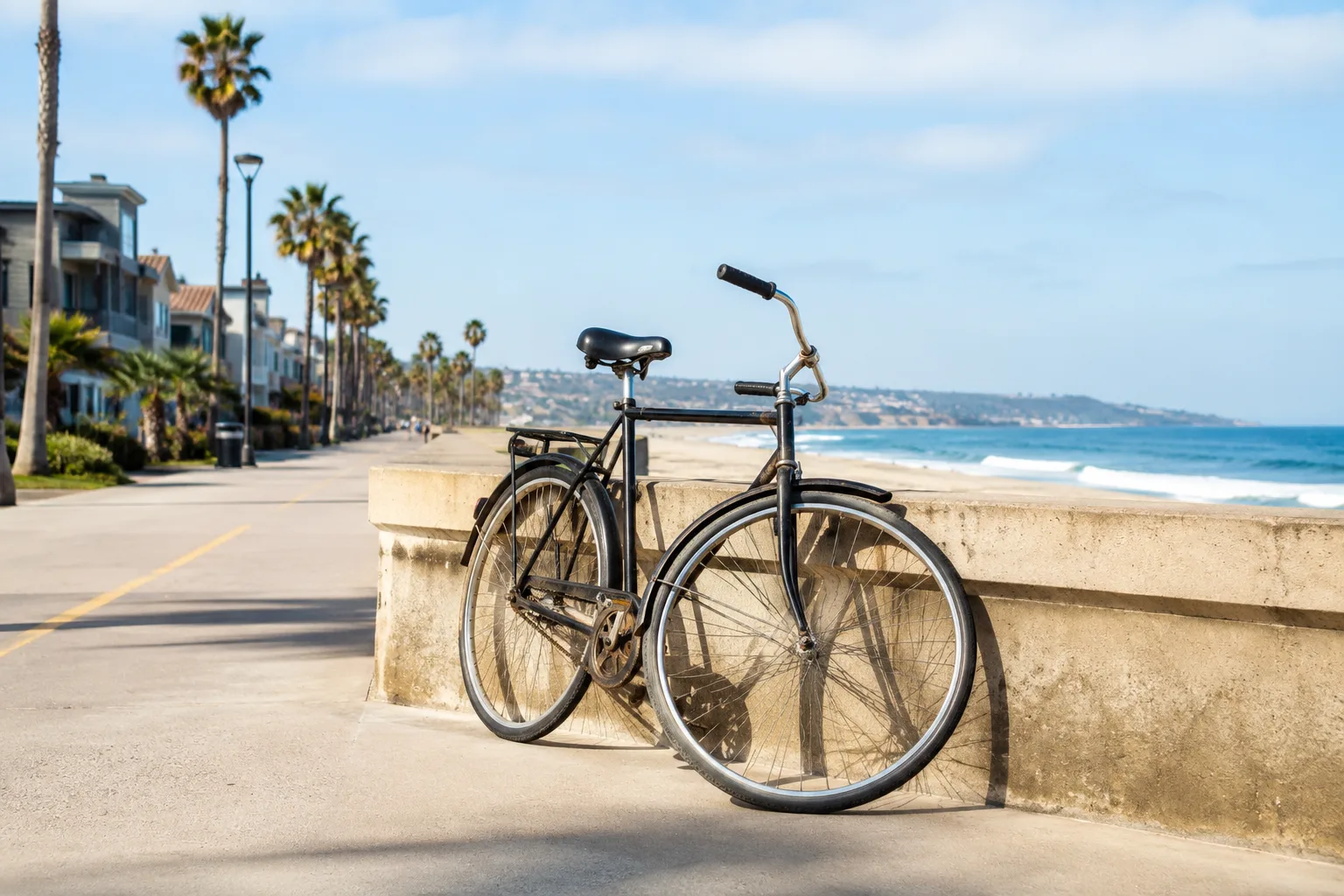
No, a bicycle is not a vehicle under California law. The Vehicle Code calls a bicycle a “device,” and its definition of a vehicle specifically leaves out anything moved only by human power. So in the strict legal sense, your bike is not a vehicle, and it is definitely not a motor vehicle.
However, even though a bicycle is not a vehicle, a person riding one on the road has nearly all the same rights and duties as someone driving a car. Both things are true at once, and the difference between them matters if you are ever hurt in a crash.
Is a bicycle a vehicle in California?
Legally, no. California defines a vehicle as a device that moves people or property on a highway, but the definition carves out “a device moved exclusively by human power.” A standard bicycle runs on your legs alone, so it falls into that exception.
The statute that defines a bicycle calls it “a device upon which a person may ride, propelled exclusively by human power.” Not a vehicle. A device.
So if you are filling out a form, reading an insurance policy, or trying to understand a traffic law, the starting point is simple: a bicycle is a human-powered device, not a vehicle.
Is a bicycle a motor vehicle?
No. A motor vehicle is defined as a vehicle that is self-propelled, meaning it moves under its own power. A bicycle has no motor and moves only when you pedal, so it is not a motor vehicle on two counts: it is not self-propelled, and it is not a vehicle to begin with.
Because a bicycle is not a motor vehicle, you do not need a driver’s license to ride one, you do not register it with the DMV, and you are not required to carry the auto insurance the state demands of drivers.
What about e-bikes?
No. California law is explicit that “an electric bicycle is a bicycle.” A true e-bike has working pedals and a limited motor, and the state classifies all three e-bike classes as bicycles rather than motor vehicles. So an e-bike rider gets the same treatment as any cyclist: not a vehicle, not a motor vehicle, but a rider with a driver’s rights and duties on the road.
The line moves once the machine stops being a true e-bike. A moped or a motorized bicycle, which has a stronger motor and can run without pedaling, is a motor vehicle. That means a license, registration, and full DUI exposure. The classification, not the label on the frame, decides which side of the line you are on. We break down the categories and the speed and wattage limits in our guide to San Diego e-bike laws and regulations.
Bicycle rights?
Under California Vehicle Code § 21200, a person riding a bicycle on the road “has all the rights and is subject to all the provisions applicable to the driver of a vehicle.”
You are entitled to use the road, and you have to follow the same rules as cars: stop at stop signs and red lights, signal your turns, ride with traffic, and yield when the law says to yield. The only exceptions are rules that make no sense for a bike, like seatbelt or license-plate requirements. For the broader set of cycling rules, see our guide to the key California bicycle laws every rider should know.
If a driver hits you while you are riding, the fact that a cyclist has a driver’s rights under Section 21200 is important. It means a driver who fails to yield to you, turns across your path, or runs you off the road has violated a duty owed to you, the same as if you had been in another car.
If you were partly at fault, you can still recover, with your compensation reduced by your share. You can read more in our explainer on comparative negligence in San Diego bicycle crash cases.
Hulburt Law Firm
If you or someone you love was hurt in a bicycle crash in San Diego, Hulburt Law Firm can help you make sense of your rights and your options. We handle serious bicycle injury cases and can sort out who was at fault, what insurance is available, and what your claim may be worth.
Call (619) 821-0500 or message us through our contact form for a free, confidential case review. To learn more about how we represent injured cyclists, visit our bicycle accident page.
Request a Free Case Review
Simply fill out the form or call 619.821.0500 to receive a free case review. We’ll evaluate what happened, your injuries, and potential defendants to determine how we can best help you.

Hulburt Law Firm handles serious personal injury and wrongful death cases throughout San Diego County.


