
Practice area
San Diego E-Bike Accident Attorney
Serious e-bike accidents in San Diego County are rising, and many involve children and teenagers. These cases can be more complicated than ordinary bike claims because they may involve vehicle drivers, e-bike classifications, local age rules, defective components, and insurance policies that were never written with e-bikes in mind.
Hulburt Law Firm represents riders and families after serious e-bike crashes throughout San Diego County. We investigate the cause of the crash, identify every responsible party, preserve key evidence, and help you understand your options under California law.
Injured in a serious e-bike crash? We can help.
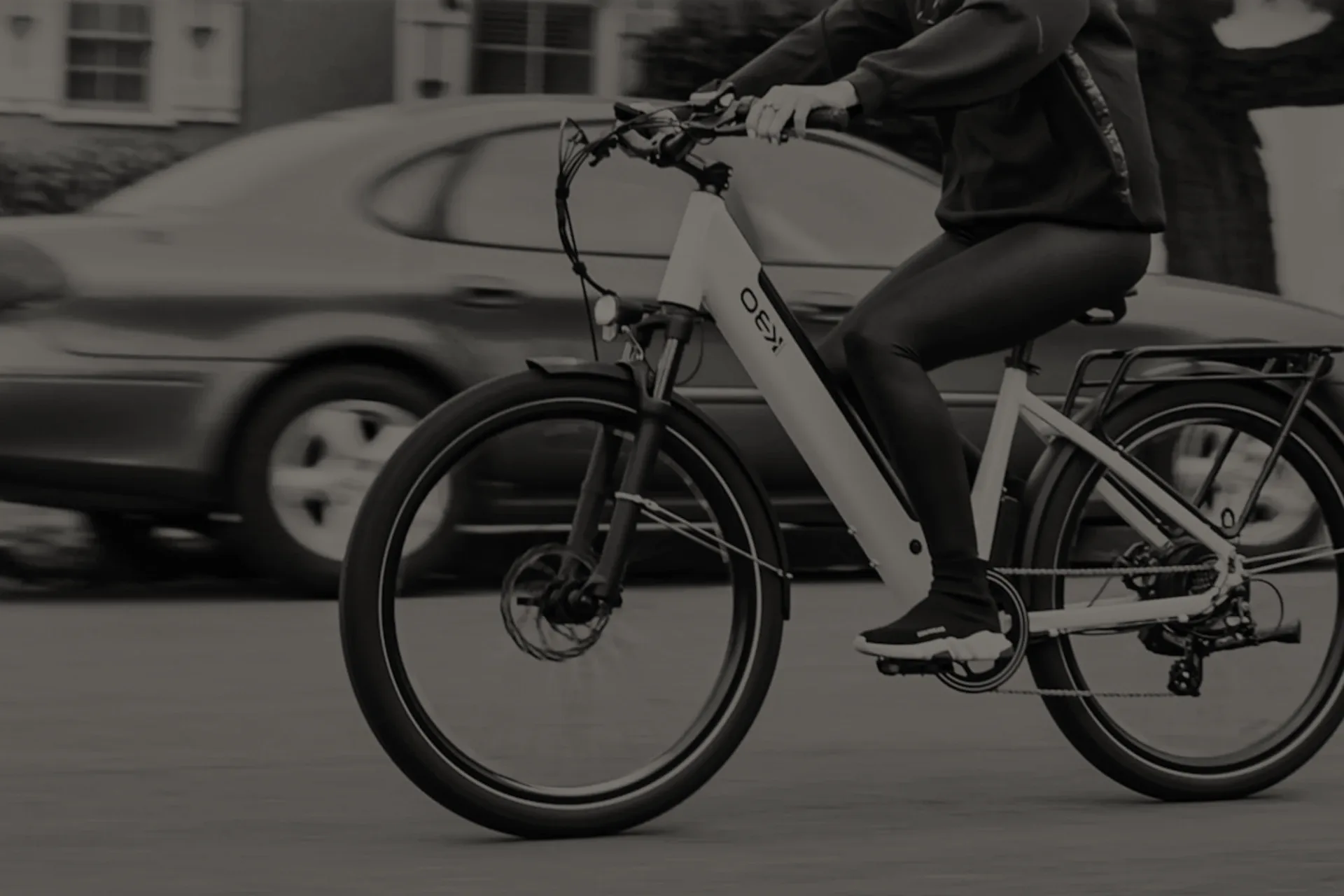
E-Bike Accident Cases We Handle
E-bike crashes range from a driver turning across a rider's path to throttle or brake malfunctions. The type of e-bike, the age of the rider, where the crash happened, and what caused it all shape how the case should be investigated. Here are the types of e-bike and electric bicycle accident cases we handle in San Diego County.
Drivers that Hit E-Bike Riders
Children and Teen E-Bike Crashes
High-Speed and Class 3 E-Bike Crashes
E-Bike Battery Fires and Defective E-Bikes
Intersection, Right-Hook, and Dooring Crashes
Hit-and-Run E-Bike Accidents
Road Hazards and E-Bikes
Fatal E-Bike Crashes
Meet Your E-Bike Accident Attorneys
Conor and Leslie Hulburt founded Hulburt Law Firm to help injured people uncover the truth and acheive justice. E-bike cases often require more than proving that a driver made a mistake. The best cases are built by preserving evidence early, challenging unfair assumptions about riders, identifying every responsible party, and showing the full human impact of the injury or loss.
Conor has recovered more than $150 million for injured clients and grieving families, including multi-million-dollar results for cyclists struck by negligent drivers, commercial vehicles, and dangerous public roadways. His advocacy has earned recognition from Best Lawyers, Super Lawyers, Best of the Bar, and Martindale-Hubbell.
Together, Conor and Leslie make sure each client receives direct attorney attention throughout the case. The firm accepts a limited number of cases so each one can be carefully investigated, prepared with the right experts, and positioned for the best possible result.

Case Results
Our attorneys have recovered significant results for cyclists and other catastrophically injured clients in cases involving negligent drivers, dangerous public roads, commercial vehicles, and defective products.
Dangerous Road
Jury verdict against Caltrans for a 13-year-old boy who suffered a catastrophic brain injury after he was struck by a vehicle while using a dangerous crosswalk.
Fatal Tire Failure
A sudden tire failure caused an SUV to fishtail and crash into a tree on the side of a San Diego County highway, killing a beloved husband and father.
Fatal Construction Accident
An improperly installed gate collapsed on a subcontracted worker after the general contractor asked him to paint it, killing him.
Bicycle Accident
A negligent driver rear-ended a cyclist in Carlsbad who was lawfully using the bike lane, causing a severe spine injury.
Truck-Bicycle Accident
A commercial truck driver drifted off the roadway and struck and killed a San Diego bicyclist who was lawfully riding on the shoulder.
Bicycle Accident
Settlement for a North San Diego County cyclist who suffered serious head and brain injuries after a negligent driver swerved across multiple lanes and struck him from behind.

How an E-Bike Accident Case Works
Free Case Review
During your free case review, we listen to what happened, how your injuries are affecting your life, and what questions you have. We review any photographs, police reports, medical records, insurance letters, or witness information you already have. We will give you an honest assessment of the potential case, including the strengths, challenges, likely next steps, and any urgent deadlines that may apply.
Detailed Investigation
Once you decide to move forward, our team begins a focused investigation. In e-bike cases, that can include examining the crash scene, inspecting your bike and safety gear, reviewing police and traffic collision reports, obtaining dash-cam or traffic-camera footage when available, and interviewing witnesses. We work to secure key evidence early, before it’s lost or overwritten.
Expert Collaboration
To fully explain what happened and how it has affected you, we collaborate with carefully selected experts. Depending on the case, that may include accident reconstructionists, medical specialists, life-care planners, and economists. They help us analyze how the collision occurred, document the nature and extent of your injuries, and calculate the financial impact on you and your family.
Comprehensive Legal Strategy
With the evidence and expert input in hand, we build the strategy and the demand package. That means demonstrating liability and damages in a single persuasive presentation. A well-built demand package is often the most important document in a bicycle case because it is the carrier's first look at what trial will cost them.
Settlement Negotiation
We handle all communications with the insurance carriers and defense lawyers so you can focus on your recovery. The lawyer handling your case is the lawyer at the table, presenting the evidence, explaining the medicine, and walking the carrier through the trial exposure they face. Throughout negotiations, we keep you informed, explain every offer, and tell you plainly what we think it is worth.
Litigation & Trial Representation
If the carrier will not pay a fair number, we file suit and prepare the case for trial. Litigation involves written discovery, depositions, expert reports, and pretrial motions, and the case can resolve at any point along the way. If it does not, we present your case to the jury through your testimony, witnesses, experts, and exhibits built to make the full impact of the crash unmistakable.
California E-Bike Law: Classes, Rules, and Liability
California treats e-bikes mostly like bicycles, not motorcycles. Riders do not need a license, registration, or insurance. But e-bikes have their own classification system, age and helmet rules, and a new wave of San Diego local ordinances.
The Three Classes of E-Bikes
Age and Helmet Rules for E-Bike Riders
San Diego's New Local E-Bike Rules
Who Can Be Liable in an E-Bike Accident
E-Bike Battery Safety and Defective Products
Insurance Coverage for E-Bike Accidents
Deadlines After an E-Bike Accident
The Hulburt Law Difference

In-Depth Investigations
We investigate the crash scene, vehicle and e-bike damage, witnesses, video, roadway conditions, traffic signals, insurance coverage, and other key evidence.

Tech-Forward Approach
We use scene photography, drone footage, 3D reconstruction, and biomechanical animation to show a jury what happened.

Maximum Compensation
Defense attorneys and insurance companies know us and respect us. We assess the full extent of your damages, and we identify every party that shares fault.

The Right Experience
We have taken on the largest corporations, insurance companies, and defense firms in the country and won.

Genuine Care
From providing regular case updates to achieving life-changing results, we genuinely care about each and every one of our clients.
E-Bike Accident FAQs
What should I do after an e-bike accident in San Diego?
Are e-bike accident cases different from bicycle accident cases?
My child was hurt riding an e-bike. Do we still have a case?
Can I still recover if I was not wearing a helmet?
Who pays if a car hit me while I was on my e-bike?
What if my e-bike battery caught fire or a part failed?
Can I sue the city if a dangerous road or bike lane caused my e-bike crash?
What is my e-bike accident case worth?
What if a family member was killed in an e-bike crash?
How much does it cost to hire Hulburt Law Firm?
Serving E-Bike Riders Across San Diego County
Hulburt Law Firm represents injured e-bike riders and their families throughout San Diego County, from the beach communities and Coast Highway 101 corridor to North County, East County, and the South Bay. Our practice focuses on serious injury and wrongful death cases, including bicycle accidents, brain injuries, and wrongful death claims.

Request a Free Case Review
Simply fill out the form or call 619.821.0500 to receive a free case review. We’ll evaluate what happened, your injuries, and potential defendants to determine how we can best help you.

Hulburt Law Firm handles serious personal injury and wrongful death cases throughout San Diego County.


