
Subsequent Remedial Measures in California Road Cases
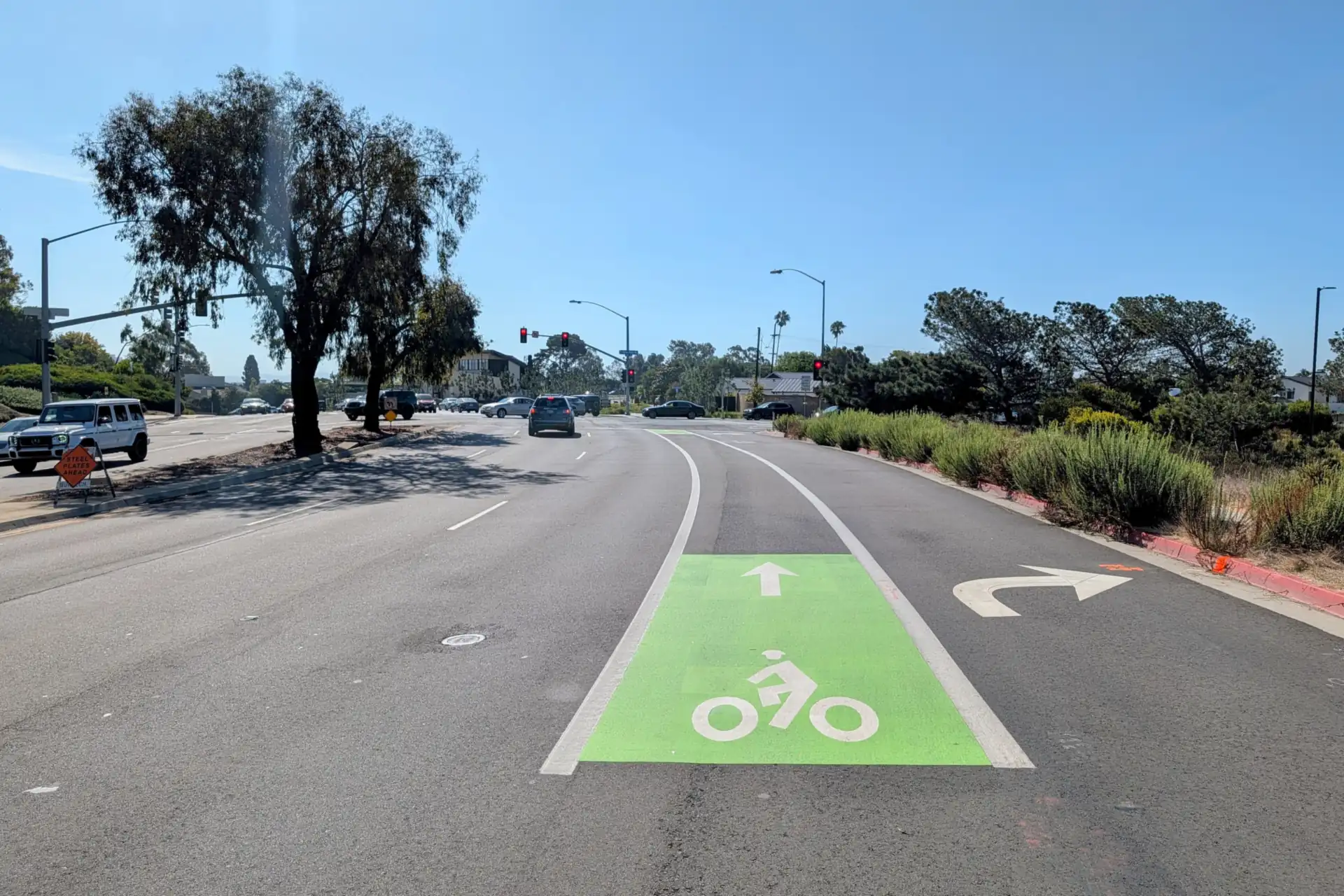
When a city, county, or Caltrans fixes a road after a crash, California law generally keeps the jury from hearing about that repair as proof the road was dangerous or the agency was careless. That applies whether the agency repaved, restriped, added a signal, or put up a guardrail. But the repair can sometimes be offered for a different purpose, such as proving control, feasibility of improvements, or impeaching a witness who claims the roadway was safe. The records behind the repair can be obtained in discovery or public records requests, and may be admissible to show what the agency knew before the crash.
Hulburt Law Firm’s dangerous road conditions practice represents people and families hurt on roads owned by Caltrans, cities, and counties. This article explains how the rules on post-crash repairs, which lawyers call subsequent remedial measures, work in those cases, what they allow, and what you can do now to protect the evidence that matters.
Why Repairs Are Usually Excluded
A subsequent remedial measure is anything done after an accident that, if done earlier, would have made the accident less likely. Repaving a pothole, trimming vegetation that blocked a stop sign, retiming a signal, adding a left-turn arrow, and installing a median barrier are all examples.
Two California statutes limit how that evidence can be used in a dangerous road case.
Evidence Code § 1151
Evidence Code § 1151 applies in all kinds of cases, not just cases against the government. It says evidence of a later remedial or precautionary measure “is inadmissible to prove negligence or culpable conduct in connection with the event.”
The reason is a policy choice, not a judgment that repairs prove nothing. The California Supreme Court explained in Ault v. International Harvester Co. (1974) 13 Cal.3d 113 that the rule exists so people are not discouraged from making things safer after an accident. The law would rather the road get fixed than have the owner leave it alone to avoid handing the other side evidence.
Government Code § 830.5(b)
Claims for a dangerous road against a public entity arise under Government Code § 835, and the Government Code has its own version of the rule. Government Code § 830.5, subdivision (b), provides that “the fact that action was taken after an injury occurred to protect against a condition of public property is not evidence that the public property was in a dangerous condition at the time of the injury.”
That language goes to the heart of a road case. Under CACI No. 1100, the jury instruction for these claims, one of the things you must prove is that the property “was in a dangerous condition at the time of the injury.” Section 830.5(b) means a later fix cannot be used to prove that element.
The California Supreme Court pointed to this rule in Becker v. Johnston (1967) 67 Cal.2d 163. After a crash at a Y intersection on a county road, the intersection was changed to eliminate the head-on collision area. In a footnote, the Court noted the change and quoted section 830.5(b): the later improvement was not evidence the intersection had been dangerous.
What makes Becker useful is where the Court found the evidence of danger instead. It held that a jury could find a dangerous condition based on expert testimony that the Y design was poor engineering practice, the traffic volume, the accident history, and an engineer’s testimony that an inexpensive traffic island could have reduced the risk of head-on collisions by 70 to 90 percent. None of that depended on the later change.
The county still won in Becker on design immunity. That result rested on Becker’s holding that design immunity continued even after changed physical conditions had revealed the design’s defects. In Baldwin v. State of California (1972) 6 Cal.3d 424, the California Supreme Court overturned that holding, concluding that immunity can be lost when an approved design becomes dangerous under changed physical conditions.
The section has a companion rule worth knowing. Section 830.5(a) says the happening of the accident is not, by itself, evidence that the property was dangerous. Put the two together: the crash alone and the later repair do not establish a dangerous condition. The case depends on evidence of the road’s condition, how it contributed to the crash, and any relevant history, such as earlier collisions at the same location.
When Repairs May Be Admitted
Section 1151 bars one use of a repair: proving negligence or fault. California courts have allowed the same evidence when it is offered to prove something else. These purposes come from cases decided under section 1151 and the earlier common-law rule, most of them against private defendants, and a judge decides in each case whether a proposed use is legitimate.
In a case against a public entity, expect these arguments to face more resistance. Section 830.5(b) does not contain the “to prove negligence” limitation that section 1151 does, and we are not aware of a published California decision admitting a public entity’s post-crash road change for one of these purposes. The closest published roadway decision we have found, Moritz, discussed below, held that a proposed impeachment based on later traffic signals did not defeat the substantial evidence supporting the city’s design immunity.
Ownership and Control
A later repair can help show who controlled the place where an injury happened. In Alcaraz v. Vece (1997) 14 Cal.4th 1149, a case against private landlords, the California Supreme Court held that evidence they fenced in a strip of city-owned lawn after the injury was admissible to show they controlled it.
Ownership is often disputed in road cases. A freeway ramp may belong to Caltrans while the street beyond it belongs to the city, and a frontage road or a crosswalk can sit on a boundary. If one agency denies responsibility for a stretch of road but its crews repaired it after the crash, that repair may support an argument about control, subject to section 830.5(b) and the court’s ruling. Our guide to claims against Caltrans explains how road ownership is usually established, through right-of-way and maintenance records rather than later repairs.
Feasibility of Repairs
Courts have also admitted later measures to show that eliminating a hazard was possible. Baldwin Contracting Co. v. Winston Steel Works, Inc. (1965) 236 Cal.App.2d 565, a construction case, allowed evidence of a barricade installed afterward for that purpose.
In a road case, this purpose is narrower than it sounds. When a public entity concedes that a signal or barrier could have been installed and argues only that it was not required, feasibility is not really in dispute, and a judge may find the repair adds little except the forbidden inference that the agency was at fault. Feasibility can often be shown another way, as the engineer’s testimony about a traffic island did in Becker.
Witness Impeachment
A later change can sometimes be used to challenge a witness who tells the jury the original condition was as safe as it could be. In Daggett v. Atchison, T. & S. F. Ry. Co. (1957) 48 Cal.2d 655, the California Supreme Court allowed a railroad’s signal engineer, who had called a crossing signal the safest type, to be cross-examined about a later request to replace it with an improved signal.
Courts apply this purpose cautiously. It generally depends on what a particular witness said and that witness’s connection to the change. Against a public entity, the argument is also subject to section 830.5(b), and Moritz shows it may not change the outcome on design immunity.
Further Evidentiary Limits
Even when a repair is offered for a proper purpose, two other rules apply. Under Evidence Code § 352, the judge can exclude it if the risk of unfair prejudice or confusion substantially outweighs its value. And under Evidence Code § 355, if it comes in for one purpose only, the court must, on request, instruct the jury to consider it only for that purpose. The standard instruction is CACI No. 206: “You may consider that evidence only for that purpose and for no other.”
These disputes are usually decided before trial through motions asking the judge to rule on what the jury may hear.
Repair Efforts Before the Crash
The repair rules apply to measures taken after the crash. They do not reach what the agency knew or did before it, and that is often where a dangerous road case is decided.
When a claim depends on notice, the question under Government Code § 835.2 is whether the agency knew, or should have discovered, the dangerous condition in time to protect against it. Evidence of that comes from the time before the crash:
- Prior complaints: resident reports, City of San Diego Get It Done requests, letters, and calls about the location.
- Prior crashes: collision reports and crash data showing a pattern at the same spot.
- Internal documents: inspection logs, work orders, traffic studies, and engineering memos that identified the problem.
- Planned projects: budget requests or improvement plans that recognized the hazard before your crash.
What matters is what the document proves and when the underlying knowledge, decision, or action occurred. A traffic study written a year before your crash that recommended a signal is evidence of what the agency knew then. The signal installed a month after your crash is the subsequent remedial measure. We have not found a published California decision that squarely decides how to treat a project approved before a crash but built after it, so expect that line to be argued in each case.
A document written after the crash can also show what was known before it. In Alpert v. Villa Romano Homeowners Assn. (2000) 81 Cal.App.4th 1320, a sidewalk trip-and-fall case against a homeowners association, board minutes written after the fall referred to an earlier discussion, before the fall, about the need for repairs. The Court of Appeal held the minutes should have been admitted to show prior knowledge, feasibility, and control, with a limiting instruction. Alpert applied section 1151 to a private defendant; it does not decide how those uses apply against a public entity under section 830.5(b).
Our guide to suing the government for a dangerous road explains how notice is proved.
Document the Road Before It Changes
Because the jury will usually not hear about the repair, the case depends on proving what the road looked like before it. Once a pothole is patched or a lane is restriped, that condition is gone. Signal timing gets reprogrammed, vegetation gets trimmed, and lighting gets repaired. The scene a week after a crash can look very different a year later.
- Photographs and video: take them as soon as it is safe, from the driver’s point of view as well as up close, with something in the frame that shows scale.
- Measurements and site inspection: in a serious case, an expert visit while the condition still exists preserves measurements and observations that may be impossible to obtain after the road changes.
- Witness information: people who use the road regularly can describe how long the condition existed.
- Your own records: dashcam footage, phone photos taken before the crash, and anything showing the route you traveled.
Do not go back to a busy road or freeway shoulder to take pictures yourself if it is not safe to do so. A lawyer can arrange a safe inspection and request preservation of agency records.
A claim against a public entity also has a short deadline. Under Government Code § 911.2, a written government claim for personal injury or death must be presented within six months after the claim accrues, which is usually the date of the crash, before any lawsuit can be filed. Relief for a late claim is limited, and separate deadlines apply after the claim is decided. The guide to suing the government mentioned above also walks through the claim process step by step.
Getting the Agency’s Records
Section 1151 controls what a jury hears. It does not control what you can obtain. In Bank of the Orient v. Superior Court (1977) 67 Cal.App.3d 588, the Court of Appeal said the section “is a prohibition on the admissibility of evidence at trial. It does not purport to limit the scope of discovery.” Under Code of Civil Procedure § 2017.010, discovery reaches relevant matters that are admissible or reasonably calculated to lead to admissible evidence.
That distinction is practical. The file behind a post-crash fix often explains why the agency made it, and the answer may point backward: an engineer’s memo citing earlier crashes, a work order opened before the crash and closed after it, or a project that had been approved and delayed. Those underlying facts can be admissible even when the repair itself is not. Ordinary agency records such as work orders and project files can also be requested under the California Public Records Act, which requires agencies to make nonexempt records available on request (Gov. Code § 7922.530).
An agency’s review of a crash is different from the fix that may follow it. In Fox v. Kramer (2000) 22 Cal.4th 531, the California Supreme Court said section 1151 “plainly refers to ‘remedial or precautionary measures,’ not to mere reports or investigations conducted after an accident,” and said the contrary reading “appears strained.” The Court left open whether an investigation could ever count as a remedial measure when it is closely tied to corrective action. So a post-crash engineering review is not automatically excluded by section 1151, even if the repair it recommended is.
Design Immunity and Subsequent Repairs
Many road cases turn on design immunity, a defense under Government Code § 830.6 that can protect a public entity when an injury was caused by a design that was approved in advance and that a reasonable official could have approved. A common question is whether a post-crash redesign shows the original design was unreasonable.
In Moritz v. City of Santa Clara (1970) 8 Cal.App.3d 573, pedestrians were struck in a marked school crosswalk, and the city later installed traffic signals there. The plaintiffs argued the signals could be used to impeach a city witness who had authorized the change. The Court of Appeal affirmed summary judgment for the city, reasoning that the proposed impeachment would at most create a conflict with the substantial evidence that the original design was reasonable, which is all design immunity requires on that element. In other words, a redesign, by itself, does not prove that the original design was unreasonable.
A later redesign also does not, by itself, show that the immunity was lost because physical conditions changed. That exception, the one Baldwin recognized, requires proof about how conditions changed before the crash and what the agency knew. Our article on design immunity in California and its exceptions covers those requirements in detail.
Hulburt Law Firm
Hulburt Law Firm represents people and families in serious injury and wrongful death cases caused by dangerous public roads across San Diego County and California. We investigate the road as it was at the time of the crash, pursue the agency’s pre-crash records, and work with experts early, before the condition is changed.
If you or someone you love was hurt because of a dangerous road in San Diego, Hulburt Law Firm can help. Call (619) 821-0500 or message us through our contact form for a free, confidential case review.
Request a Free Case Review
Simply fill out the form or call 619.821.0500 to receive a free case review. We’ll evaluate what happened, your injuries, and potential defendants to determine how we can best help you.

Hulburt Law Firm handles serious personal injury and wrongful death cases throughout San Diego County.


