
Small Plane Crash Claims in San Diego
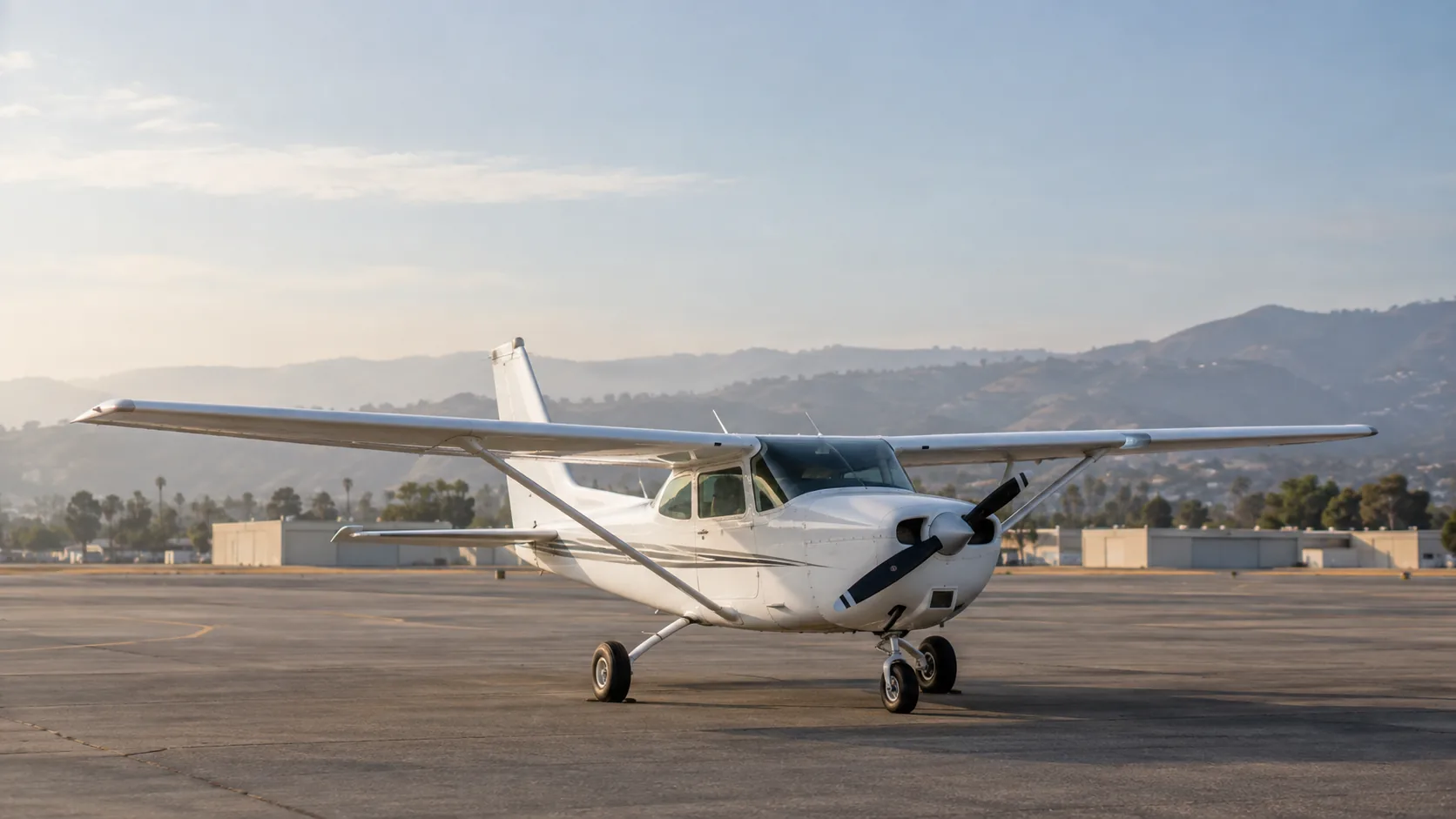
A small plane crash can leave passengers, families, and people on the ground facing serious injuries, loss, and unanswered questions. A civil claim may involve the pilot, aircraft owner, operator, maintenance provider, or manufacturer. Identifying each responsible party requires an independent investigation, even when the National Transportation Safety Board (NTSB) is investigating the same accident. This guide explains potential claims, evidence to preserve, deadlines to consider, and local accident records from 2021 through September 2026.
Hulburt Law Firm represents people seriously injured in aviation accidents in San Diego and families who have lost someone in a crash, including people hurt on the ground. In a small plane case the firm investigates the pilot, the owner, the operator, the maintenance history, and the components, because responsibility often sits with more than one of them.
NTSB Investigations
The NTSB investigates civil aircraft accidents in the United States, usually issues a preliminary report within weeks, and later issues a final report with a probable cause finding. The agency says it tries to complete an investigation within 12 to 24 months. The federal investigation is valuable, but it is not your investigation, and three features of it change how a claim has to be run.
The NTSB’s conclusions cannot be used in court. Under 49 U.S.C. § 1154(b), “no part of a report of the Board, related to an accident or an investigation of an accident, may be admitted into evidence or used in a civil action for damages resulting from a matter mentioned in the report.” Every NTSB final report carries a footer saying the same thing and pointing to the separate factual report that may be admissible. The underlying facts the investigators gathered, such as the wreckage examination, the flight track data, the recorded communications, and the maintenance records, can be proved through your own experts and the documents themselves. The probable cause paragraph cannot. Cause has to be established independently, and the defense will bring its own experts.
The wreckage belongs to the investigation first. Under 49 C.F.R. § 830.10, the operator must preserve the wreckage and all flight, maintenance, and voice records until the NTSB takes custody or releases them, and nobody may disturb the wreckage except to rescue people, protect it from further damage, or protect the public. Once the NTSB releases the wreckage, it goes back to the owner or the owner’s insurer, and it can be scrapped. A written preservation demand to the owner, the insurer, the maintenance shop, and any manufacturer, sent before that release, is one of the first things the firm does in an aviation case.
You are not a party to the investigation. The NTSB designates manufacturers, operators, and the FAA as parties who participate in the investigation. Injured people and families are not parties and do not receive the evidence as it develops. That is why an independent investigation has to begin immediately rather than after the final report. Early access allows qualified experts to document the wreckage, evaluate potential causes, and test their conclusions against the available evidence. Waiting can make that work harder if parts, records, or other evidence become unavailable.
Two pieces of advice follow. Before signing a release or accepting a settlement, have counsel review its terms and how it could affect claims against other parties. The effect depends on the agreement and applicable law. At the same time, cooperate with lawful requests from the NTSB and the FAA, and route any request from a private party’s insurer or lawyer through your own counsel.
Claim Deadlines
Most small plane injury and wrongful death lawsuits in California must be filed within two years of the crash under Code of Civil Procedure section 335.1. Three shorter or different clocks can run alongside it:
- If a City or County airport may share the blame: a written claim must be presented to the public entity within six months under Government Code section 911.2. A separate deadline governs the later lawsuit, and a missed claim usually ends the case against that entity, so seek prompt advice about any available late-claim relief.
- If a federal employee’s negligence may be involved: an administrative claim generally must reach the appropriate agency within two years after accrual. Suit generally must await a final denial or six months of inaction, and a separate six-month filing deadline generally follows the agency’s mailing of a final denial. Identify the service provider because private contract controllers may require a different claim.
- If a defective part may be involved: GARA generally asks whether the accident occurred after the applicable 18-year period measured from delivery or a qualifying component replacement or addition. It is not a new 18-year filing period beginning with the crash, nor a post-crash countdown to the aircraft’s next anniversary. Separate filing deadlines and statutory exceptions still require review.
Because a single crash can involve a pilot, an owner, a shop, a manufacturer, an airport, and the FAA, identifying every responsible party and every deadline is the first task. For the general rules, see the firm’s guides to the personal injury statute of limitations and the wrongful death statute of limitations.
Who Can Be Held Responsible?
California treats an aircraft crash the way it treats any other injury caused by carelessness. Public Utilities Code section 21404 says the liability of an aircraft owner or pilot to passengers “is determined by the rules of law applicable to torts on the land or waters of this state.” Under CACI No. 400, the jury instruction courts use for negligence, you must prove three things: that the defendant was negligent, that you were harmed, and that the negligence was a substantial factor in causing the harm. What changes from defendant to defendant is what negligence looks like and what limits apply.
The Pilot
Federal Aviation Regulations set the standard of care for a pilot, and California law lets a jury use them that way. Public Utilities Code section 21407 makes it unlawful to operate an aircraft “in a careless or reckless manner so as to endanger the life or property of another” and directs courts to measure carelessness against the federal standards for safe operation. Under Evidence Code section 669 and CACI No. 418, a defendant who violated a safety regulation is presumed negligent if the violation caused the kind of harm the rule was meant to prevent. This is called negligence per se, and it can help frame a claim when supported by admissible evidence; the presumption remains subject to the statutory requirements and available defenses.
The regulations that come up most often are short and plain. 14 C.F.R. § 91.13 bars careless or reckless operation. 14 C.F.R. § 91.103 requires the pilot in command, before every flight, to become familiar with the weather, fuel requirements, and alternatives if the flight cannot be completed. 14 C.F.R. § 91.151 sets airplane fuel requirements for flight in visual flight rules (VFR) conditions: enough to reach the intended landing point plus a 30-minute reserve by day or 45 minutes at night, considering wind and forecast weather. Instrument flight rules (IFR) fuel requirements under 14 C.F.R. § 91.167 generally include fuel to the destination, an alternate when required, and another 45 minutes at normal cruising speed for airplanes. 14 C.F.R. § 91.7 makes the pilot in command responsible for confirming the aircraft is airworthy. Three of the San Diego accidents since 2021 were fuel exhaustion or starvation events, and the 2023 Montgomery-Gibbs case involved a cowling that opened after takeoff because neither the student nor the instructor did an adequate preflight inspection.
When the pilot dies in the crash, the claim proceeds against the pilot’s estate and the pilot’s insurance. Other potentially responsible parties should be evaluated as part of the same investigation.
The Aircraft Owner
Many private planes are flown by someone other than the owner: a friend, a renter, a club member, a student. Section 21404 makes an owner liable for injury or death “resulting from a negligent or wrongful act or omission in the operation of the aircraft” by anyone flying it with the owner’s permission. That sounds broad, but California caps it.
Under Public Utilities Code section 21404.1, an owner whose only connection to the crash is having lent the plane is liable for no more than $15,000 per person and $30,000 per accident for injury or death, and $5,000 for property damage. The cap does not apply when the pilot was the owner’s employee or agent, and it limits only the owner’s responsibility for someone else’s flying; an owner who was personally negligent, for example by neglecting the aircraft’s maintenance, answers for that negligence without the cap. The owner’s relationship to the pilot and the owner’s own conduct therefore matter. A school or company may face liability for an employee’s negligence within the scope of employment. A permissive-use claim against an owner who lent the aircraft requires a different analysis, including whether there is evidence of independent negligence.
Flight Schools and Instructors
Eight of the 46 San Diego accidents were instructional flights. On a dual-instruction flight, the instructor’s responsibilities and who was acting as pilot in command must be established from the circumstances; giving instruction does not automatically make an instructor the acting pilot in command. The school that employs the instructor is liable for the instructor’s negligence, and it may be independently negligent in how it maintains its aircraft, screens its instructors, or decides when a student is ready to fly solo. The 2022 Cirrus SR20 crash at Montgomery-Gibbs involved a solo student who could not recover from an unstabilized approach; the questions in a case like that are about the training and the release to solo, not only the last 30 seconds of the flight.
Maintenance Shops and Mechanics
Three of the San Diego accidents were traced to maintenance work: a vacuum pump improperly installed at Gillespie Field in 2024 that starved the engine of oil, a wing strut improperly installed on an amateur-built airplane in Chula Vista in 2022, and the fatal 2022 Fallbrook crash in which the NTSB found an unmaintained carburetor diaphragm and an inoperative electric fuel pump. A shop is held to the standard of a reasonably careful mechanic doing that work, and the federal maintenance regulations and the manufacturer’s service instructions define what careful means. The logbooks, the work orders, and the parts themselves are the evidence, and they need to be secured before the wreckage is released.
Manufacturers and the 18-Year Rule
When a part fails, California’s product liability law applies to the airplane the same way it applies to a car. Under CACI No. 1201 a manufacturer is liable for a manufacturing defect, meaning the part left the factory different from its design; under CACI No. 1203 for a design defect when the product did not perform as safely as an ordinary consumer would expect; and under CACI No. 1205 for failing to warn of a known risk. You do not have to prove the manufacturer was careless, only that the defect existed and caused the harm. The 2024 Montgomery-Gibbs engine failure, in which the NTSB found a cylinder that cracked from fatigue at an undersized fillet radius, is the kind of finding that points at a manufacturer.
The complication is federal. The General Aviation Revitalization Act of 1994, printed in the notes to 49 U.S.C. § 40101, bars most civil actions against the manufacturer of a general aviation aircraft or its parts once 18 years have passed since the aircraft was first delivered. A general aviation aircraft under the Act is one with fewer than 20 passenger seats that was not flying a scheduled airline route. Many of the aircraft in the local accident table, including the Cessna and Piper trainers that fill the flight school ramps, were built decades ago, so this rule takes the original manufacturer out of many cases.
The Act has exceptions that matter in practice. For a new replacement or added component alleged to have caused the harm, the Act measures a separate 18-year period from completion of that replacement or addition. This does not restart the period for the entire aircraft. Whether the provision preserves a particular component claim depends on the part, its history, and its alleged role in the accident. The bar does not apply at all to a person who was not aboard the aircraft, so that particular age-based bar does not defeat an injury or death claim by someone hurt on the ground; other requirements and defenses still apply. Another exception concerns specified knowing misrepresentations, concealment, or withholding of required information from the FAA, subject to the Act’s pleading, proof, and causal requirements. These exceptions are why the maintenance history, the serial numbers, and the installation date of every suspect component are among the first things the firm pins down in a small plane case.
Charter and Sightseeing Operators
A company that carries passengers for a fee, whether an air taxi, a charter jet, or a sightseeing flight, is generally treated as a common carrier under California law and is held to a higher standard than a private pilot. Civil Code section 2100 requires a carrier of persons for reward to “use the utmost care and diligence for their safe carriage.” CACI No. 902 tells the jury that common carriers “must do all that human care, vigilance, and foresight reasonably can do under the circumstances to avoid harm to passengers.” A paying passenger in a Part 135 charter does not have to show the operator fell below ordinary care, only that it fell short of the highest care.
Airports and the Government
Two kinds of government defendants appear in San Diego small plane cases, and they follow different rules.
The airports themselves are public property. The City of San Diego operates Montgomery-Gibbs and Brown Field, and the County of San Diego operates Gillespie Field, McClellan-Palomar, Ramona, Fallbrook Airpark, Borrego Valley, Agua Caliente, Jacumba, and Ocotillo. A claim that an airport’s lighting, signage, weather equipment, or runway condition contributed to a crash is a claim against a California public entity, which means the six-month claim deadline discussed below and the special rules for dangerous conditions of public property.
Air traffic services may be provided by FAA employees or by private contractors. Identifying the controller’s employer and who was responsible for relevant equipment helps determine the potential defendants and procedures. When actionable negligence by a federal employee supports a claim against the United States, the Federal Tort Claims Act generally requires an administrative claim to the appropriate agency before suit. Under 28 U.S.C. § 2401(b), the claim generally must be presented within two years after accrual, and a lawsuit generally must be filed within six months after the agency mails its final denial. Under 28 U.S.C. § 2675, suit generally must await a final denial or six months of agency inaction. The waiting period and the deadline following a mailed denial are separate rules. A private contractor’s involvement requires a separate liability analysis.
People Hurt on the Ground
Small planes in San Diego come down in neighborhoods and on freeways. The 2021 Santee crash killed a person on the ground and seriously injured two others, and the debris path ran through a residential street, vehicles, and homes. The 2025 Murphy Canyon crash injured eight people on the ground. A Piper made a forced landing on Interstate 5 near Del Mar in 2021 and collided with vehicles, and another put down on Interstate 805 in August 2025.
People injured on the ground may have claims against the pilot and other parties whose conduct or defective products caused their injuries. The General Aviation Revitalization Act’s 18-year manufacturer bar has an exception for injury or death claims involving people who were not aboard the aircraft. That exception can be significant, but responsibility, causation, other defenses, and applicable deadlines still must be evaluated. California’s permissive-use owner cap may also matter when liability rests solely on the owner having allowed someone else to fly the plane.
Wrongful Death Claims
Eleven of the 46 San Diego accidents were fatal, and a small plane crash often kills everyone aboard. When it does, the claim belongs to the family. Under Code of Civil Procedure section 377.60, a wrongful death action may be brought by the surviving spouse or domestic partner, the children, and, in some circumstances, other dependents and relatives. The firm’s wrongful death practice handles these cases, and its guides explain who can file and what damages the family can recover.
One point specific to aviation: when the pilot is a family member who died in the crash, the family may still have claims against the maintenance shop, the manufacturer, the flight school, the airport, or the government, even though the NTSB attributes the probable cause to the pilot. The NTSB’s finding is not binding on anyone, and its own reports regularly identify contributing failures by others.
San Diego Small Plane Crashes Since 2021
The accompanying table compiles 46 airplane accidents identified through the National Transportation Safety Board’s accident database for the period from January 2021 through September 9, 2026. It includes accidents in San Diego County and offshore accidents involving local flights, including private, business, instructional, and charter operations. Eleven entries are fatal accidents, accounting for 26 deaths: 25 people aboard aircraft and one person on the ground. These figures describe the compiled records, rather than an independently verified census of every accident in the region.
A few patterns stand out from the records:
- Several airports appear repeatedly. Sixteen table entries explicitly identify a connection to Montgomery-Gibbs Executive Airport in Kearny Mesa, twelve to Gillespie Field in El Cajon, and five to McClellan-Palomar in Carlsbad. These are connections stated in the table, not a complete reconstruction of each flight’s route. Airport counts may overlap when a flight connects more than one airport and do not measure accident rates or relative airport safety.
- The two deadliest crashes happened weeks apart in 2025. A Cessna Citation jet struck power lines in fog on approach to Montgomery-Gibbs and crashed into the Murphy Canyon neighborhood on May 22, 2025, killing all six aboard and injuring eight people on the ground. On June 8, 2025, a Cessna 414A went into the ocean off Point Loma minutes after takeoff, killing six.
- Weather and darkness run through the fatal crashes. Four of the eleven fatal accidents happened at night or in clouds and fog: Santee in 2021, the Learjet near Gillespie Field in 2021, a Cessna P210 that ran out of fuel in low cloud west of Montgomery-Gibbs in 2023, and the Murphy Canyon crash in 2025.
- Fuel and maintenance failures are a recurring finding. The NTSB blamed fuel exhaustion or fuel starvation in three accidents, two of them fatal, and found improper maintenance work in three others, including a fatal Fallbrook crash traced to an unmaintained carburetor diaphragm and an inoperative fuel pump.
- Training flights are a meaningful share. Eight of the 46 were instructional flights, including a solo student pilot killed in a stall during a go-around at Montgomery-Gibbs in 2022.
- Most accidents are not fatal. Eleven of the 46 were loss-of-control events on the landing or takeoff roll, usually in a crosswind, and most caused no injuries. Serious and fatal accidents can occur in flight, during approach, or on the runway.
The compiled records follow. Shaded entries identify fatal accidents, and linked NTSB case numbers lead to the agency’s reports. Preliminary descriptions are not final findings of cause and may change as investigations proceed.
| Date | Where | Aircraft | Outcome | Findings | NTSB case |
|---|---|---|---|---|---|
| Sep 7, 2026 | Montgomery-Gibbs, Kearny Mesa | Cessna 172 | 2 killed | Under investigation; no report yet | WPR26FA330 |
| Sep 4, 2026 | McClellan-Palomar, Carlsbad | Cessna 152 | No injuries | Under investigation; no report yet | WPR26LA332 |
| Jun 27, 2026 | Gillespie Field, El Cajon | Cessna 170A (training flight) | No injuries | Under investigation; final report pending | WPR26LA239 |
| Apr 22, 2026 | McClellan-Palomar, Carlsbad | Cessna 172N (training flight) | No injuries | Student pilot lost control landing in gusty crosswind | WPR26LA169 |
| Mar 23, 2026 | John Nichols Field, Chula Vista | Quicksilver GT-400 | No injuries | Improper flare, bounced landing, runway excursion | WPR26LA148 |
| Dec 19, 2025 | Gillespie Field, El Cajon | Boeing PT-13D Stearman | No injuries | Loss of directional control on landing roll | WPR26LA066 |
| Sep 23, 2025 | Highway near Fallbrook Airpark | Cessna 182N | 1 minor injury | Engine would not respond on final; emergency landing on divided highway (preliminary) | WPR25LA292 |
| Sep 17, 2025 | San Diego International (Part 135 charter) | Cessna 750 Citation X | No injuries | Nose gear collapsed during aborted takeoff (preliminary) | WPR25LA288 |
| Aug 16, 2025 | Interstate 805, San Diego | Piper PA-28-181 | No injuries | Partial power loss after fuel tank switch; forced landing on I-805 (preliminary) | WPR25LA261 |
| Aug 12, 2025 | Montgomery-Gibbs, Kearny Mesa | Cessna TR182 | No injuries | Landing gear would not extend; hydraulic hose failure found (preliminary) | WPR25LA266 |
| Jul 13, 2025 | Pacific Ocean, en route Ramona to Montgomery-Gibbs | Cessna T240 | 1 killed (pilot and plane not found) | Impact with ocean for undetermined reasons | WPR25LA212 |
| Jun 8, 2025 | Pacific Ocean off Point Loma | Cessna 414A | 6 killed | Steep descent after departure from San Diego; investigation ongoing (preliminary) | WPR25FA169 |
| May 22, 2025 | Murphy Canyon, approach to Montgomery-Gibbs | Cessna Citation S550 | 6 killed, 8 injured on ground | Struck power lines on approach in fog; airport weather system out of service (preliminary) | WPR25FA161 |
| May 3, 2025 | Montgomery-Gibbs, Kearny Mesa | CubCrafters CC19-180 | No injuries | Loss of directional control on landing roll | WPR25LA150 |
| Feb 2, 2025 | Ramona Airport | Cessna 172P | No injuries | Bird strike in the traffic pattern | WPR25LA086 |
| Dec 8, 2024 | Gillespie Field, El Cajon | Boeing A75N1 Stearman | No injuries | Loss of directional control landing with a flat tire | WPR25LA059 |
| Aug 9, 2024 | Fallbrook Airpark | Piper PA-32-300 | No injuries | Struck an obstacle while taxiing | WPR24LA283 |
| Jul 2, 2024 | Montgomery-Gibbs, Kearny Mesa | Cessna 172N | 1 minor injury | Cylinder failed from fatigue cracking at an undersized fillet radius | WPR24LA229 |
| Jun 1, 2024 | Montgomery-Gibbs, Kearny Mesa | Beech 35-C33A Bonanza | No injuries | Partial power loss from water in the fuel system | WPR24LA174 |
| Apr 28, 2024 | Gillespie Field, El Cajon | Bellanca 17-31ATC | 1 minor injury | Maintenance improperly installed vacuum pump; oil starvation, total power loss | WPR24LA135 |
| Nov 15, 2023 | Hillside about 3 miles west of Montgomery-Gibbs | Cessna P210N | 1 killed | Fuel exhaustion; inadequate fuel planning, night IMC without recent instrument experience | WPR24FA037 |
| Sep 27, 2023 | Gillespie Field, El Cajon | Stinson 108-1 | No injuries | Ground loop landing in gusty wind | WPR23LA359 |
| Sep 9, 2023 | Near Gillespie Field (training flight) | Bellanca 7ECA Citabria | No injuries | Total loss of engine power, undetermined | WPR23LA341 |
| Jul 9, 2023 | La Mesa, en route Montgomery-Gibbs to Brown Field | Cessna A185F | 2 minor injuries | Total loss of engine power, undetermined | WPR23LA264 |
| Jan 19, 2023 | Carlsbad, after departing Montgomery-Gibbs (training flight) | Piper PA-28R Arrow | No injuries | Connecting rod bearing failed from oil starvation, undetermined cause | WPR23LA094 |
| Jan 15, 2023 | Montgomery-Gibbs, Kearny Mesa (training flight) | Piper PA-28-180 | No injuries | Cowling opened after takeoff; instructor failed to hold altitude; inadequate preflight | WPR23LA091 |
| Jan 12, 2023 | Agua Caliente Springs Airport | Cessna 180K | No injuries | Loss of control during aborted approach | WPR23LA088 |
| Nov 5, 2022 | Montgomery-Gibbs, Kearny Mesa (solo student) | Cirrus SR20 | 1 killed | Stall during go-around after unstabilized approach | WPR23FA027 |
| Oct 4, 2022 | Mountains near Jamul, after departing Gillespie | Mustang II (amateur-built) | 1 killed | Impact with mountainous terrain, reasons undetermined | WPR23FA007 |
| Aug 18, 2022 | Gillespie Field, El Cajon | Cessna 195 | 1 serious injury | Fuel exhaustion; pilot did not verify fuel before departure | WPR22LA308 |
| Jul 27, 2022 | Montgomery-Gibbs, Kearny Mesa (training flight) | Piper PA-28-181 | No injuries | Unstable approach, hard bounced landing | WPR22LA292 |
| Jul 23, 2022 | Fallbrook Airpark | North American T-28B | 1 killed, 1 minor injury | Fuel starvation from unmaintained carburetor diaphragm and inoperative fuel pump | WPR22FA265 |
| Jul 16, 2022 | San Marcos, after departing Montgomery-Gibbs | Socata TB21 | 2 minor injuries | Mechanical fuel pump failed; total power loss | WPR22LA259 |
| Jun 3, 2022 | Oceanside Airport (skydiving flight) | Cessna 208B Caravan | 1 killed, 1 serious injury | Thrust mismanagement on final; landed short into a berm | WPR22FA197 |
| May 30, 2022 | McClellan-Palomar, Carlsbad | Diamond DA40 | No injuries | Loss of directional control on takeoff | WPR22LA191 |
| Apr 8, 2022 | John Nichols Field, Chula Vista | Rans S-4 Coyote (amateur-built) | No injuries | Wing strut improperly installed by owner and maintenance personnel | WPR22LA149 |
| Mar 19, 2022 | Canyon near Alpine, out of Gillespie | Piper PA-28-151 | No injuries | Failed to clear rising terrain in a canyon | WPR22LA144 |
| Feb 24, 2022 | Oceanside Airport (skydiving flight) | Cessna 208B Caravan | 2 serious injuries | Pilot ran propeller in beta in flight; could not restore thrust | WPR22LA114 |
| Dec 27, 2021 | Near Gillespie Field, El Cajon (air ambulance positioning flight) | Learjet 35A | 4 killed | Crew descended below minimums for unauthorized night circling approach and stalled; tower weather monitoring also cited | WPR22FA068 |
| Nov 17, 2021 | McClellan-Palomar, Carlsbad | Phoenix Air U-15 | No injuries | Struck an airport sign while taxiing | WPR22LA042 |
| Oct 11, 2021 | Santee neighborhood, approach to Montgomery-Gibbs | Cessna 340A | 2 killed (pilot and a person on the ground), 2 seriously injured on the ground | Loss of control from spatial disorientation in clouds | WPR22FA004 |
| Sep 20, 2021 | Gillespie Field, El Cajon | Beech D17S Staggerwing | No injuries | Crosswind runway excursion into signage | WPR21LA349 |
| Aug 24, 2021 | Interstate 5 near Del Mar | Piper PA-32-300 | No injuries aboard | Partial power loss, undetermined; forced landing on I-5, collided with vehicles | WPR21LA326 |
| Jun 29, 2021 | Borrego Valley Airport, out of Gillespie | Lancair 235 (amateur-built) | No injuries | Loss of control in crosswind landing | WPR21LA257 |
| May 31, 2021 | McClellan-Palomar, Carlsbad (training flight) | Cessna 182 | No injuries | Student pilot bounced landing, lost directional control | WPR21LA217 |
| Feb 13, 2021 | Montgomery-Gibbs, Kearny Mesa | Dassault Falcon 900EX | No injuries | Overweight and mis-trimmed for takeoff; captain not properly certificated | WPR21LA110 |
Shaded entries are fatal accidents. Source: NTSB CAROL accident database and case reports, queried September 9, 2026. Covers fixed-wing airplane accidents in San Diego County and offshore local flights under Part 91 and Part 135; excludes airline, military, helicopter, and balloon cases. Entries under investigation are preliminary and may change.
What the NTSB Findings Show
Nationally, about 70 percent of accidents involving noncommercial fixed-wing aircraft are pilot-related, and loss of control on the ground and in flight remain the largest categories of both fatal and nonfatal accidents, according to the AOPA Air Safety Institute’s McSpadden Report covering 2023. The local records also illustrate why investigators examine possible contributing factors alongside a pilot’s actions.
The 2021 Learjet crash near Gillespie Field illustrates why an investigation should examine more than the crew’s actions. The NTSB found that the crew descended below minimums, flew an unauthorized night circling approach, and stalled. It also identified failures in the tower’s weather monitoring and contributing issues with the weather display and alerts. Other accidents require more caution: the 2025 Murphy Canyon preliminary report documents an out-of-service automated weather system and runway alignment indicator lights, but does not determine probable cause or establish that those outages caused the crash. It also states that other runway lighting was operable. The 2023 fuel exhaustion example describes the pilot’s planning and weather decisions; those facts alone do not establish another party’s fault.
A finding of pilot error does not resolve whether another party contributed to the accident. The evidence may support further investigation of maintenance, training, components, airport equipment, or air traffic services. Available insurance also varies among the people and businesses involved, making it important to identify applicable coverage alongside the evidence of responsibility.
Hulburt Law Firm
Conor Hulburt has handled aviation product liability litigation involving a fatal small plane crash in which the manufacturer blamed the pilots. In that litigation, the family’s case relied on maintenance records, component evidence, and expert analysis supporting a claim that a defective ignition-system magneto caused a loss of engine power. The case resulted in a substantial recovery for the surviving family. Past results do not guarantee or predict the outcome of any future case.
If you or someone you love was hurt in a small plane crash in San Diego County, or you lost a family member in one, Hulburt Law Firm can help. Call (619) 821-0500 or message us through our contact form for a free, confidential case review.
Related Resources
Request a Free Case Review
Simply fill out the form or call 619.821.0500 to receive a free case review. We’ll evaluate what happened, your injuries, and potential defendants to determine how we can best help you.

Hulburt Law Firm handles serious personal injury and wrongful death cases throughout San Diego County.


