
Truck Accident Liability in San Diego: Who's Responsible?
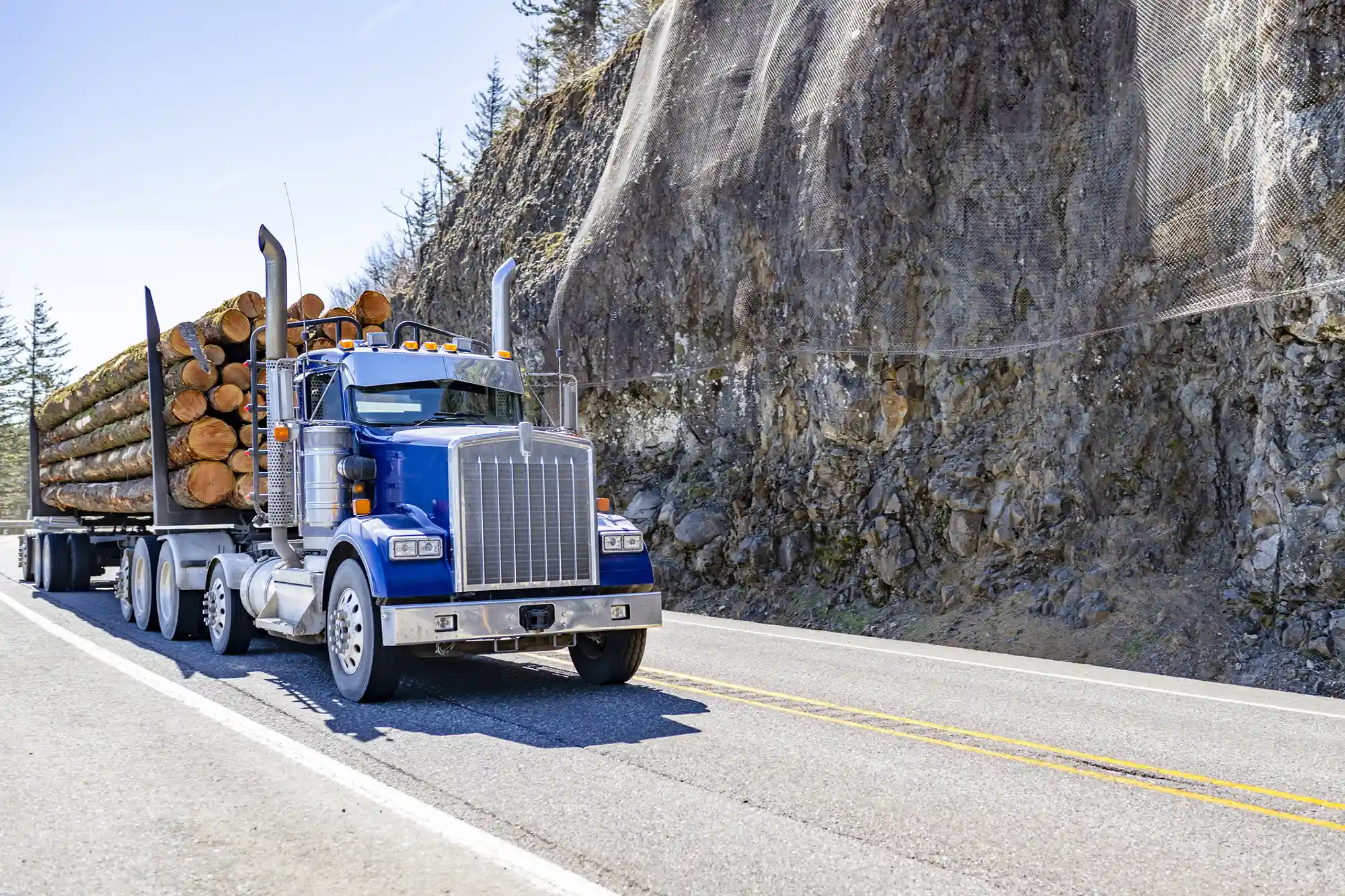
The truck driver may be only one of the parties responsible for a serious crash. A motor carrier can answer for its driver’s negligence, and other businesses may share liability when unsafe loading, poor maintenance, negligent carrier selection, or a defective product contributes to the injury.
Identifying those parties can make a substantial difference to the recovery. In one case handled by Conor Hulburt, the driver worked through a two-truck operation with limited insurance. Contracts, communications, and company testimony helped establish responsibility for the larger carrier that had subcontracted the work.
Our San Diego truck accident attorneys investigate both the cause of the crash and the relationships behind the truck. This article explains who may be liable and why those relationships matter.
Looking Beyond the Small Truck Company
A worker suffered a crushed right knee when a dump truck backed into him on a jobsite. The general contractor had hired a larger dump truck company, which subcontracted the hauling work to a small operation with only two dump trucks and limited insurance.
Conor obtained the contracts and communications between the two trucking companies. He also deposed the larger company’s designated corporate witness, establishing that it had hired the smaller operation and controlled its work.
Those facts supported a claim against the larger carrier, which had substantially more insurance. Conor submitted a brief explaining its vicarious responsibility for the subcontractor’s negligence under Vargas v. FMI, Inc. and related California authority.
The combination of establishing the driver’s negligence and the larger carrier’s responsibility resulted in a significant policy-limits settlement.
The larger company’s insurance became relevant because there was a legal basis to hold it responsible. The investigation connected that company to the hauling work and established why subcontracting did not remove its responsibility. The investigation article explains how testimony and diagrams also tested the driver’s account of the collision.
Who Can Be Held Responsible?
The driver, tractor, trailer, cargo, and shipment may be controlled by different people or businesses. Depending on the evidence, potential defendants include:
- The negligent truck driver
- The motor carrier or driver’s employer, including parcel carriers such as UPS and FedEx
- An owner-operator or equipment owner
- A freight broker that negligently selected a carrier
- A shipper, warehouse, or cargo-loading company
- A maintenance or repair contractor
- A manufacturer of defective equipment
- A public entity responsible for a dangerous roadway
Each party must be connected to a valid liability theory. Merely owning the cargo, appearing in a contract, or having insurance does not make a business responsible.
These questions are especially consequential when truck accident injuries create lifelong care needs or permanent disability. Multiple responsible parties may bring different policies and layers of truck accident insurance coverage into the case.
The Truck Driver
Drivers must use reasonable care under the circumstances. Negligence may include unsafe backing, speeding, following too closely, failing to check blind spots, distraction, impairment, or driving while dangerously fatigued.
Under CACI No. 400, a negligence claim generally requires proof of negligence, harm, and a causal connection between them. The fact that a truck was involved in a collision does not by itself establish driver fault.
Safety regulations may help show what the driver should have done. When the requirements of Evidence Code § 669 are met, a violation can support a rebuttable presumption of negligence. Our FMCSA regulations guide explains how federal trucking rules can affect a California claim.
The collision pattern helps direct that inquiry. Our overview of types of truck accidents explains common failures associated with rollovers, jackknifes, underrides, and other crashes.
The Motor Carrier
A motor carrier may be responsible for a driver’s negligence, its own unsafe conduct, or both. The relationship between the carrier and the driver is often a central issue.
Employee drivers
When an employee negligently causes a crash while acting within the scope of employment, the employer can be vicariously liable. This means the employer answers for the employee’s conduct even without separate proof that the company itself acted negligently. CACI No. 3701 addresses employer responsibility.
Subcontractors and owner-operators
A carrier does not necessarily avoid liability by calling the driver an independent contractor. In Vargas v. FMI, Inc. (2015) 233 Cal.App.4th 638, the court addressed a licensed motor carrier’s nondelegable duty in an operation using another company’s tractor and drivers.
For a carrier subject to that duty, subcontracting the driving work does not transfer away responsibility to the public for negligent operation. The investigation should establish the carrier’s operating authority, the transportation arrangement, and the work being performed.
Equipment leases also matter. 49 CFR Part 376 imposes control and responsibility requirements in covered motor-carrier leases, but does not automatically determine employment status for every purpose.
A private business transporting its own goods may present a different analysis from a licensed for-hire carrier. Other grounds for liability, including its own negligence or responsibility for employees, may still apply.
The carrier’s own conduct
Company decisions may independently contribute to a crash. Examples include ignoring known brake problems, hiring an unqualified driver, failing to address repeated safety violations, or imposing schedules that encourage unsafe driving.
California law limits some overlapping claims. Under Diaz v. Carcamo, an employer’s admission of vicarious liability can foreclose separate negligent hiring, retention, or entrustment theories based on the same driving. Maintenance and dispatch allegations require analysis of their particular facts and the scope of any admission.
An admission does not itself eliminate a properly supported punitive-damages request. CRST, Inc. v. Superior Court explains that distinction. Punitive damages require the additional proof specified in Civil Code § 3294; ordinary negligence is not enough.
Freight Brokers
A freight broker arranges transportation by connecting a shipper with a motor carrier. A broker may be liable when negligent selection of an unsafe carrier contributes to a crash.
In Montgomery v. Caribe Transport II, LLC (May 14, 2026), the United States Supreme Court held that the negligent-selection claim before it fell within the Federal Aviation Administration Authorization Act’s safety exception. Federal preemption therefore did not bar that claim.
The decision does not make a broker automatically liable whenever a carrier causes an injury. The evidence must establish the applicable negligence claim, including causation. Relevant material may include carrier safety history, inspection findings, selection criteria, contracts, and communications showing what the broker knew or should have discovered.
A company’s actual role also matters. Calling itself a broker does not resolve whether it acted as a carrier in the transaction. Its insurance and assets should be investigated separately from the motor carrier’s coverage.
Shippers and Cargo Loaders
A shipper is not automatically liable merely because its goods were on the truck. Its own conduct, or another recognized basis for responsibility, must connect it to the injury.
A shipper, warehouse, or loading contractor may contribute to a crash by overloading the vehicle, distributing weight improperly, failing to secure freight, or concealing a loading problem the driver could not reasonably discover.
Drivers and carriers also have cargo-inspection and securement responsibilities. Investigators should determine who loaded the trailer, what the driver could inspect, and whether shifting cargo or excess weight affected braking, steering, or stability.
Bills of lading, loading photographs, weight tickets, seal records, and warehouse video can help distinguish the roles of the loader and carrier.
Maintenance and Repair Contractors
A repair contractor may share liability if negligent work causes or contributes to the collision. Examples include incorrectly installing a tire, overlooking a dangerous brake condition, or performing an inadequate repair.
Outsourcing the work does not necessarily remove the carrier’s responsibility for vehicle safety. Federal maintenance regulations impose inspection, repair, and maintenance duties on covered carriers.
The investigation should compare the failed component with service records and earlier defect reports. That can reveal whether the problem arose from negligent repair, deferred maintenance, a manufacturing defect, or a combination of causes.
Defective Trucks or Parts
A defect in tires, brakes, steering, couplings, fuel systems, or crash-protection equipment may cause a collision or make the injuries worse. These cases focus on the product’s condition and performance.
California strict product liability generally does not require proof that the manufacturer was negligent. The claimant must establish the applicable defect theory, the defendant’s responsibility for the product, and causation. CACI No. 1200 provides the general framework.
Preserving the vehicle and failed parts allows engineers to assess whether a defect played a role. Our San Diego auto defect attorneys investigate these issues when the evidence points to a vehicle or component failure.
Government Entities and Dangerous Roads
A dangerous road condition may contribute to a truck crash even when a driver also acted negligently. Relevant conditions can include obstructed sight distance, an unsafe intersection or merge, or a hazardous construction-zone layout.
Under Government Code § 835, a claimant generally must establish a dangerous condition, causation, a reasonably foreseeable risk of the kind of injury suffered, and either negligent creation by a public employee or sufficient notice to the entity. Government immunities and other defenses also require careful analysis.
A personal injury or death claim generally must be presented to the appropriate public entity within six months under Government Code § 911.2. Our dangerous roadway conditions practice explains these claims.
San Diego’s freeways and local roads present different investigative issues. Our San Diego truck accident statistics provide local context, but a roadway claim requires evidence of the specific condition involved in the crash.
How Fault Affects the Recovery
California permits fault to be divided among responsible parties. An injured person’s own negligence can reduce the recovery but generally does not eliminate the claim. CACI No. 406 addresses allocation of responsibility.
When multiple defendants are responsible for an indivisible injury, economic and noneconomic damages are generally treated differently:
- Economic damages: joint and several liability can allow recovery of the recoverable medical expenses, future care costs, and lost earnings from a responsible defendant even if another defendant bears more fault.
- Noneconomic damages: under Civil Code § 1431.2, liability for pain, suffering, and similar losses generally follows each defendant’s share of fault.
Vicarious liability remains important: an employer can answer for the noneconomic damages attributable to its employee even without separate employer fault. Comparative fault, settlement credits, and other limitations affect the amount recoverable. The law does not permit double recovery for the same loss.
Our guide to truck accident compensation explains the categories of damages. Identifying every responsible party helps determine both who owes those damages and what insurance may respond.
Identify the Parties Early
Contracts, operating authority, leases, dispatch messages, and shipping records may reveal a responsible company that was not identified at the scene. Obtain and preserve those records before routine business practices make them harder to find.
Depositions and document discovery can establish who hired whom, who controlled the work, and what each business undertook to do. Our guide to the truck accident litigation process explains how those questions are developed after suit is filed.
The dump truck case illustrates why this work matters. Establishing the driver’s negligence addressed how the worker was hurt. Establishing the larger carrier’s legal responsibility made its coverage available to help resolve the claim.
Hulburt Law Firm
Conor and Leslie Hulburt handle serious injury and wrongful death cases involving commercial vehicles throughout San Diego County. We accept a limited number of cases and work directly with clients to investigate the facts, identify responsible parties, and prepare for trial.
If you or a family member suffered a serious truck accident injury, call (619) 821-0500 or use our contact form for a free, confidential case review. There is no attorney fee unless we recover compensation for you.
Request a Free Case Review
Simply fill out the form or call 619.821.0500 to receive a free case review. We’ll evaluate what happened, your injuries, and potential defendants to determine how we can best help you.

Hulburt Law Firm handles serious personal injury and wrongful death cases throughout San Diego County.


