
Dangerous Intersection Accidents in San Diego: Who's Liable?
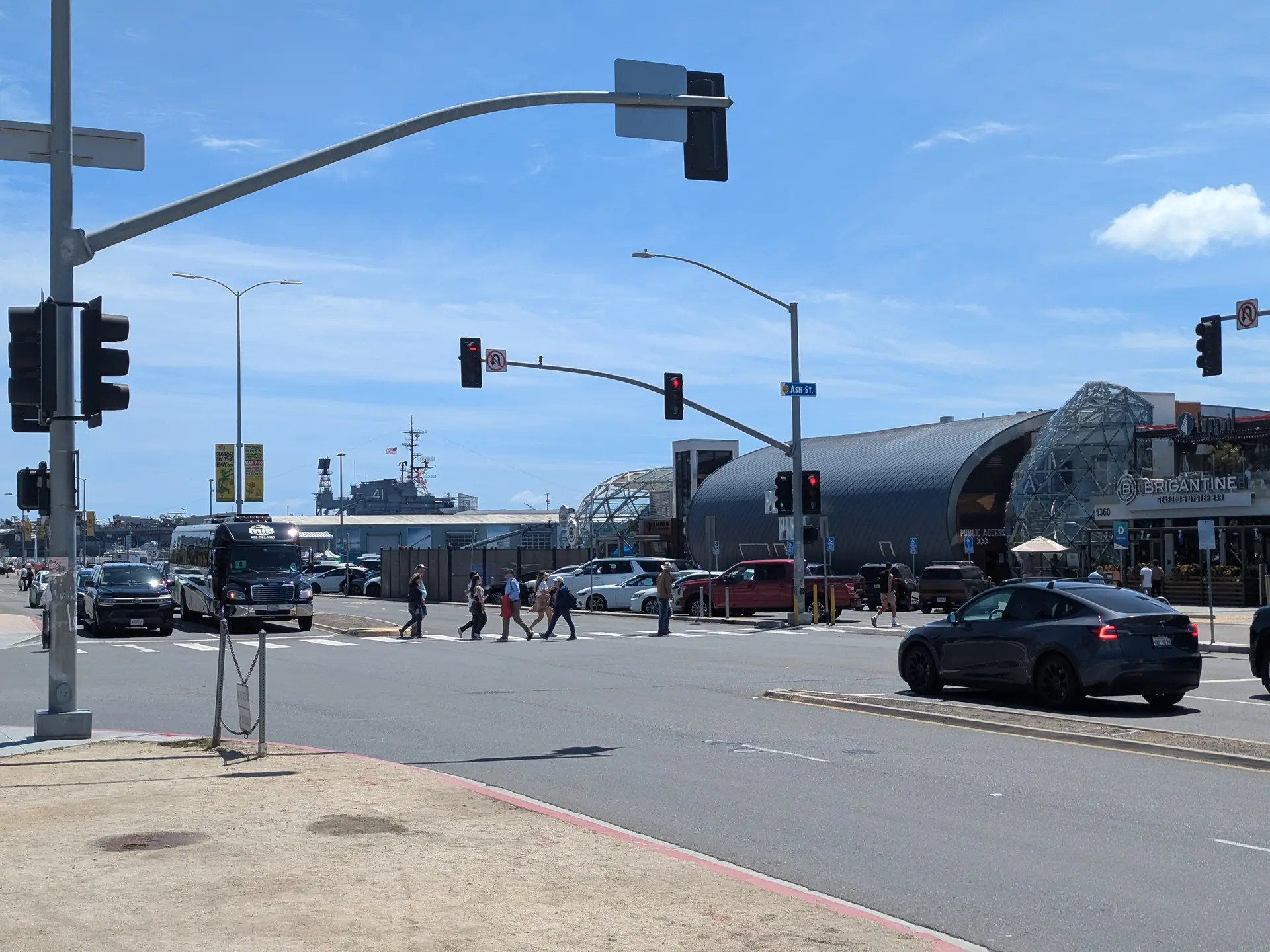
After an intersection crash, the at-fault party is not always the other driver. Sometimes it is the city, the county, or the state for a poorly designed or badly maintained intersection, and sometimes it is both. Figuring out who is liable is the difference between a claim against one driver’s limited insurance and a case that reaches every party that actually caused the crash.
This article explains the two kinds of liability in an intersection crash, the driver mistakes that cause most of them, when the intersection itself is the problem, and how fault gets sorted out when more than one party shares the blame. It comes from the San Diego dangerous roadway conditions attorneys at Hulburt Law Firm, who handle both kinds of claims.
The short version
- Two parties can be liable: the driver who caused the crash, and the government agency responsible for a dangerous intersection.
- Most intersection crashes come down to a driver who turned left into oncoming traffic, ran a red light, or failed to yield the right-of-way.
- The intersection itself can be the cause when an unsafe crossing, a neglected feature, or blocked sight lines create a hazard the agency knew about.
- More than one party can share fault, and California lets you recover from each one in proportion to its responsibility.
- If a government agency is involved, the deadline is six months, not two years.
When the other driver is at fault
Most intersection crashes trace back to a driver who broke a basic rule of the road. The most common are:
- Unsafe left turns. A driver turning left must yield to oncoming traffic until the turn can be made safely. Left-turn crashes are among the most common and most serious intersection collisions.
- Running a red light. A driver facing a steady red must stop and stay stopped until the light turns green, which makes red-light runners squarely at fault for the broadside crashes that follow.
- Failing to yield the right-of-way. California’s right-of-way rules decide who goes first, and a driver who takes a turn that was not theirs is usually liable for the result.
- Rolling through stop signs and entering an intersection without making sure it was clear.
When a driver breaks one of these rules, it is strong evidence of negligence. How that gets established and what it means for your claim is covered in our guide to how fault is determined in car accidents, and the duties every driver owes after a crash are laid out in our guide to the steps to take after a car accident.
When the intersection itself is dangerous
Sometimes the real problem is the intersection, not just the driver. A government agency can be liable when the intersection is in a dangerous condition that it knew about and failed to fix. On San Diego roads, that can mean:
- An uncontrolled crosswalk across a high-speed, multi-lane road, where people are sent across fast traffic with no signal, beacon, or median refuge.
- A configuration that invites collisions, like a crossing or turn the agency failed to make safe for the speeds the road actually carries.
- Sight lines blocked by overgrown vegetation, signs, or structures so drivers cannot see cross traffic.
- Missing, downed, or malfunctioning traffic signals and stop signs.
- Faded lane markings that leave drivers guessing.
Holding a public agency responsible is harder than a claim against a driver, because you have to prove the agency knew the intersection was dangerous and had time to fix it. The same rules govern other road defects, which we explain in our guide to who is liable for a dangerous San Diego road, and a San Diego dangerous roadway attorney can pull the signal-timing data, traffic studies, and prior-crash records these cases turn on. The deeper rules for holding an agency responsible are in our guide to suing the government for a dangerous road, and if the intersection is on a state highway, our guide to suing Caltrans covers that path.
When more than one party is at fault
Intersection cases often have more than one cause. A driver may have run a red light at an intersection the city already knew was dangerous, and both can share responsibility. California uses comparative fault, which means responsibility is divided by percentage and you can recover from each party in proportion to its share of the blame. Even if you were partly at fault yourself, you can still recover, reduced by your own percentage.
This matters for a practical reason: the driver who hit you may carry very little insurance, and available coverage is usually the biggest factor in what an injured person actually recovers. Adding a government agency or another responsible party can be the difference between a token settlement and a recovery that covers a serious injury. A dangerous roadway conditions lawyer looks for every party that shares the blame, not just the obvious one.
Proving who is liable
Intersection cases are won with evidence gathered before it disappears. That includes traffic-signal timing records, the intersection’s design and traffic-study history, any prior complaints or crashes at the same spot, nearby surveillance or doorbell video, event-data-recorder downloads from the vehicles, and witness accounts. In a contested case, an accident-reconstruction or traffic-engineering expert ties it together and shows a jury what happened. Much of this evidence is time-sensitive, which is why the early investigation often decides the case.
If a pedestrian was hurt in an intersection rather than a driver or passenger, the analysis is different; our guide to the most dangerous pedestrian intersections in San Diego covers that situation.
The deadline depends on who is liable
The filing deadline changes based on who is responsible. A claim against another driver generally follows the standard two-year deadline for a car accident claim. But if a government agency shares the blame for a dangerous intersection, you must first file a formal claim with that agency, and you generally have only six months from the date of the crash to do it. Because you cannot always tell at the scene whether the intersection itself was a cause, it is worth having the crash looked at early so the short government deadline does not pass unnoticed.
How Hulburt Law Firm Can Help
If you were hurt in an intersection crash in San Diego, Hulburt Law Firm can determine who is actually responsible, the other driver, a government agency, or both, and move fast to preserve the evidence before it is gone. Call (619) 821-0500 or message us through our contact form for a free, confidential case review.
Request a Free Case Review
Simply fill out the form or call 619.821.0500 to receive a free case review. We’ll evaluate what happened, your injuries, and potential defendants to determine how we can best help you.

Hulburt Law Firm handles serious personal injury and wrongful death cases throughout San Diego County.


