
San Diego Bicycle Advocacy Groups: A Rider's Guide
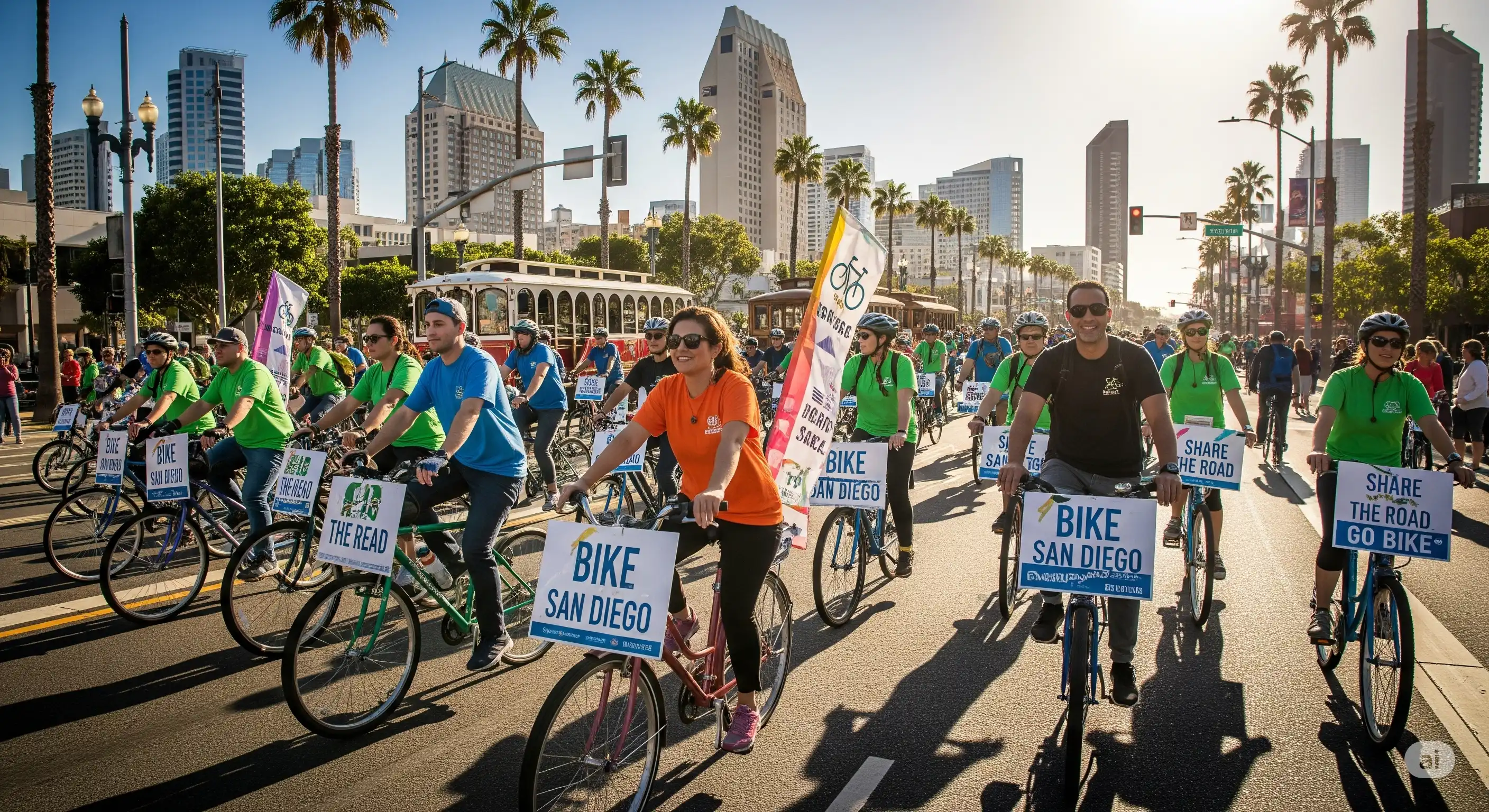
San Diego’s bicycle advocacy groups do two things most injured riders never realize are connected. They push the city to fix the dangerous streets that cause crashes, and the safety records they build along the way can become evidence in an injury claim. If a known-bad intersection or a long-ignored road hazard played a part in your crash, the work these groups have already done can help prove it.
This guide covers the main organizations working for safer cycling in San Diego, what each one offers, and how their advocacy connects to your legal rights after a crash. It is a connection our San Diego bicycle accident attorneys lean on in dangerous-road cases. If you ride here, it is worth knowing who they are before you ever need them.
Bicycle Advocacy Groups
These are the organizations leading the push for safer cycling across San Diego County.
San Diego County Bike Coalition
The San Diego County Bike Coalition is the region’s main cycling nonprofit, working county-wide through education, events, and advocacy. It runs low-cost Smart Cycling classes and repair clinics, organizes the annual Bike the Bay ride, and pushes the city to fix its most dangerous intersections and close the gaps in the regional bike network. It also runs a public tool to report a road hazard, which is worth using both for your own safety and to build the public record on a bad location.
BikeSD
BikeSD is a grassroots nonprofit focused on safe, everyday biking and better street design. It runs targeted campaigns to complete specific bikeways and redesign dangerous intersections, tracks city progress on a Vision Zero dashboard, and publishes an Advocacy 101 guide for residents who want to push for change. If your crash involved poor street design or a long-stalled safety project, BikeSD is often already working the issue.
California Bicycle Coalition (CalBike)
The California Bicycle Coalition is the statewide group that lobbies in Sacramento for stronger cyclist protections. Its work includes the Three Feet for Safety campaign, complete-streets legislation, and the rules that separate true e-bikes from high-powered electric motorcycles. CalBike sets much of the legal backdrop that local San Diego cases are built on.
San Diego Bicycle Collective
The San Diego Bicycle Collective is a community bike shop and nonprofit offering affordable repairs, donation-based bike builds, and youth education. It is less about policy and more about access, getting people on safe, working bikes and teaching them how to maintain them.
San Diego also has dozens of riding clubs that host community and memorial rides, which can be a meaningful part of recovery after a crash. We cover those separately in our guide to organized bicycle rides in San Diego.
Why Advocacy Matters
Cyclists are among the most exposed people on San Diego’s roads. Even a rider doing everything right can be hurt by one distracted driver or one poorly designed intersection. Advocacy groups work to change the conditions that cause those crashes in the first place, so the next rider does not get hurt the same way.
Most of their work falls into a few buckets: pushing for protected bike lanes and safer intersection design, teaching both cyclists and drivers, collecting crash data, and advancing Vision Zero, the City of San Diego’s goal of eliminating traffic deaths and serious injuries. That data and design work is also why their records matter to an injured rider. The same groups that map the city’s worst intersections are documenting exactly the kind of hazard that may have caused your crash. Our overview of San Diego bicycle accident statistics and high-risk areas and the driver mistakes that cause most bike crashes cover the patterns these groups are trying to fix.
How a Group’s Safety Work Can Strengthen Your Claim
When a crash happens on a road the city was repeatedly warned about, that warning record can become the heart of your case. If a dangerous road condition contributed to your crash, a public entity like the city, the county, or Caltrans can be held responsible under California’s dangerous-condition-of-public-property law. A “dangerous condition” is a physical feature of the property that creates an unreasonable risk, like a missing bike lane, a poorly designed intersection, or a hazard the city never repaired.
The catch is that you usually have to prove the entity had “notice,” meaning it knew or should have known about the danger and had time to fix it. That is where advocacy work becomes evidence. Hazard reports, public complaints at city meetings, and the crash data these groups compile can all help show a city was told about a problem and did nothing. Our guide on suing a government entity after a bike crash explains how these claims work, and gathering evidence early is what preserves the proof.
From My Practice
One of my cyclist cases turned on exactly this kind of record. A long line of vehicles was blocking the shoulder of a fast highway, forcing my client out of the shoulder and toward the travel lane, where he was struck from behind. The driver’s insurance was limited, and the case looked thin until we found years of prior public complaints about vehicles blocking that same shoulder. That history of complaints established that the public entity knew the spot was dangerous and had failed to act. The recovery did not come from the driver. It came from the entity that let a known hazard persist.
Know Your Rights
Two rules come up constantly for San Diego cyclists. The first is the Three Feet for Safety Act, which requires a driver passing a cyclist to leave at least three feet of clearance, and to slow down and wait when three feet is not possible. A driver who buzzes a rider and causes a crash has broken this law, which matters for proving fault.
The second is where you are allowed to ride. California leaves sidewalk rules to each city, so they change as you cross town lines. In the City of San Diego, you cannot ride on a sidewalk that fronts a business unless signs allow it, and you must yield to people on foot. Other cities in the county set their own rules, so check the local ordinance before assuming a sidewalk is fair game. The City’s own bicycle safety page and our guide to key California bicycle laws lay out the details. Where you were riding can affect how fault is divided, so it is worth knowing the rule for your route.
Report a Hazard
If you spot a dangerous spot, report it, and not only after a crash. Use the San Diego County Bike Coalition’s road hazard reporting tool and the City of San Diego’s Vision Zero channels. Every report adds to the public record that a location is dangerous, which helps the next rider and, if a crash does happen there, helps prove the city was on notice.
Beyond reporting, these groups welcome volunteers, riders at community events, and voices at city planning meetings. For many people recovering from a crash, turning a bad experience into safer streets is part of healing.
Hulburt Law Firm
If you or someone you love was hurt in a bicycle crash in San Diego, Hulburt Law Firm can help. We investigate the real cause of each crash, whether it was a negligent driver or a city that ignored a dangerous road, and we work with the same hazard records and crash data the advocacy community builds. Our San Diego bicycle accident attorneys handle the legal side so you can focus on recovery. Call (619) 821-0500 or message us through our contact page for a free, confidential case review.
Request a Free Case Review
Simply fill out the form or call 619.821.0500 to receive a free case review. We’ll evaluate what happened, your injuries, and potential defendants to determine how we can best help you.

Hulburt Law Firm handles serious personal injury and wrongful death cases throughout San Diego County.


