
Amazon Product Liability in California: Can You Sue?
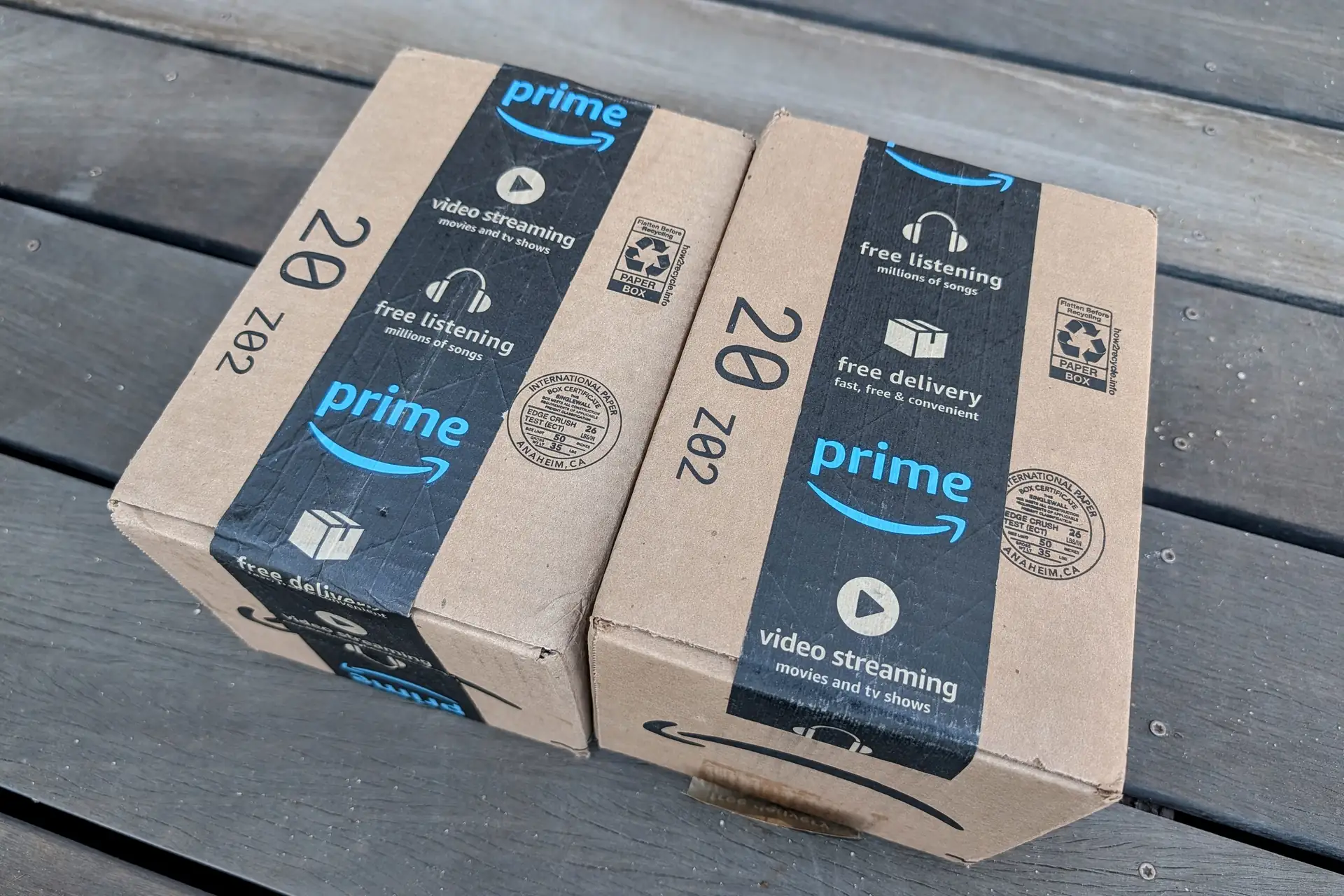
Yes. California courts have held that Amazon can be strictly liable for a defective product sold on its website, even when a third-party seller listed it and even when Amazon never touched the box. You still have to prove the product was defective and that the defect caused your injury, and the claim is subject to deadlines and to Amazon’s own terms of use, which are discussed below.
Hulburt Law Firm represents people in San Diego and throughout California who were injured by defective products, including batteries, chargers, e-bikes, and household goods bought online. Our San Diego product liability attorneys investigate who made the product, who sold it, and how it reached you.
Why Amazon Can Be Liable
Under California’s rule of strict liability, a business that puts a defective product into the hands of the public can be responsible for the injuries the defect causes, whether or not that business was careless. You prove the defect, not the negligence.
That responsibility does not stop with the manufacturer. In Vandermark v. Ford Motor Co., the California Supreme Court held that retailers, like manufacturers, are “engaged in the business of distributing goods to the public” and can be strictly liable for defects in what they sell (Vandermark v. Ford Motor Co. (1964) 61 Cal.2d 256). Every business in the chain of distribution, meaning the line of companies that moves a product from the factory to the buyer, can share that responsibility.
The jury instructions California courts use say the same thing in broader terms. The sources for CACI No. 1200 state that beyond manufacturers, anyone who is “an integral part of the overall producing and marketing enterprise” is subject to strict liability. Amazon’s position for years was that it is not part of that enterprise at all: it is a website where other companies sell things. California’s appellate courts have rejected that argument.
The Key California Cases
Bolger v. Amazon (2020)
The leading case came from the Court of Appeal, Fourth Appellate District, Division One, in San Diego. A woman bought a replacement laptop battery listed by a third-party seller that used Fulfilled by Amazon (FBA), Amazon’s program in which the seller ships inventory to Amazon’s warehouses and Amazon stores, packs, and delivers each order. Months later the battery exploded and she suffered severe burns.
The court held that Amazon could be strictly liable. Amazon stored the battery, took the customer’s payment, shipped it in Amazon packaging, controlled communications between buyer and seller, and collected fees on the sale. In the court’s words, Amazon “placed itself between” the seller and the buyer in the chain of distribution. The court also rejected Amazon’s defense under Section 230 of the federal Communications Decency Act, the law that protects websites from liability for what other people post, because the claim targeted Amazon’s role in distributing a physical product, not the seller’s listing (Bolger v. Amazon.com, LLC (2020) 53 Cal.App.5th 431). In November 2020, the California Supreme Court denied review and also denied a request to depublish the opinion, so it remains binding published authority.
Loomis v. Amazon (2021)
A year later, a Los Angeles appellate court took the next step. In Loomis, a hoverboard caught fire while charging, and the buyer was burned trying to put out the fire. This seller did not use FBA; the hoverboard shipped directly from a third party. Amazon argued that without warehousing or shipping the product, it could not be in the chain of distribution.
The court disagreed and allowed the strict liability and negligence claims to go forward. It looked at whether Amazon received a direct financial benefit from the sale, whether its role was integral to the business of selling the product, and whether it had control over, or a substantial ability to influence, how the product reached the buyer. Amazon processed the order and payment, controlled customer communications, collected fees, and could require sellers to provide safety certifications, indemnity, and insurance (Loomis v. Amazon.com LLC (2021) 63 Cal.App.5th 466).
Lee v. Amazon (2022)
Lee was not a personal injury case. It involved Amazon’s duty to give the chemical exposure warnings required by California’s Proposition 65 for skin creams sold by third-party sellers. But it matters here for two reasons: the court agreed with Bolger that Amazon was “pivotal in bringing the product here to the consumer,” and it again held that Section 230 did not protect Amazon, because the warning duty arose from Amazon’s own role in the sale rather than from anything a seller posted (Lee v. Amazon.com, Inc. (2022) 76 Cal.App.5th 200).
These are Court of Appeal decisions. The California Supreme Court has not decided the question itself, so the law in this area can still develop.
Does It Matter Who Shipped It?
People often run three different kinds of Amazon purchases together. They are worth separating, because each one puts Amazon in a slightly different position:
- Ships from and sold by Amazon.com: Amazon is the retailer. This is the ordinary Vandermark situation, and Amazon’s status as a seller is not seriously in dispute.
- Sold by a third-party seller, fulfilled by Amazon: Amazon stored, packed, and shipped the item. These are the facts of Bolger, the strongest fact pattern for holding Amazon responsible.
- Ships from and sold by a third-party seller: the seller or its supplier shipped the item, and Amazon handled the listing, the order, and the payment. These are the facts of Loomis. The claim against Amazon is still available, though Amazon has more room to argue about its role.
You can usually tell which one applies from your order. Open the order in your Amazon account and look for the “Ships from” and “Sold by” lines on the product page or order details. Take a screenshot of both. If Amazon is not listed as the seller, the seller’s name and contact information should appear there or on the seller’s profile page.
What to Do After an Injury
Medical care and safety come first. Once those are handled, the product itself is often the most important evidence in the case, and much of it can be lost in the first few days.
- Get medical care and keep the records. Burns and electrical injuries can worsen over the first days, and the medical records connect the injury to the incident.
- Treat a damaged battery as a fire hazard. The EPA’s lithium-ion battery guidance warns that damaged, defective, or recalled lithium batteries are more likely to catch fire during transport than undamaged ones, so moving one is not a casual task. If a battery is hot, smoking, swelling, or hissing, leave it alone, move away, and call 911. Do not store a damaged battery in your home until you have safe-handling guidance from the fire department, the manufacturer, or a lawyer who can arrange storage with a fire investigator.
- Keep the product when it is safe to do so. Do not return it for a refund. A returned item usually leaves your control for good, and with it the best evidence of the defect. If a recall offers a refund for destroying or returning the product, photograph it and talk to a lawyer before you do either.
- Keep everything else that came with it. Chargers, cords, packaging, and manuals. Set them aside as they are; do not try to clean, repair, or reassemble anything.
- Save the listing. Screenshot the product page, the seller’s profile, any warnings shown on the listing, and the “Ships from” and “Sold by” lines. Listings change and sellers disappear, sometimes within weeks of an incident.
- Save your order records. The order confirmation, invoice, and delivery details show the date, the item number, and who sold and shipped it.
- Photograph the scene and your injuries. Take pictures before cleanup, including where the product was being used or charged.
California generally gives an injured person two years from the date of injury to file a personal injury lawsuit under Code of Civil Procedure § 335.1. Exceptions can shorten or extend that period, and Amazon’s terms add their own pre-dispute steps (explained below) that take time to complete, so do not wait until the deadline is close. Our guide to the personal injury statute of limitations covers the exceptions.
What You Have to Prove
Getting Amazon into the case is only the first step. The claim itself is the same product liability claim you would bring against any manufacturer or store. California recognizes three kinds of defects:
- Manufacturing defect: this particular unit differs from what the manufacturer intended, such as a battery cell with contamination inside.
- Design defect: the product’s design itself is defective, so the danger is built into the product rather than limited to one bad unit.
- Failure to warn: the product lacked sufficient instructions or warnings about a danger that was known or knowable.
A single product can involve more than one. A charger sold without overcharge protection and without warnings, for example, might support both a design claim and a warning claim.
Each theory has its own elements. For a manufacturing defect, CACI No. 1201 lists what a plaintiff must prove:
- Distribution. The defendant manufactured, distributed, or sold the product.
- Defect. The product contained a manufacturing defect when it left the defendant’s possession.
- Harm. You were harmed.
- Causation. The defect was a substantial factor in causing your harm.
Design defect and failure-to-warn claims use different instructions with different elements, so this list is not a universal checklist for every product case.
The evidence that proves a defect usually comes from the product itself. Fire investigators and engineers can often tell from the remains of a battery or charger whether a cell failed internally, whether protective circuitry was missing, or whether the device was damaged or misused. That is why the product, preserved safely, can be critical evidence.
How Amazon Defends These Claims
Beyond the “we are only a marketplace” and Section 230 arguments that the cases above rejected, Amazon and its insurers commonly argue about the product and the incident:
- No defect, or a different cause. Amazon and the seller may argue the product was damaged, modified, used with the wrong charger, or used in a way no one could anticipate. California law still allows recovery for uses that were reasonably foreseeable, but misuse arguments can reduce or defeat a claim.
- Its role in a seller-fulfilled sale. When Amazon did not store or ship the item, it may argue its involvement was too limited, and the answer depends on the evidence of its role in your particular sale.
- Arbitration. Amazon’s Conditions of Use contain an arbitration clause, explained next.
Amazon’s Terms and Arbitration
Amazon’s Conditions of Use state that customers accept those terms by using the site. The version posted as of this writing (last updated August 14, 2026) says that claims relating to products sold through Amazon.com will be resolved by individual binding arbitration rather than in court, with an exception for claims that qualify for small claims court. Before arbitration, that version requires contacting customer service, then submitting a Notice of Dispute and negotiating for 60 days.
Amazon changes these terms from time to time, and which version applies, whether a particular person agreed to it, and whether it reaches a particular injury claim are case-specific questions. Two points in the current version are worth knowing. First, it says disputes over personal injury or property damage caused by products bought on Amazon are governed by the law of the state where the injury happened, so under Amazon’s own terms a San Diego injury is governed by California law. Second, a spouse, child, houseguest, or neighbor who was hurt by a product someone else bought may never have agreed to Amazon’s terms at all, which puts that person in a different position from the account holder.
These questions affect where a case is heard and how it is prepared, so raise them with a lawyer early.
Amazon’s A-to-z Guarantee
Since September 2021, Amazon has said it will pay valid personal injury and property damage claims under $1,000 against third-party sellers through its A-to-z Guarantee, and may step in on larger claims when a seller does not respond. For minor property damage, it may be a possible route for resolving a smaller claim.
It is not the limit of what the law allows. An injury that needed emergency care or time off work can easily exceed $1,000, and California law allows recovery of medical expenses, lost earnings, and pain and suffering. Before you accept any offer, read Amazon’s A-to-z Claims Process terms. They say that accepting Amazon’s offer means the claim is “settled and finally resolved as to Amazon and the seller,” that you assign your claim to Amazon to the extent the law allows, and that you may also be asked to sign a release. In other words, accepting the offer itself can end your claim against both Amazon and the seller, even without a separate release document. Get advice before you accept an offer for an injury, while still answering Amazon’s reasonable requests for information about what happened.
Recalls and the CPSC
In July 2024, the U.S. Consumer Product Safety Commission ruled that Amazon was a “distributor” under federal product safety law for more than 400,000 specific hazardous items sold through Fulfilled by Amazon, including faulty carbon monoxide detectors, hair dryers without electrocution protection, and children’s sleepwear that failed federal flammability standards (CPSC Decision and Order, In the Matter of Amazon.com, Inc.). A separate final order in January 2025 set out how Amazon must notify purchasers and provide refunds for those items. Amazon challenged the agency’s determination in federal court in 2025 (Amazon.com, Inc. v. Consumer Product Safety Commission, D. Md. No. 8:25-cv-00853). As of October 2026, that case was still pending, with cross-motions for summary judgment awaiting a decision.
The CPSC ruling does not by itself give an injured person a right to sue; California law does that. But it matters in two practical ways. If you receive a recall notice for a product you own, stop using it. And if the product that hurt you was later recalled, the recall record can be useful evidence of the hazard.
Notes for Attorneys
This section collects the issues that tend to shape a marketplace case in practice.
Joint and Several Liability
Proposition 51 (Civil Code § 1431.2) makes each defendant’s liability for noneconomic damages several only. But it does not apportion damages among strictly liable defendants in the same chain of distribution. In Wimberly, the San Diego appellate court held that “a strictly liable defendant cannot reduce or eliminate its responsibility to the plaintiff for all injuries caused by a defective product by shifting blame to other parties in the product’s chain of distribution” (Wimberly v. Derby Cycle Corp. (1997) 56 Cal.App.4th 618, 633). Springmeyer v. Ford Motor Co. (1998) 60 Cal.App.4th 1541, 1575-1576, and Bostick v. Flex Equipment Co. (2007) 147 Cal.App.4th 80 follow that rule. None of these cases involved Amazon, but they state the general rule for strictly liable defendants in a chain of distribution.
Joint and several liability applies once Amazon is established as a strictly liable participant in the chain of distribution under Bolger or Loomis. If the injury was caused by the defect alone and the manufacturer is overseas or the seller is a storefront that cannot be served or cannot pay, Amazon generally remains answerable for the full judgment, economic and noneconomic. Its recourse is indemnity against the upstream companies, which Wimberly notes may be limited by good faith settlement principles (56 Cal.App.4th at p. 633), and settlements and credits can affect the final numbers. The analysis can also change when fault is attributed to the plaintiff or to someone outside the chain of distribution, such as a party who modified or misused the product.
Fulfillment Model and Pleading
Identify the fulfillment model from the order record before drafting. FBA cases track Bolger closely. Seller-fulfilled cases rely on Loomis, which found Amazon to be a link in the vertical chain of distribution and, as an alternative basis, applied the stream of commerce (marketing enterprise) factors: direct financial benefit, an integral role, and control over or substantial ability to influence distribution. Plead the facts that support both analyses: fees, payment processing, control of buyer-seller communications, seller requirements such as insurance and indemnity, and Amazon’s ability to suspend listings.
Plead negligence where the facts support duty, breach, and causation. Loomis reversed summary adjudication of the negligence claim, but the court cautioned that its ruling “is not the equivalent of a finding that Amazon owed Loomis a duty of care or was negligent under these circumstances.” The ruling was procedural: Amazon had not carried its burden on the motion.
In a seller-fulfilled case, also consider how the pattern instructions will read. CACI No. 1201 asks whether the product was defective “when it left [the defendant]’s possession,” language written for a defendant that physically held the product. Plan for how that element will be framed for a marketplace that never did.
Identifying the Seller
The federal INFORM Consumers Act requires online marketplaces to verify high-volume third-party sellers and, for those with $20,000 or more in annual gross revenue on the platform, to disclose the seller’s full name, physical address, and contact information on the product listing or in the order confirmation and account history (15 U.S.C. § 45f). Those disclosures are subject to statutory exceptions. Most notably, a seller operating solely from a residence may disclose only its country and state, plus a phone number, email address, or messaging channel, as the FTC’s INFORM Act guidance explains. Capture whatever disclosure appears, along with the item’s ASIN and the seller’s storefront page, as early as possible.
Discovery Targets
Amazon holds records that are difficult to obtain anywhere else: the seller’s account and verification records, customer complaints and safety reports for the same item number, returns data, internal product safety reviews, any listing suspensions (the record in Loomis showed Amazon had suspended hoverboard listings after safety reports), and the seller agreement terms on insurance and indemnity. Send a preservation letter covering the listing and the seller account as soon as the case comes in.
Arbitration and Choice of Law
Before filing, examine the Conditions of Use version in effect when each plaintiff used the account, along with the notice and assent record, timing, the scope of the clause, and its exceptions. Amazon may move to compel arbitration against a plaintiff who is the account holder, so build the record early on who placed the order, who was injured, and whether each plaintiff ever assented. Note that the current choice-of-law clause carves out personal injury and property damage claims and applies the law of the state where the harm occurred.
Watch the calendar as well. Amazon’s pre-arbitration dispute resolution procedure provides that, for claims covered by a Notice of Dispute, any statute of limitations is tolled from the date Amazon receives the notice until the later of 60 days or the completion of a timely requested settlement conference. Whether that provision applies to a given claim and party, and whether the notice was properly given, should be evaluated rather than assumed; the conservative course is to calendar the statutory deadline without relying on contractual tolling.
Hulburt Law Firm
If you or someone you love was hurt by a defective product bought on Amazon, Hulburt Law Firm can help you identify everyone in the chain of distribution and preserve the evidence that proves the defect. Call (619) 821-0500 or message us through our contact form for a free, confidential case review.
Related resources:
Request a Free Case Review
Simply fill out the form or call 619.821.0500 to receive a free case review. We’ll evaluate what happened, your injuries, and potential defendants to determine how we can best help you.

Hulburt Law Firm handles serious personal injury and wrongful death cases throughout San Diego County.


